Category: On Writing…

Reflections on craft, creativity, and the quiet joys of a life spent writing.

  • Blog Post: Behind the Scenes

    Unveiling the Writer’s Process

    Step into a realm where inspiration thrives and creativity takes flight. In this behind-the-scenes look, we explore the inner workings of a celebrated author’s imaginative journey—a blend of meticulous planning and spontaneous bursts of inspiration. Readers will discover how a skilled wordsmith transforms fleeting thoughts into captivating stories, integrating deep personal insights with refined writing techniques.

    This introduction prepares you to learn about the subtle art of storytelling that combines disciplined research with creative experimentation. Here are a few highlights you can expect:

    • The Blueprint: An insight into crafting outlines and character arcs.
    • Spontaneous Inspiration: Techniques to capture creative sparks in everyday moments.
    • Localized Influence: How regional flavors, from the vibrant energy of Newnan, GA to eclectic urban influences, enrich the narrative.

    Whether you’re an aspiring writer or simply passionate about the literary craft, uncovering these practical insights can help improve your writing approach and illuminate the path to your own creative breakthroughs. Prepare to be inspired by a unique perspective on turning everyday life into extraordinary art.

    The Evolution of a Masterpiece: From Spark to Publication

    Every great book begins with a moment of inspiration—an idea that ignites the imagination and sets the creative process in motion. The journey from initial concept to final publication is a multifaceted process that blends creativity with rigorous discipline, offering an insightful look behind the scenes.

    Authors typically start by brainstorming and outlining themes, characters, and plot developments. They then move on to drafting, where ideas flow freely onto paper and come to life in rough form. Key milestones in this journey include:

    • Idea Incubation: Capturing the initial inspiration and forming a clear concept.
    • Drafting & Structuring: Organizing thoughts into coherent chapters and scenes.
    • Revisions & Editing: Refining the narrative, enhancing clarity, and ensuring logical flow.
    • Finalizing & Publishing: Meticulous proofreading followed by formatting, readying the work for readers.

    This progression not only sharpens literary skills but also reinforces practical project management—important for creatives, especially in regions like Newnan, GA, where local talent thrives. Understanding these stages empowers aspiring authors to navigate common challenges and transform raw ideas into enduring works of art.

    The Art and Challenge of Writing

    Every compelling piece of writing begins as a blank page, and diving into the creative process can be both daunting and exhilarating. Behind the scenes, authors tackle numerous challenges—from organizing their thoughts to overcoming creative blocks. This journey involves a blend of discipline, passion, and the willingness to share personal insights in every word.

    The writing process is an enlightening experience that teaches valuable lessons in perseverance and adaptability. Authors often find themselves balancing the struggle to maintain authenticity while addressing the needs of their readers. This balance is achieved by embracing several key strategies:

    • Planning and Outlining: Breaking down ideas into manageable segments to form a cohesive narrative.
    • Revising and Editing: Dedicating time to refine each draft ensures clarity and engagement.
    • Feedback and Reflection: Actively seeking input from trusted peers can sharpen one’s storytelling skills.

    For those navigating the creative landscape in locations like Newnan, GA, these insights offer practical guidance to overcome common writing hurdles. Embrace each challenge as an opportunity to innovate, while celebrating the rewards that come with every written masterpiece.

    Top 7 Essential Tools for Unstoppable Writing

    When exploring the creative process behind compelling storytelling, it’s important to have a go-to toolkit that fuels productivity and clarity. Here are seven indispensable tools and resources that consistently boost writing efficiency:

    1. Digital Notebooks
      Capture fleeting ideas with efficient digital note-taking apps. These platforms allow you to organize thoughts, sync across devices, and revisit inspiration anytime.
    2. Mind Mapping Software
      Visualize story arcs and character developments with intuitive mind mapping applications. This approach helps in structuring narratives seamlessly.
    3. Grammar and Style Checkers
      Leverage advanced editing tools that automatically refine sentence structure and correct errors while maintaining your unique voice.
    4. Citation Managers
      Quickly collect research and references, ensuring that all sources are neatly organized for later review.
    5. Cloud Storage Solutions
      Secure written drafts and revisions with reliable cloud services, providing access wherever you are, whether at home or in Newnan, GA.
    6. Collaboration Platforms
      Engage with fellow writers to exchange ideas, feedback, and encouragement, strengthening your craft.
    7. Local Writer Workshops
      Participate in community events and local groups to further refine your techniques and connect with like-minded individuals.

    Behind the Scenes: Your Burning Questions Answered

    What drives a professional author’s creative process?
    A strong blend of imagination, personal experience, and strategic planning fuels the creative process. Authors often balance inspiration with disciplined routines that encourage continuous output. This balance is vital, regardless of whether one works in bustling urban centers or quieter locales like Newnan, GA.

    How do writers overcome creative blocks?
    Many authors tackle creative roadblocks by stepping away from their work, seeking fresh perspectives, or using writing prompts to restart momentum. Techniques include walking, reading diverse genres, or discussing ideas with fellow creative professionals.

    What does the behind-the-scenes research process entail?
    Thorough research helps ensure the accuracy and depth of a narrative. Authors compile notes, chronicle personal observations, and translate real-world details into engaging stories. This process often involves structured planning and frequent revisions.

    How does local culture influence the writing process?
    Local history, community events, and regional nuances provide rich material that enhances storytelling. Whether drawing from the vibrancy of urban environments or the charm of smaller towns, these elements add authenticity.

    How do editing and revisions shape final manuscripts?
    Editing refines the narrative, emphasizing clarity and consistent tone. Iterative revisions help transform rough drafts into polished works, ensuring every detail resonates with readers and meets industry standards.

    Wrapping Up the Creative Journey

    As we close this behind-the-scenes exploration, take a moment to reflect on the creative process and the key insights shared throughout. This blog post has offered a glimpse into what it means to harness imagination, overcome challenges, and push the boundaries in the creative industry. Whether you’re looking to refine your storytelling craft or embark on your own innovative project, the practical guidance provided here serves as a roadmap to unlock your potential.

    Remember these actionable steps:

    1. Identify the challenges in your creative process and tackle them with small, manageable objectives.
    2. Experiment with different techniques to stay ahead of industry trends.
    3. Continuously refine your methodology by integrating feedback and new ideas.

    For those in regions like Newnan, GA and beyond, the tips offered here can be adapted to suit your local market and personal style. Embrace the inspiration and actionable insights as you start or continue your creative journey. Keep experimenting, stay curious, and never hesitate to share your story. Your next breakthrough may be just one creative step away.
  • The Writing Advice I Actually Use

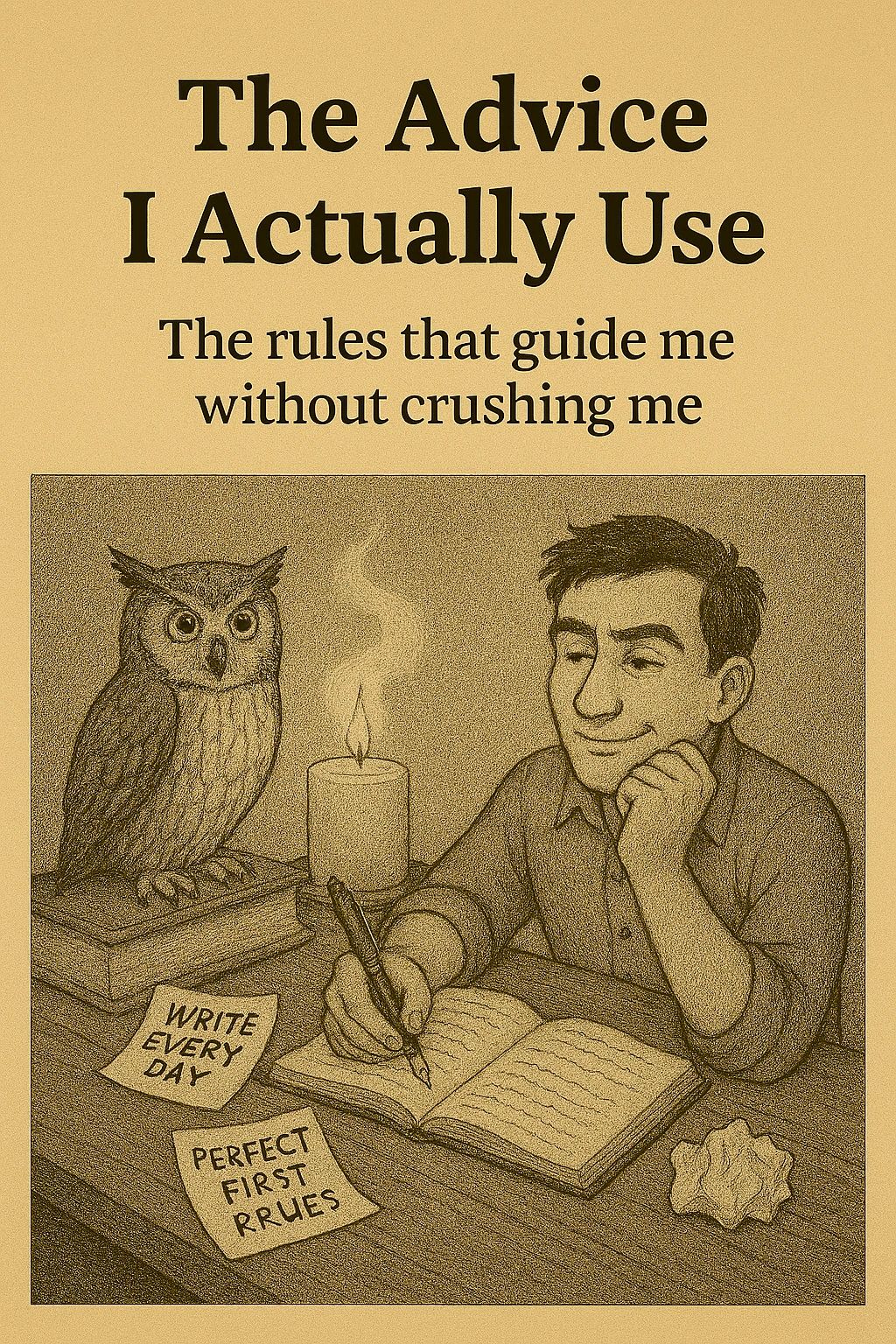
    The Writing Advice I Actually Use

    There’s a lot of writing advice out there. Some of it’s brilliant. Some of it’s confusing. Some of it feels like it was written by someone who’s never met a deadline or spilled coffee on a draft.

    Over the years, I’ve tried most of it. Timers. Outlines. Morning pages. Writing upside down (don’t ask).
    And while I’ve let go of a lot, a few pieces of advice have stuck — because they actually work.

    Here’s the writing advice I still use, even when the coffee’s cold and the page is blank.

    1. “Write what you notice”

    Not what you know. Not what you feel. Not what you think people want to hear.

    Just… what you notice.

    • The way someone taps their foot when they lie
    • The sound of a screen door in July
    • The smell of pencil shavings and old paper

    Noticing is the first step to storytelling. It’s how you find the detail that makes a scene feel alive.

    2. “Start before you’re ready”

    If I wait until I feel ready, I’ll never write.
    So I start when I’m unsure. I start when I’m tired. I start when I have half an idea and a full mug.

    And somehow, the act of starting makes me ready.

    3. “Don’t write to impress — write to connect”

    The best writing isn’t clever. It’s clear.
    It doesn’t show off. It shows up.

    When I write like I’m talking to a friend — not a panel of judges — my words breathe easier.
    And readers respond.

    4. “Finish the thing”

    This one’s brutal. But true.

    It’s easy to start. It’s hard to finish.
    But the magic lives in the ending — even if it’s messy, rushed, or not quite what you imagined.

    I’ve learned to finish the thing.
    Then I can fix it. Shape it. Make it sing.

    5. “Keep going”

    Some days, writing feels like walking through molasses.
    Some days, it feels like flying.

    Either way — I keep going.

    Because the only way to get better is to keep writing.
    And the only way to keep writing is… to keep writing.

    Final thought

    Writing advice is like seasoning. Use what enhances the flavor. Toss what makes it bitter.
    And remember: the best advice is the one that gets you back to the page.

    Next week: “Why I Keep a Notebook I Never Read.” Spoiler: it’s full of nonsense, and that’s the point.

  • The April Fool’s Guide to Writing Advice You Should Ignore

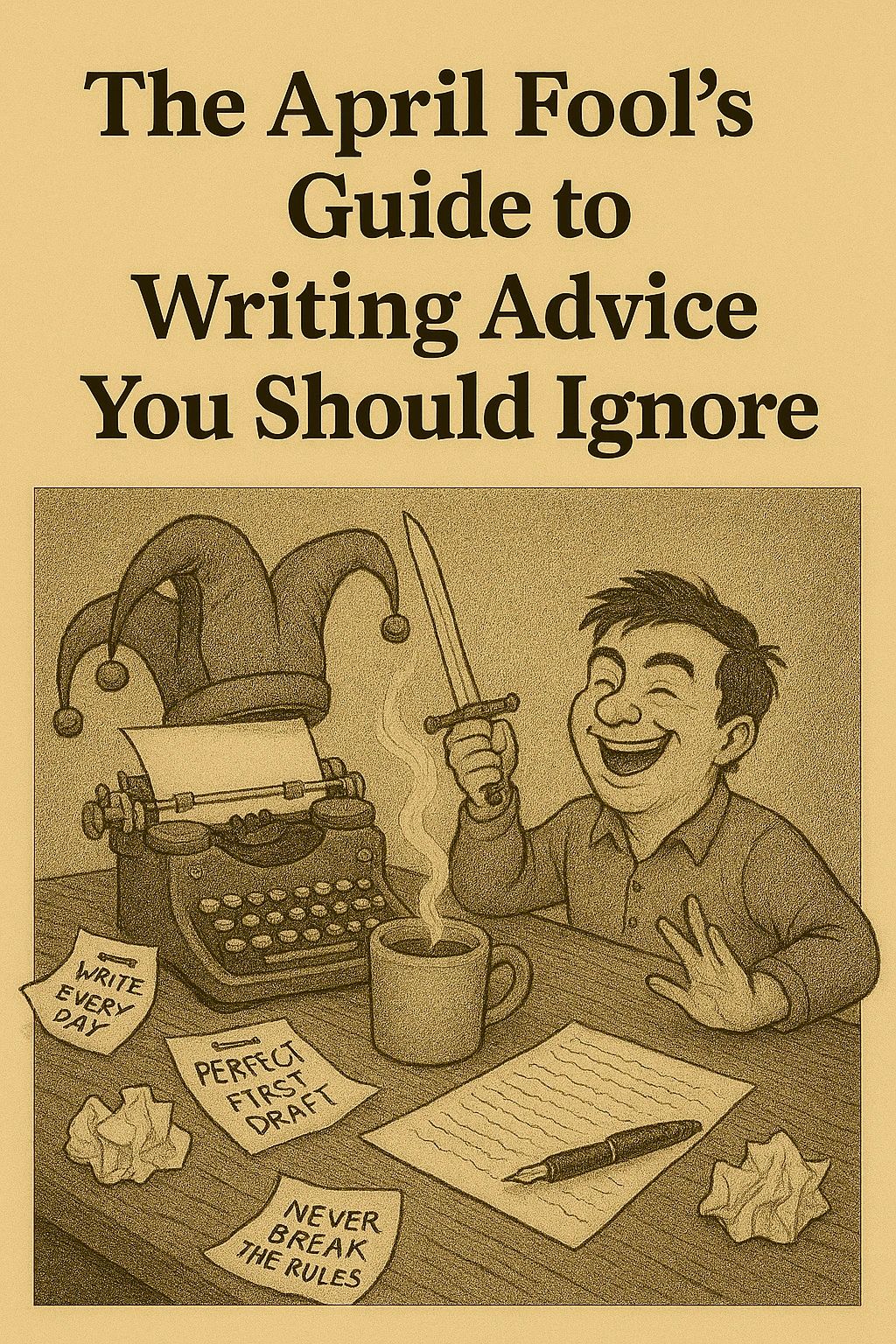
    The April Fool’s Guide to Writing Advice You Should Ignore

    Blog Post: April 4, 2026

    Some writing advice is gold. Some is gentle and wise. And some… well, some feels like it escaped from a fortune cookie written by a committee of pranksters.

    April Fool’s Day felt like the perfect moment to celebrate the advice you can safely toss into the recycling bin — right next to the half‑finished drafts and that notebook you bought because a YouTuber said it would “change your life.”

    The Advice That Sounds Smart (But Isn’t)

    “Write every day or you’re not a real writer.”
    Ah yes, the classic guilt‑trip mantra. Writing every day is lovely if your life cooperates. But if you’re juggling work, family, pets, laundry, and the occasional existential crisis, missing a day doesn’t revoke your writer card.

    “Never break the rules.”
    Rules are training wheels. They’re helpful until they’re not. Break them with intention, not rebellion — but break them all the same.

    “Your first draft should be perfect.”
    This one is so wrong it feels like a prank. First drafts are supposed to be messy, chaotic, and occasionally embarrassing. That’s their job.

    “Serious writers don’t write funny things.”
    Tell that to Shakespeare. Or Nora Ephron. Or the raccoon currently reorganizing my recycling bin with suspicious comedic timing.

    Why Bad Advice Sticks Around

    Because it’s simple.
    Because it sounds authoritative.
    Because it promises certainty in a craft built on uncertainty.

    But writing isn’t a formula. It’s a conversation between you and the page — and sometimes the page has a sense of humor.

    The real danger isn’t bad advice. It’s letting someone else’s voice drown out your own.

    What to Listen For Instead

    • Advice that makes you feel braver, not smaller
    • Advice that opens a door instead of closing one
    • Advice that helps you write the story only you can write

    Good advice expands your world. Bad advice shrinks it.

    Closing Thought

    If a piece of writing advice feels like an April Fool’s joke, treat it like one. Laugh, crumple it up, and get back to the page.

    Your voice is the only rule that matters.

  • The Myth of the Perfect Writing Day

    Post 3 — February 21, 2026

    The Myth of the Perfect Writing Day

    Somewhere out there, in the collective imagination of writers, exists the Perfect Writing Day.

    It looks something like this:
    You wake up early, refreshed.
    The coffee is perfect.
    The house is quiet.
    Your desk is clean.
    Your brain is sharp.
    Your characters are cooperative.
    Your sentences glide out like butter on a warm skillet.

    This day does not exist.

    What does exist is the Real Writing Day:
    You oversleep.
    The coffee is lukewarm.
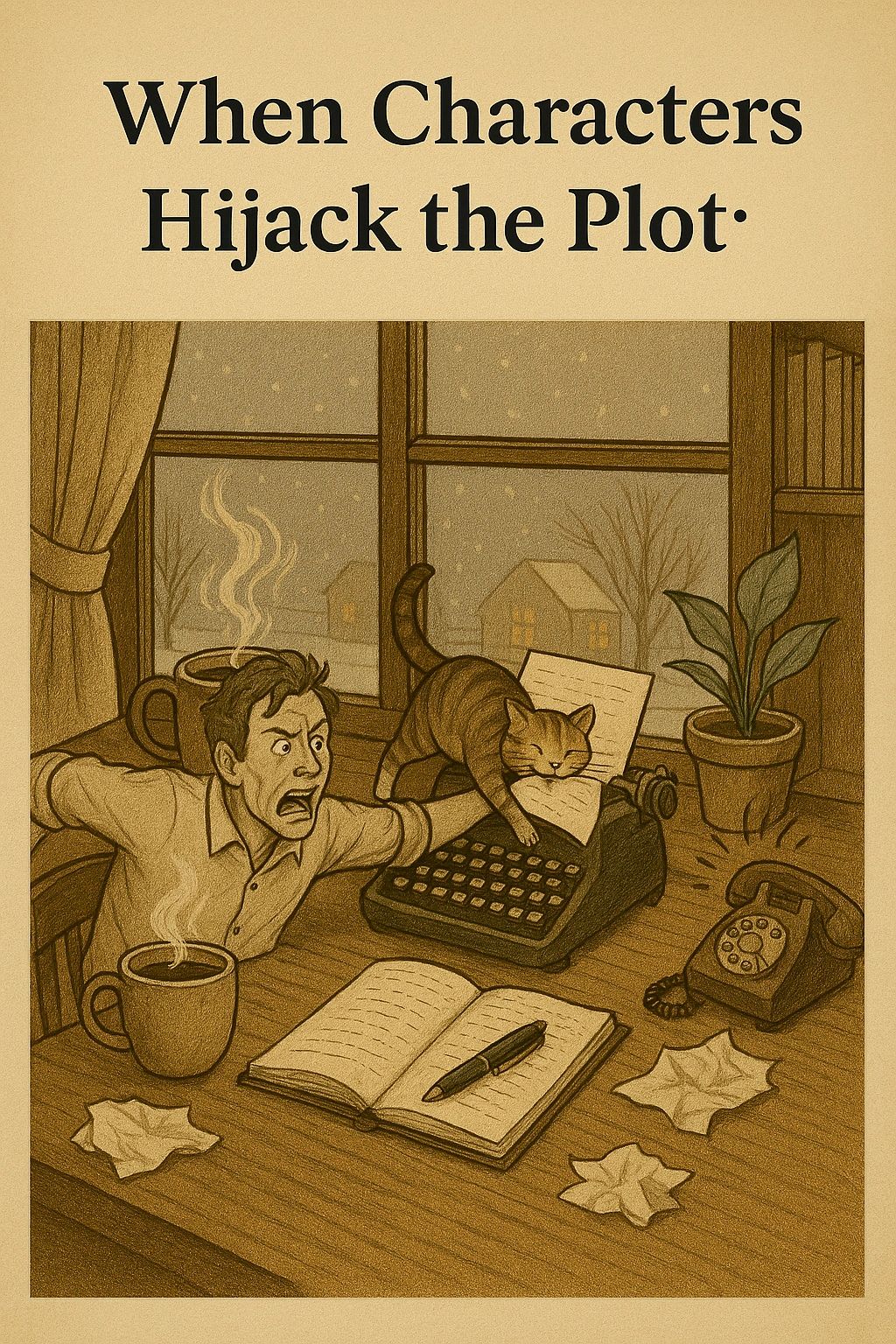
    The cat is determined to sit on your keyboard.
    Your inbox is a swamp.
    Your brain is made of oatmeal.
    Your characters are staging a coup.
    Your sentences are… fine. Mostly.

    And yet — this is the day you write.

    The myth of the perfect writing day keeps us waiting for conditions that never arrive. But creativity doesn’t need perfection. It needs presence. It needs willingness. It needs the courage to write badly until the writing gets better.

    So the next time your day feels messy, chaotic, or decidedly un‑literary, remember:
    Most great stories were written on imperfect days by imperfect people doing their best.

    And that’s more than enough.

  • How To Create Characters That Feel Like Real People

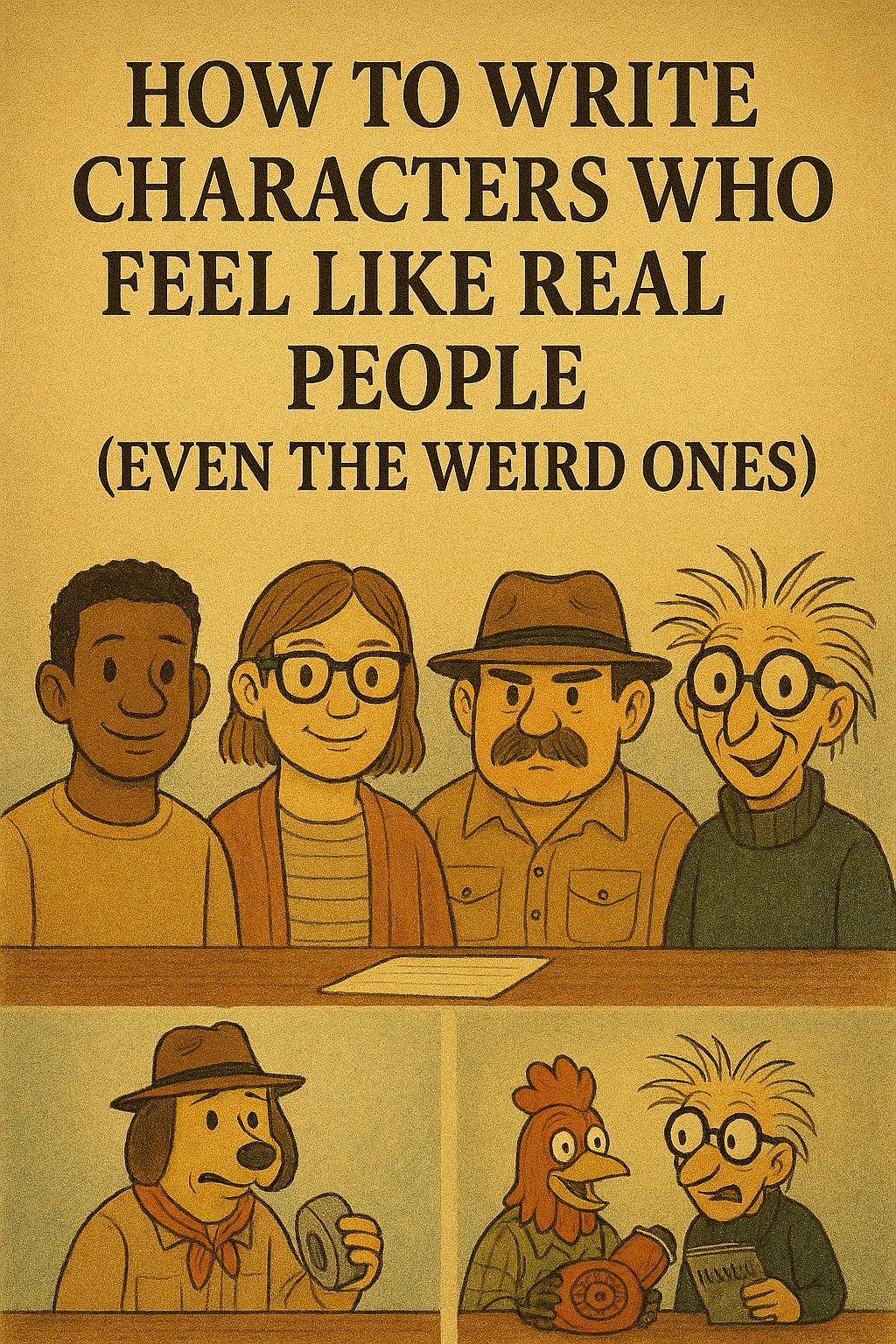
    How To Create Characters That Feel Like Real People (Even The Weird Ones)

    Readers will forgive you a lot of things, but they won’t forgive you flat characters.

    Even the craziest plots and most spellbinding settings won’t make up for emoticons disguised as human beings.

    I spent years learning to write characters who feel vivid and specific — which sounds fancy, but really means that you’d recognize them if you saw them at Hank’s Gas-n-Go on a Sunday morning.

    Give each character a secret

    Not a “plot secret” or a murder mystery, but a real, lived-in truth that defines the character from the inside.

    • The school principal who writes poetry
    • The cheerful grandma who regrets having kids
    • The post-apocalyptic vigilante with a soft spot for ducks

    Let the weird stuff stay weird

    Shirley can hand out frog stickers at the pharmacy or sleep in a canopy bed, but once she starts doing both, she starts feeling real.

    First drafts are the audition. Rewrites are the job.

    Characters come in loud and broad at first. That’s fine. But in the second, third, and fourth drafts, I leave room for them to surprise me. That’s when they start talking back.

    Then they boss me around for the next 150 pages.

  • Love Letters to the Drafts We Abandoned

    Post 2 — February 14, 2026

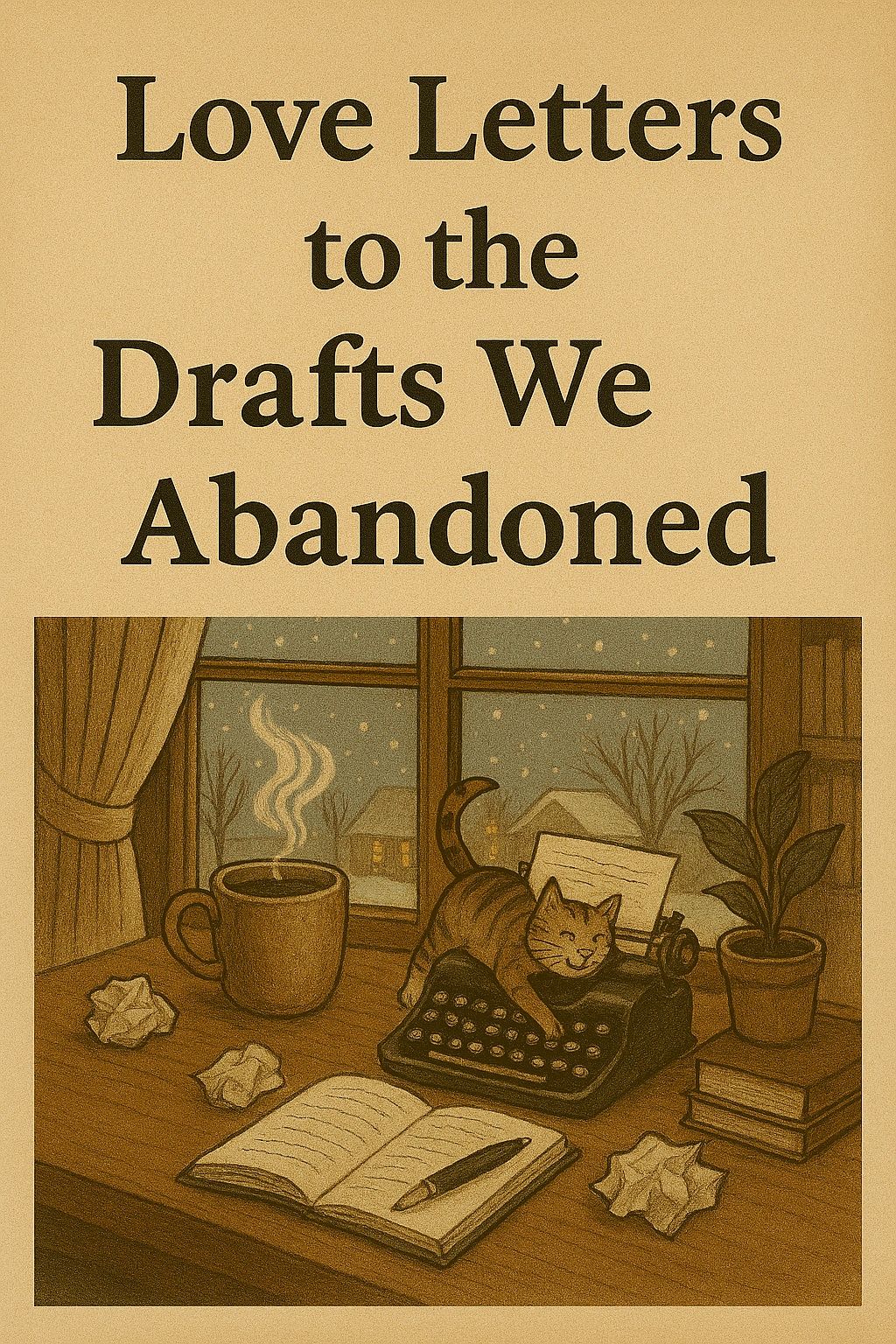
    Love Letters to the Drafts We Abandoned

    Ah, Valentine’s Day — the perfect time to honor the great loves of our writing lives: the drafts we abandoned.

    You know the ones.
    The half‑formed novel that fizzled out at chapter three.
    The essay that started strong and then wandered off like a distracted toddler.
    The poem that was definitely going to be brilliant until it suddenly wasn’t.

    We treat these drafts like exes we don’t talk about. But maybe we should.

    Because those abandoned drafts? They taught us things. They showed us what didn’t work so we could find what does. They gave us characters who weren’t ready yet, ideas that needed to marinate, and sentences that deserved a second chance in some future piece.

    So today, I’m writing them a love letter.

    Dear Drafts,
    Thank you for your enthusiasm, your chaos, your unfiltered honesty.
    Thank you for showing up when inspiration was thin.
    Thank you for being the stepping stones to better stories.

  • 1. Why I Keep Writing Even on the Days I Don’t Want To

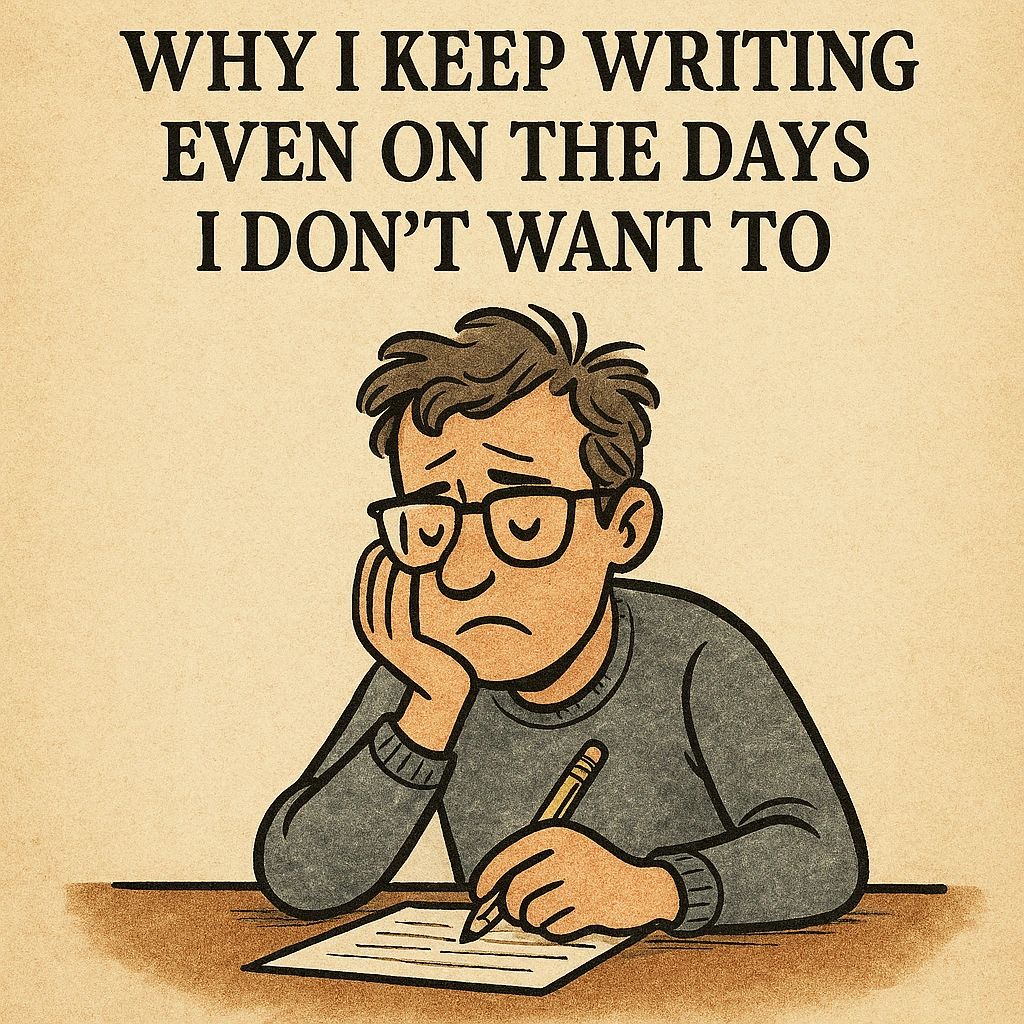
    1. Why I Keep Writing Even on the Days I Don’t Want To

    Some days the words line up like well‑trained soldiers. Other days they scatter like toddlers in a grocery store. I used to think “real writers” woke up inspired, disciplined, and spiritually aligned with their creative purpose. Now I know better.

    Writing isn’t about waiting for the perfect mood. It’s about showing up — even when the muse is late, the coffee is weak, and the only thing I feel like writing is a complaint letter to my future self.

    But here’s the thing: every time I choose to write anyway, something shifts. Maybe not immediately. Maybe not dramatically. But the act of returning to the page reminds me that I’m still paying attention to the world. I’m still curious. I’m still willing to wrestle with the blank space in front of me.

    And every once in a while, on a day that started with zero promise, the words surprise me. They say something I didn’t know I knew. They reveal a truth I wasn’t brave enough to say out loud. They make me laugh, or ache, or remember something I thought I’d forgotten.

    That’s why I keep writing — not because it’s easy, but because it keeps me awake to my own life.

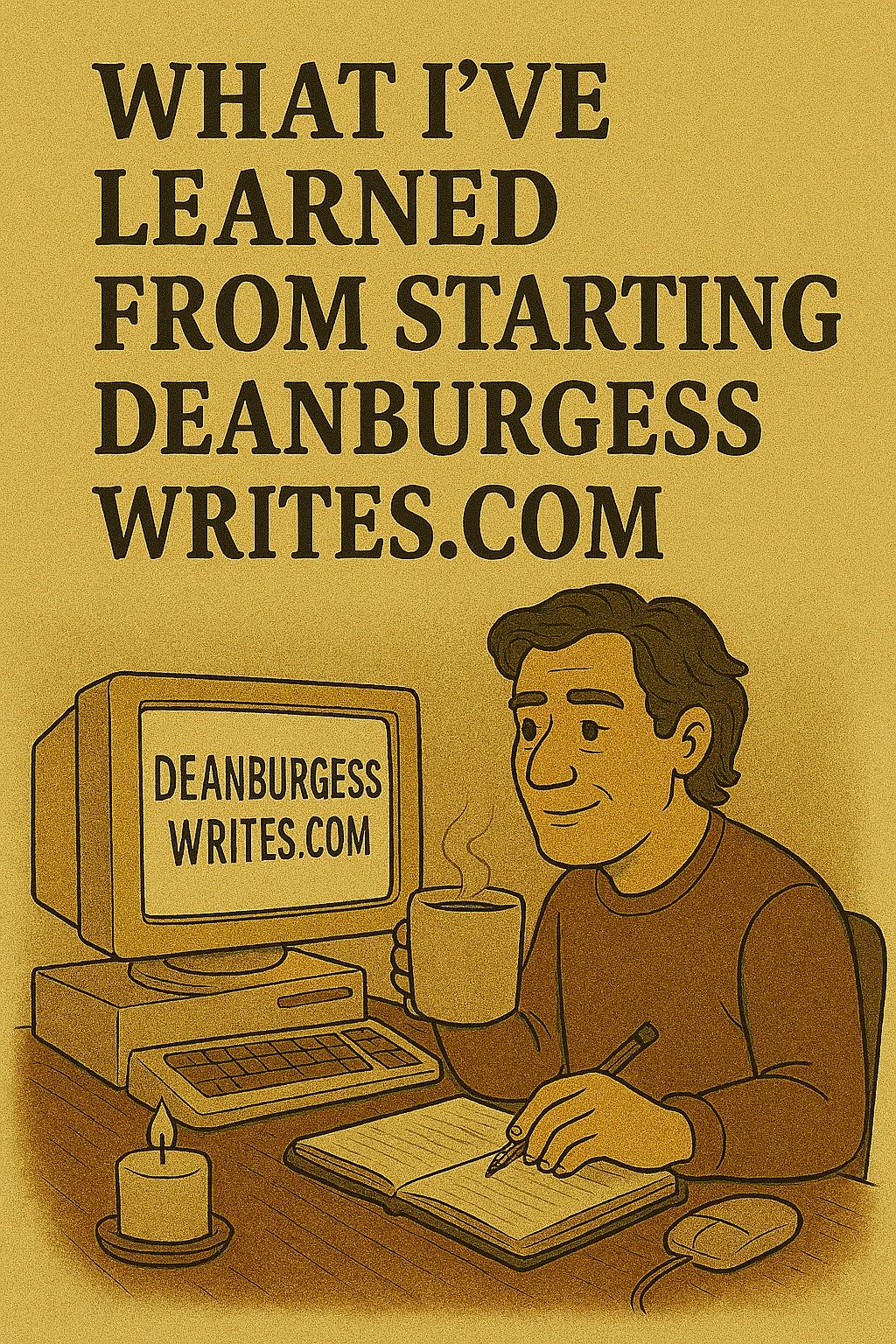
  • What I’ve Learned From Starting DeanBurgessWrites.com

    4. What I’ve Learned From Starting DeanBurgessWrites.com

    Launching a website is a lot like inviting people into your living room and hoping they don’t notice the laundry basket you shoved behind the couch. It’s vulnerable. It’s exciting. It’s mildly terrifying.

    But here’s what I’ve learned so far:

    People don’t want perfection — they want presence.
    Readers aren’t looking for a flawless brand. They’re looking for a voice that feels human.

    A website grows the same way a story does: one sentence at a time.
    You don’t build a creative home overnight. You build it by showing up, adding a little more each week, and letting it evolve.

    Your work doesn’t need to be “ready.” It just needs to be shared.
    If I waited for perfect timing, perfect ideas, or perfect confidence, the site would still be a blank page.

    DeanBurgessWrites.com isn’t just a website. It’s a place where my writing, my cartoons, and my Crabapple Creek stories can live together. It’s a home for the things I care about — and the people who care enough to read them.

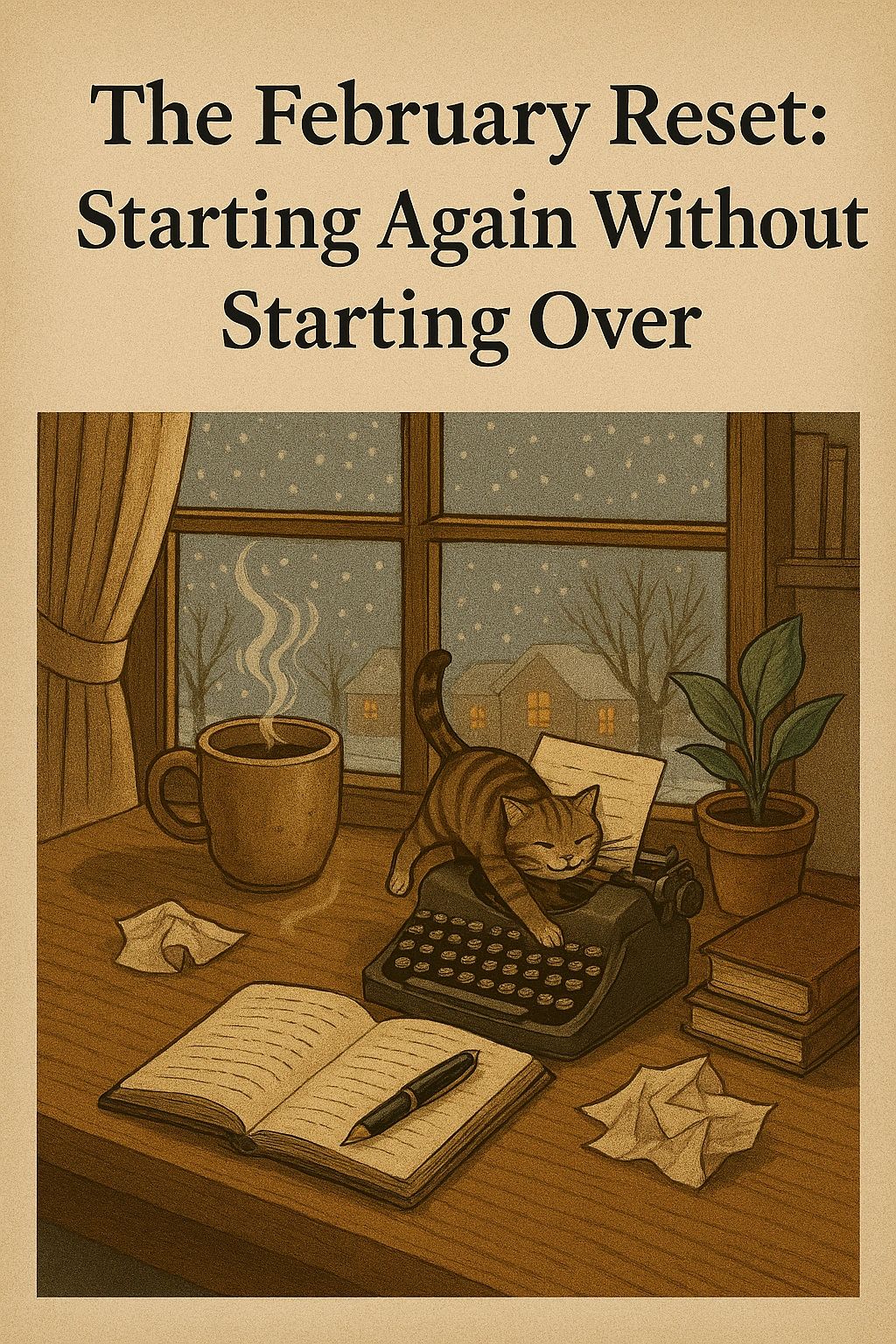
  • The February Reset: Starting Again Without Starting Over

    Post 1 — February 7, 2026

    The February Reset: Starting Again Without Starting Over

    February is the month where all our January optimism goes to stretch its legs, look around, and say, “Oh… we’re still doing this?”

    It’s the midpoint between the shiny promise of a new year and the muddy reality of mid‑winter. The resolutions have softened around the edges. The planners have lost their crispness. The pens we bought in a burst of ambition are now rolling around the desk like bored teenagers.

    And yet — February is one of my favorite creative months.

    Not because it’s glamorous. Not because it’s inspiring in the traditional sense. But because February is honest. It’s the month that says, “Okay, now that the confetti has settled, what do you actually want to make?”

    A February reset isn’t about reinvention. It’s about returning to the work with a gentler hand. It’s about remembering that momentum doesn’t come from grand declarations — it comes from showing up, even when the sky is gray and the coffee tastes slightly burnt.

    So here’s my February invitation:
    Pick up the project you set down in January. Dust off the idea you weren’t ready to commit to. Reopen the document you closed with a sigh.

    You don’t have to start over.
    You just have to start again.

  • Mastering the Craft of Storytelling

    Unleashing the Magic of Storytelling

    Step into a world where every narrative holds the power to captivate and transform. Storytelling is not just an art—it’s a tool for connection and clarity that resonates across cultures and communities. In this introduction, you’ll discover the fundamentals of crafting compelling stories that both inspire and inform.

    Our journey begins by breaking down the core elements of effective storytelling:

    • Character Development: Understand how relatable characters can drive your narrative forward.
    • Plot Structure: Learn the essentials of a well-paced story arc that keeps readers hooked.
    • Emotional Engagement: Discover strategies to weave emotions into your narrative, making your message memorable.

    As you explore these components, consider how localized insights, like the vibrant cultural backdrop of Newnan, GA, can enrich your storytelling process. Whether you’re a writer or a business professional seeking fresh angles for your content, the techniques discussed here offer practical guidance to solve common creative challenges. Prepare to delve into actionable tips and clear explanations that pave the way for mastering a craft that’s as timeless as it is transformative.

    The Building Blocks of an Unforgettable Narrative

    Every great story is built on a foundation of essential elements that captivate readers and spark their imagination. At its core, the narrative thrives on well-developed characters, a dynamic plot, and an immersive setting. Strong characters—whether flawed heroes or intricate villains—bring depth to your narrative by offering varied perspectives and relatable emotions. They evolve through challenges and conflicts, making the audience invest in their journey.

    A compelling plot is essential for maintaining momentum. It involves not only the rising action and unexpected twists but also a coherent structure that guides the reader through a transformative experience. Equally important is the setting, which grounds the story in a tangible world. A well-crafted backdrop adds layers of atmosphere, reflecting the mood and highlighting cultural or regional characteristics, including hints of local charm from places like Newnan, GA.

    Consider these actionable tips:
    • Develop characters with clear motivations.
    • Structure your plot to balance tension and resolution.
    • Use detailed descriptions to bring your setting to life.

    By honing these elements, you can craft narratives that resonate deeply and stand the test of time.

    Ignite Your Narrative: A Step-by-Step Blueprint

    Step into the art of storytelling with a structured guide that transforms raw ideas into compelling narratives. This how-to blueprint empowers you to brainstorm and structure your story elements with precision and creativity.

    1. Brainstorm Your Concepts:
    • Write down all initial ideas without judgment.
    • Use mind maps to explore character inspiration, setting details, and plot twists.
    • Consider local influences, such as the vibrant culture of Newnan, GA, to add authenticity.
    • Outline Your Structure:
    • Develop a clear storyline arc including introduction, rising action, climax, and resolution.
    • Create bullet points that detail key events and character developments.
    • This structured outline serves as a roadmap, keeping your narrative focused and engaging.
    • Refine and Flesh Out:
    • Expand each bullet point with detailed descriptions and dialogue.
    • Regularly revise to ensure consistency and natural flow.
    • Emphasize clarity in your language while incorporating industry terminology to showcase professional storytelling skills.

    By following these actionable steps, you’ll not only craft memorable stories but also gain confidence in your ability to entertain and inspire readers. Embrace this guide as your first step towards mastering the art of narrative creation.

    Navigating Storytelling Challenges with Confidence

    Storytelling is an art that often comes with its own set of hurdles, from finding a unique narrative voice to maintaining a well-structured plot. One common challenge is keeping the story cohesive while ensuring that every subplot enriches the overall narrative. Balancing character development and pacing too can feel overwhelming, especially when trying to engage a diverse audience.

    To overcome these obstacles, consider a few practical strategies:

    • Outline Your Narrative: Begin with a detailed outline that maps out key plot points and character arcs. This minimizes the risk of narrative inconsistencies.
    • Embrace Revisions: Don’t shy away from rewriting sections that feel forced or muddled. Iterative editing is crucial for clarity and flow.
    • Focus on Pacing: Use targeted storytelling techniques to adjust rhythm and ensure that your readers stay engaged from start to finish.
    • Localize Your Approach: Adapt examples and regional references to resonate with local readers, leveraging area-specific keywords to support local search discovery.

    By regularly reassessing your storytelling approach and incorporating actionable tips, you can turn common challenges into opportunities for crafting compelling, immersive stories. Embrace the journey of continuous improvement, and let each challenge refine your unique narrative voice.

    Frequently Asked Questions About Storytelling Techniques

    How can I develop a compelling narrative arc?
    Start with a clear beginning, middle, and end to ensure your story flows naturally. Focus on establishing conflict early and resolving it in a satisfying way. This approach helps readers stay engaged and emotionally invested.

    What techniques enhance character development?
    Deep characters are built through detailed backstories, relatable motivations, and consistent growth. Utilize dialogue and subtle cues to reveal personality traits over time. This adds layers and authenticity to your narrative.

    How do I effectively use descriptive language?
    Incorporate vivid imagery and sensory details to set the scene. Balancing descriptive passages with action keeps the pace lively and makes scenes more immersive for diverse audiences, including those in Newnan, GA who appreciate locally relevant storytelling.

    What is the role of pacing and tension?
    Strategically vary your pacing by interspersing intense scenes with calmer moments. Controlled tension not only sustains reader interest but also accentuates key plot points.

    Why is incorporating local elements important?
    Integrating regional references creates a sense of place and familiarity, connecting your narrative to specific cultural or geographical experiences.

    Final Thoughts on Shaping Your Narrative

    As our exploration ends, it’s clear that mastering storytelling is a journey of both art and strategy. Bringing together narrative techniques, compelling language, and relatable experiences forms the backbone of effective storytelling. By synthesizing key tips and actionable steps discussed throughout, you gain the tools needed to transform everyday ideas into immersive narratives.

    Key takeaways include:

    • Structure Your Story: Develop a clear beginning, middle, and end to guide your audience.
    • Engage Emotionally: Use vivid descriptions and relatable scenarios to capture attention.
    • Iterate and Refine: Continuously revise your narrative to better connect with your readers.

    As you apply these insights, consider incorporating local perspectives, such as storytelling trends in Newnan, GA, to enrich your narrative with regional flair. Embrace every opportunity to experiment with new techniques and refine your craft. Your storytelling journey is uniquely yours—commit to continuous improvement and watch your narrative evolve into a truly engaging masterpiece.