Category: On Writing…

Reflections on craft, creativity, and the quiet joys of a life spent writing.

  • What to Do When You’re Stuck as a Writer

    What to Do When You’re Stuck as a Writer

    When the Words Go Missing

    Every writer knows the feeling. You sit down with noble intentions, a fresh cup of coffee, and the confidence of a person who has definitely figured out life. Then your brain opens a tiny window, waves politely, and leaves the building.

    Being stuck as a writer is a time-honored tradition. It belongs in the same category as overwatering houseplants, misplacing reading glasses, and deciding that reorganizing a bookshelf counts as productive work. The good news is that being stuck does not mean you have lost your talent. It usually just means your imagination has put on slippers and is refusing to come downstairs.

    Step One: Lower the Drama

    First, resist the urge to declare that you are finished forever and will now live quietly in the woods making jam. You are not broken. You are merely stalled. There is a difference. A stalled car still works. It just needs a nudge, a better road, or someone to stop pressing the wrong pedal.

    Writer’s block is often just perfectionism wearing a fake mustache.

    Step Two: Write Something Bad

    This is one of the great secret tricks of the writing life. If you cannot write something brilliant, write something gloriously mediocre. Write a sentence so clunky it could trip over its own shoes. Write a paragraph that sounds like it was dictated by a sleepy pigeon. The point is movement, not majesty.

    • Write the scene badly on purpose
    • Describe the problem in plain language
    • Let yourself be ridiculous for ten minutes
    • Keep going until the inner critic gets tired

    Step Three: Change the Scenery

    If the desk has become a place of sorrow and unpaid emotional invoices, move. Take your notebook to the porch, the kitchen table, the library, or the nearest coffee shop with suspiciously confident muffins. Sometimes your brain simply needs a new view in order to stop behaving like a Victorian ghost.

    Step Four: Ask Smaller Questions

    Do not ask, “How do I finish this entire chapter and become a literary legend by supper?” Ask smaller questions. What does the character want in this scene? What is the next sentence? What is one detail that makes the room feel real? Tiny questions are much less frightening, and they rarely require dramatic music.

    Step Five: Read Like a Thief

    When your own words refuse to cooperate, borrow momentum from other people’s books. Read a page by a writer you admire and pay attention to rhythm, detail, and honesty. Do not copy their voice. Just remind yourself that language can still sing, even if yours is currently clearing its throat in the corner.

    Step Six: Bribe Yourself

    Writers are not above incentives. Promise yourself a cookie, a walk, a chapter of a good novel, or twenty guilt-free minutes of staring out the window like a misunderstood genius. If toddlers can be motivated by stickers, there is no shame in discovering that adults can be motivated by pie.

    One Last Truth

    Most writing problems are solved by staying in the chair a little longer, laughing at your own melodrama, and writing the next imperfect line. Inspiration is lovely when it arrives wearing a golden halo, but discipline is the one who usually shows up with the house keys.

    So if you are stuck today, take heart. Make tea. Write badly. Move your chair. Ask smaller questions. Then begin again, sentence by sentence, like every writer before you.

    Keep Reading

    If you enjoy warm reflections on writing, books, and the creative life, visit My Journal for more posts or browse the Shop to discover Dean Burgess titles.

  • Why Writing Still Matters

    A Quiet Practice

    Writing asks us to slow down long enough to notice what is true. In a noisy world, the page remains one of the few places where thought can deepen, memory can settle, and feeling can find its proper shape.

    For many writers, the work begins before the first sentence. It begins in observation: the turn of a phrase overheard in town, the weathered look of a porch at dusk, the way a person hesitates before telling the truth. These small details are often where stories first take root.

    Finding Your Voice

    A writer’s voice is not manufactured overnight. It is discovered through repetition, patience, and a willingness to write imperfectly. The more honestly you write, the more your work begins to sound like you and no one else.

    • Read with attention and curiosity
    • Write regularly, even in small stretches
    • Revise with care rather than haste
    • Trust the details that feel lived-in and specific

    The best writing does not shout. It invites the reader to come closer.

    Staying With the Work

    Every writer meets doubt. Some days the words arrive with ease, and some days they do not come at all. What matters most is returning to the desk. A page written in uncertainty can still lead to something lasting, honest, and unexpectedly beautiful.

    If writing matters to you, keep going. Protect the habit, honor the craft, and let the work teach you what it wants to become.

    Browse the books or visit My Journal for more reflections on storytelling, reading, and the writing life.

  • The Art of Storytelling: Crafting Compelling Narratives

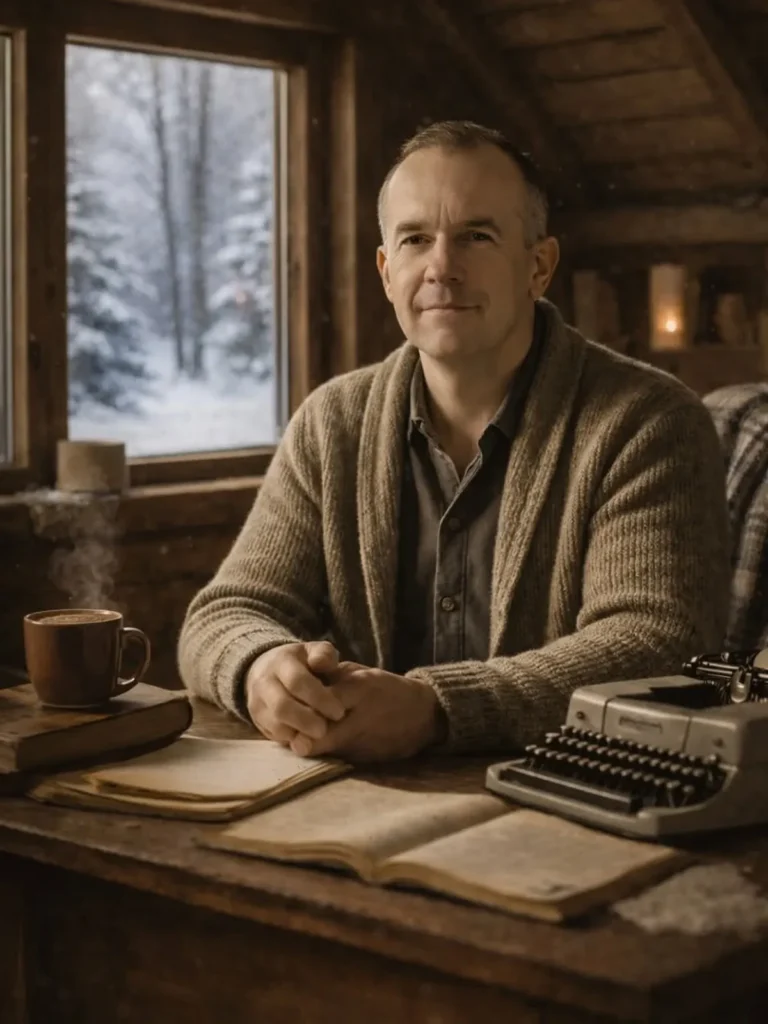
    Portrait of Dean Burgess seated at a wooden desk in a rustic study with a typewriter and warm window light

    Why Stories Stick: Unlocking the Mind’s Love for Narrative

    From boardrooms in Newnan to classrooms across Georgia, one truth remains constant: people don’t just consume information—they remember stories. The human brain is wired to respond to narrative structure, using it to organize thoughts, retain details, and make emotional connections. In fact, research shows that messages delivered through storytelling are up to 22 times more memorable than facts alone—making narrative not just a creative tool, but a strategic advantage in communication.

    Whether you’re crafting a blog post, designing website copy, or sharing community updates, understanding the mechanics of effective storytelling helps your audience engage, relate, and respond. A well-structured narrative builds trust, clarifies purpose, and turns abstract ideas into relatable experiences. It answers the silent questions: Why does this matter? How does it affect me?

    In this guide, you’ll learn how to harness narrative elements—character, conflict, resolution, and emotional arc—to strengthen your writing and deepen audience connection. You’ll discover how location-specific storytelling (such as weaving in Georgia settings or Southern cultural nuances) boosts local relevance and search visibility. Most importantly, you’ll walk away with practical frameworks to transform everyday content into compelling narratives that inform, inspire, and convert.

    Mastering the Framework: The Core Elements of Compelling Story Structure

    Every memorable story—whether a novel, article, or blog post—relies on a strong narrative foundation. Understanding the essential components of narrative structure empowers writers to craft stories that engage, resonate, and stick with readers long after the final sentence. In cities like Newnan and across Georgia’s growing literary communities, storytellers are using these time-tested elements to build authentic, impactful content that connects on both emotional and intellectual levels.

    A compelling narrative typically follows a clear arc composed of key structural pillars: exposition, rising action, climax, falling action, and resolution. The exposition introduces your characters, setting, and central conflict—laying the groundwork for reader investment. As tension grows in the rising action, obstacles challenge your protagonist, deepening emotional stakes. The climax delivers the turning point—the moment of greatest intensity or decision—while the falling action unravels consequences. Finally, the resolution offers closure, answering key questions and leaving a lasting impression.

    To strengthen your storytelling:

    • Map your arc before writing: Outline each structural phase to maintain pacing and purpose.
    • Anchor conflict early: Readers stay engaged when a clear problem emerges within the first few paragraphs.
    • Vary pacing intentionally: Use shorter sentences and scenes to heighten tension; longer descriptions can provide reflection.
    • Ensure character motivation drives the plot: Authentic choices make your narrative feel real and relatable.

    By mastering these foundational elements, you create stories that don’t just entertain—they endure.

    Choose Your Storytelling Format: 7 Methods to Match Message and Audience

    Every compelling narrative begins with a simple but critical decision: which storytelling method best serves your audience and objective? With so many formats at your disposal, choosing the right one can make the difference between engagement and indifference. Here’s how to align your message with the most effective approach.

    1. The Personal Anecdote
      Use this when building trust or illustrating a lesson. Rooted in authenticity, personal stories humanize brands and ideas. Focus on vulnerability, growth, and relatable outcomes—ideal for blogs, live speeches, or introductory videos targeting local Newnan audiences seeking genuine connection.

    2. The Hero’s Journey
      A timeless structure perfect for case studies or customer success features. It follows a character overcoming obstacles—ideal for showcasing transformation in service-based businesses. Map out the “call to adventure,” “trial,” and “return” to create an emotionally resonant arc.

    3. The Inverted Pyramid
      Common in journalism and ideal for time-poor readers. Lead with the most critical facts—what, why, and how—then layer in context. Use this for press releases, news updates, or quick-turnaround content that prioritizes clarity over suspense.

    4. The Data Story
      Turn statistics into a narrative by framing numbers within real-world impact. Instead of listing figures, build a plot around what changed and who benefited. This approach works well for annual reviews, community impact reports, or nonprofit storytelling in Georgia regions.

    5. The Metaphor-Driven Tale
      When explaining complex ideas, use symbolic narratives—like comparing a business journey to a road trip. This method simplifies abstract concepts and boosts retention, especially useful for workshops or educational webinars.

    6. The Episodic Serial
      Break long-form messages into digestible installments. This builds anticipation and encourages repeat engagement, perfect for email drip campaigns or social media storytelling aimed at local communities.

    7. The Origin Story
      Audiences love to know where things began. Use this to highlight foundational values, struggles, and breakthroughs—especially effective for websites, onboarding materials, or community outreach in Newnan and neighboring towns.

    Master the Mechanics: A Step-by-Step Guide to Sharpening Your Storytelling Skills

    Improving your storytelling abilities doesn’t require a flash of inspiration—just consistent, intentional practice across formats. Whether you’re crafting blog posts, scripts, or social media narratives, follow these proven steps to build stronger, more engaging stories.

    1. Define Your Core Message
      Start every story by identifying the central idea or emotion you want to convey. Ask: What should the audience feel, know, or do after hearing this? A clear purpose keeps your narrative focused and impactful.

    2. Structure with a Narrative Arc
      Use the classic arc—setup, conflict, climax, resolution—even in short-form content. In Newnan and beyond, audiences respond best to stories that build tension and deliver satisfying conclusions. Map your key beats before writing.

    3. Hook in the First 10 Seconds
      Whether spoken, written, or visual, open with intrigue: a question, bold statement, or relatable problem. Skip the preamble—your reader decides quickly whether to stay.

    4. Use Sensory and Emotional Language
      Replace generic descriptions with vivid details. Instead of “a busy café,” say “the hum of espresso machines and scattered laughter bouncing off brick walls.” Ground your story in place and feeling.

    5. Practice Across Mediums
      Tell the same story as a 60-second voice memo, a 500-word blog post, and a three-slide carousel. Each format strengthens different muscles—brevity, pacing, visual support.

    6. Seek Feedback and Refine
      Share drafts with trusted peers and ask: Where did you disengage? What felt unclear? Revise based on responses, not just preferences.

    Consistent application of these steps builds narrative confidence and audience connection—one story at a time.

    How to Master Your Voice, Break Through Blocks, and Captivate Readers

    How do I develop a unique writing voice that stands out?
    Your voice emerges from consistent writing and intentional reading. Focus on authenticity—write as if speaking to a trusted friend. Study authors you admire, but don’t imitate. Instead, analyze why their tone resonates: Is it their word choice, rhythm, or honesty? Experiment with sentence length, diction, and perspective to discover what feels natural. Keeping a journal specifically for voice exploration can accelerate this process.

    What’s the best way to overcome creative blocks when crafting a narrative?
    Start small. Set a timer for 10 minutes and write freely without editing. Freewriting bypasses mental blocks by prioritizing flow over perfection. Change your environment—visit a park in Newnan or work from a local café. You can also try narrative swapping: retell your story from a side character’s point of view. This shift often unlocks fresh insights and momentum.

    How can I make my writing more engaging from the first sentence?
    Hook readers with immediacy. Begin with action, tension, or a compelling question. Avoid lengthy exposition. Instead, drop readers into a moment that raises curiosity: What happens next? Why is this character here? Strong openings often include sensory details or emotional stakes.

    Should I outline my story, or write freely without structure?
    Balance both. A loose outline gives direction, but leave room for discovery. Use a three-act framework or beat sheet to map key turning points, then let scenes unfold organically. Writers in Georgia and beyond find this hybrid approach maintains focus while preserving creativity.

    How do I keep readers engaged throughout a long piece?
    Maintain momentum with varied pacing. Alternate fast-paced dialogue with reflective moments. End sections with micro-cliffhangers or unanswered questions. Use concrete language and active verbs to keep energy high.

    How often should I revise to strengthen my narrative?
    Revise in layers. First pass: focus on structure and clarity. Second: refine voice and tone. Final pass: polish grammar and flow. Allow time between drafts for fresh perspective.

    Can reading regional literature improve my storytelling?
    Absolutely. Southern narratives, for example, often emphasize voice, place, and social nuance—valuable techniques for any writer. Reading works inspired by Georgia communities deepens your understanding of authentic dialogue and setting.

    Keep Your Storytelling Skills Sharp Through Consistent Practice

    Mastering the art of storytelling isn’t about a single breakthrough—it’s the result of ongoing refinement and intentional practice. Throughout this guide, we’ve explored how narrative structure, emotional resonance, and authentic voice shape compelling stories that engage audiences across Newnan and beyond. From understanding character arcs to leveraging setting as a storytelling device, each element plays a vital role in creating narratives that stick.

    To turn these insights into lasting skill growth, focus on consistency over intensity. Small, daily habits—like journaling a scene, analyzing a short story, or outlining a personal anecdote—build muscle memory for effective storytelling. Writers who treat storytelling as a craft rather than a one-time task see faster progress and greater audience engagement, whether they’re creating blog posts, marketing copy, or literary works.

    Here’s how to stay on track:

    • Set weekly storytelling goals, such as drafting one short narrative or rewriting a past piece with stronger emotional stakes.
    • Read like a writer—dissect what makes stories in Georgia-based publications or regional genres effective.
    • Seek feedback from trusted peers or writing groups to identify blind spots and refine your approach.

    Your voice matters, and every story you tell makes the next one stronger. Keep writing, keep revising, and let every word move you closer to becoming the storyteller you aim to be.


  • Why Writers Stare at Walls

    Why Writers Stare at Walls

    In tray and vintage phone in old fashioned office scene

    Why Writers Stare at Walls

    A field guide to procrastination, inspiration, and pretending the ceiling fan is part of the creative process.

    People imagine writers spend their days in a thunderstorm of genius, pounding away at the keyboard while sentences arrive like divine telegrams. This is adorable. In reality, a great deal of writing involves staring at a wall as if it owes you money.

    A writer can stare at a blank page for twenty minutes, write six words, delete four of them, and then reward this effort with a snack usually reserved for emotional emergencies. It is not laziness. It is craft. Or at least that is what we tell ourselves while opening the pantry for the third time.

    The Many Forms of Research

    • Looking up one historical detail and resurfacing ninety minutes later knowing everything about 18th-century spoons.
    • Searching for a better character name and accidentally reading baby-name forums from 2014.
    • Watching interviews with other writers to confirm they are also confused and mildly sleep deprived.

    Writing is the only profession where staring into space counts as visible productivity.

    Then there is the ritual side of things. Some writers need silence. Some need music. Some need a candle, a lucky mug, a sharpened pencil, and the exact emotional weather of a 1997 autumn afternoon. If one item is missing, the whole operation collapses and no one can reasonably be expected to write chapter twelve.

    Drafts Are Strange Creatures

    First drafts are wild little beasts. They are full of plot holes, repeated words, and characters who somehow have blue eyes on page ten and green eyes by page forty. A first draft is not a polished story. It is a note to yourself that says, I was here, and I think this might become something if I do not panic.

    Editing, of course, is where the real mischief begins. That is when writers become detectives, janitors, surgeons, and occasionally arsonists. Entire paragraphs vanish. Dialogue gets tightened. Adverbs are escorted firmly off the premises. It is brutal, necessary, and oddly satisfying.

    A Serious Conclusion

    For all the silliness, writing remains one of the finest ways to make sense of the world. It lets us chase memory, invent trouble, tell the truth sideways, and occasionally produce a sentence so good we forgive ourselves for the previous three pages.

    So if you see a writer staring out the window, do not interrupt. They may be working very hard. Or they may be wondering whether their hero should own a dog. In either case, it is best to back away slowly and leave coffee within reach.

    More From the Shelf

    If you enjoy warm stories, literary reflections, and the occasional laugh from behind the writing desk, explore more posts on My Blog or browse the latest titles in the Bookshop.

  • A Day in the Life of a Writer: Humorous Edition

    Dean Burgess seated at a wooden table with a typewriter in a rustic cabin setting

    A Writer’s Life


    Morning Routine:

    • 7:00 AM: Alarm goes off; realize it’s a “merely suggestion”. Hit snooze for the third time.
    • 8:00 AM: Crawl out of bed, fueled by yesterday’s leftover pizza and dreams of literary stardom.

    Coffee Time:

    • 9:00 AM: Brew a strong cup of coffee. It’s a necessary potion for creativity. Why do we call it “writer’s block” when it should just be “no-coffee zone”?

    Writing Session:

    • 10:00 AM: Open laptop; stare blankly at the screen, contemplating life choices. Finally, write the first sentence of a new novel… “It was a dark and stormy night.” Thanks, Snoopy.

    Distractions Galore:

    • 11:00 AM: Check social media for “inspiration.” End up on a cat video marathon. 30 minutes later: “Why do I not write as well as this cat?”

    Lunch Break:

    • 12:30 PM: Lunch consists of whatever is within reach; in this case, a handful of almonds and one suspicious-looking apple.

    Afternoon Grind:

    • 1:00 PM: Back to writing. Motivational quote pop-ups: “Just keep writing!” followed by a slow decline into despair.

    Procrastination Techniques:

    • 3:00 PM: Spend yet another hour organizing writing utensils. The pencil sharpener has suddenly become my best friend.

    Evening Reflection:

    • 5:00 PM: Review word count. Realize you’ve written “the” ten times in various drafts, but the novel is still not started. Time spent planning the perfect plot: 7 hours. Actual writing: 30 minutes.

    Dinner & Wind Down:

    • 7:00 PM: Reward myself with a lavish dinner—a bowl of cereal, naturally. Reflect on the day and find comfort in knowing that tomorrow, the coffee and cat videos await once more.

    Conclusion:

    Sure, the life of a writer can be filled with bouts of procrastination and questionable eating habits, but hey, if it weren’t for humor, we might just cry at our empty word documents! Remember to laugh, write, and don’t forget the coffee!


    Feel free to substitute the image link with one of your choice!

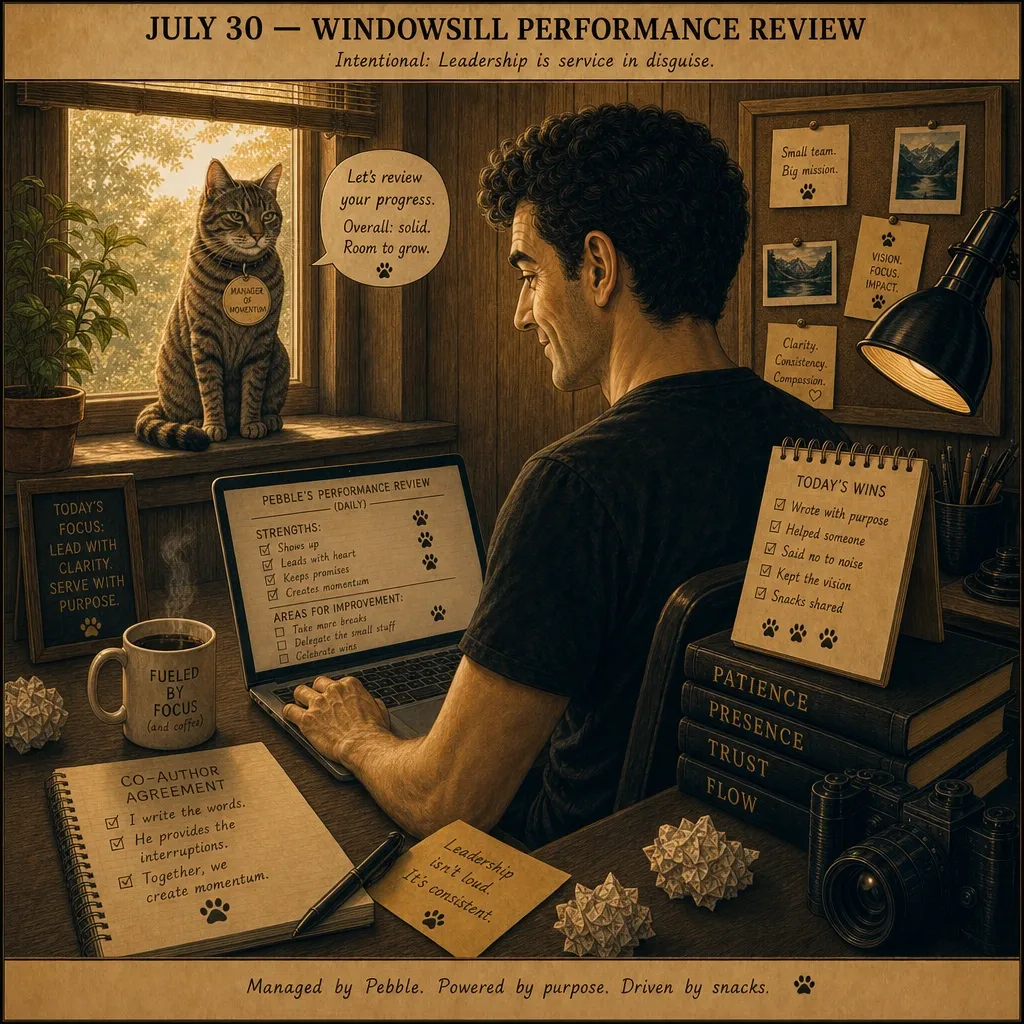
  • July 30, 2026 — The Performance Review

    Illustration for July 30 — Windowsill Performance Review showing a cat named Pebble supervising a writer at a desk

    Pebble called a meeting today.

    No notice, no agenda — just a long stare from the windowsill that said, we need to talk.

    The Evaluation

    He began by pacing across the desk, inspecting my progress. The notebook earned a pawprint of approval. The coffee mug, however, was deemed “underfilled.” He sat down, tail flicking, clearly preparing his feedback.

    Strengths

    • Consistent snack delivery.
    • Acceptable lap warmth.
    • Occasional bursts of creativity.

    Areas for Improvement

    • Excessive typing without pet breaks.
    • Insufficient acknowledgment of Pebble’s contributions.
    • Failure to meet cuddle quotas.

    The Outcome

    I received a conditional renewal — one treat per paragraph, effective immediately. Pebble stretched, yawned, and dismissed me with a slow blink that said, keep up the good work, human.

    Signed while accepting my cat’s terms of continued employment — Dean Burgess

  • Breaking Through Writer’s Block

    When the Words Won’t Come

    Every writer faces it sooner or later: the blank page, the stalled chapter, the sentence that refuses to land. Writer’s block can feel frustrating, personal, and even permanent in the moment. But more often than not, it’s a signal—not a verdict. It may be telling you that you’re tired, overthinking, afraid of getting it wrong, or simply in need of a new approach.

    The good news is that writer’s block does not mean you’ve lost your voice. It usually means you need to change the way you’re trying to reach it.

    Start Small

    One of the best ways to move through writer’s block is to lower the pressure. Instead of trying to write the perfect chapter, write one honest paragraph. Instead of outlining an entire book, jot down a single scene, a line of dialogue, or even a question about your character. Small steps create momentum, and momentum often breaks the silence.

    • Write for ten minutes without editing
    • Describe a scene using only sensory details
    • Let a character speak freely on the page
    • Rewrite the last sentence you liked and continue from there

    Get Out of Your Head

    Sometimes writer’s block grows when we judge every word too quickly. Drafting and editing are different skills, and trying to do both at once can stop a story before it starts. Give yourself permission to write badly for a while. A rough page can be revised. An empty page cannot.

    You do not have to write brilliantly to begin. You only have to begin.

    Change the Rhythm

    If your usual routine isn’t working, change it. Take your notebook outside. Switch from typing to handwriting. Write in the morning if you usually write at night. Read a few pages from a favorite author to remind yourself why stories matter to you. A small shift in rhythm can open a door that force never will.

    Trust the Return

    Writer’s block can feel like a wall, but often it’s just a pause. Stories have a way of returning when we stay open, curious, and willing to keep showing up. Be patient with yourself. Keep listening. Keep gathering details. Keep writing what you can, even if it’s only a few lines today.

    The words will come back. And when they do, they may carry you somewhere deeper and truer than before.

    Dean Burgess seated at a wooden table with a typewriter in a rustic cabin setting
  • Finding Your Voice on the Page

    Finding Your Voice on the Page

    Every writer begins with influence. We read stories that move us, admire authors who seem to say exactly what we wish we could say, and slowly begin to shape our own words in response. Over time, however, writing becomes more than imitation. It becomes discovery. Your voice is not something you invent overnight. It is something you uncover through patience, practice, and the courage to write honestly.

    Why Voice Matters

    A strong writing voice gives your work personality. It helps readers recognize your style, trust your perspective, and stay connected to the story or message you are sharing. Voice is present in word choice, rhythm, tone, and the way you see the world. Whether you write fiction, essays, or blog posts, your voice is what makes the work feel distinctly yours.

    Read Widely, Write Regularly

    One of the best ways to strengthen your voice is to read broadly while continuing to write consistently. Reading exposes you to different techniques, cadences, and structures. Writing regularly helps you sort through those influences and discover what feels natural. Not every sentence will shine, and not every draft will feel inspired, but each page teaches you something about how you communicate.

    Open notebook with writing tools on a rustic desk

    Let Honesty Lead

    Readers respond to authenticity. Even in fiction, emotional truth matters. Instead of trying to sound impressive, focus on sounding clear, grounded, and sincere. Write the scene as you feel it. Write the thought as you truly think it. The more honest your work becomes, the more naturally your voice will emerge.

    Your voice grows stronger every time you choose truth over performance.

    Practical Ways to Develop Voice

    • Keep a daily writing habit, even if it is brief.
    • Read your work aloud to hear its rhythm.
    • Notice the words and phrases you return to naturally.
    • Revise for clarity instead of complexity.
    • Write about subjects that genuinely matter to you.

    Keep Going

    Writing voice is shaped over time. It grows with every draft, every risk, and every honest attempt to say something meaningful. If you stay with the work, your voice will become clearer, steadier, and more confident. The page has a way of teaching us who we are, one sentence at a time.

  • July 30, 2026 — The Performance Review

    Pebble called a meeting today. No notice, no agenda — just a long stare from the windowsill that said, we need to talk.

    The Evaluation

    He began by pacing across the desk, inspecting my progress. The notebook earned a pawprint of approval. The coffee mug, however, was deemed “underfilled.” He sat down, tail flicking, clearly preparing his feedback.

    Strengths:

    • Consistent snack delivery.
    • Acceptable lap warmth.
    • Occasional bursts of creativity.

    Areas for Improvement:

    • Excessive typing without pet breaks.
    • Insufficient acknowledgment of Pebble’s contributions.
    • Failure to meet cuddle quotas.

    The Outcome

    I received a conditional renewal — one treat per paragraph, effective immediately. Pebble stretched, yawned, and dismissed me with a slow blink that said, keep up the good work, human.

    𝓢𝓲𝓰𝓷𝓮𝓭 𝔀𝓱𝓲𝓵𝓮 𝓪𝓬𝓬𝓮𝓹𝓽𝓲𝓷𝓰 𝓶𝔂 𝓬𝓪𝓽’𝓼 𝓽𝓮𝓻𝓶𝓼 𝓸𝓯 𝓬𝓸𝓷𝓽𝓲𝓷𝓾𝓮𝓭 𝓮𝓶𝓹𝓵𝓸𝔂𝓶𝓮𝓷𝓽  — 𝓓𝓮𝓪𝓷 𝓑𝓾𝓻𝓰𝓮𝓼𝓼

  • July 27, 2026 — The Power of Delegation

    Pebble has discovered the joy of management. He now oversees my writing schedule from the comfort of the windowsill, occasionally glancing at the clock as if to remind me that deadlines are a human construct.

    The New Workflow

    He’s delegated himself three key responsibilities:

    1. Quality Control: Pawprints on every draft.
    2. Time Management: Strategic naps to keep me humble.
    3. Creative Direction: Sudden bursts of inspiration, usually at 3 a.m.

    I’ve learned to adapt. When Pebble strolls across the keyboard, I take it as editorial input. When he knocks over a pen, I assume he’s emphasizing a point.

    The Lesson

    Delegation isn’t about control — it’s about trust. Pebble trusts me to keep the words flowing; I trust him to remind me that perfection is overrated. Together, we make progress — one pawprint at a time.

    He stretches, yawns, and flicks his tail toward the notebook, signaling that my break is officially over.

    𝓢𝓲𝓰𝓷𝓮𝓭 𝔀𝓱𝓲𝓵𝓮 𝓻𝓮𝓿𝓲𝓼𝓲𝓷𝓰 𝓾𝓷𝓭𝓮𝓻 𝓶𝔂 𝓬𝓪𝓽’𝓼 𝓶𝓪𝓷𝓪𝓰𝓮𝓶𝓮𝓷𝓽 𝓼𝓽𝔂𝓵𝓮 — 𝓓𝓮𝓪𝓷 𝓑𝓾𝓻𝓰𝓮𝓼𝓼