Category: On Writing…

Reflections on craft, creativity, and the quiet joys of a life spent writing.

  • July 24, 2026 — The Co‑Author Agreement

    Pebble has taken his promotion seriously. The “Chief Distraction Officer” sign now sits squarely beside my keyboard, and he’s begun attending every writing session like a seasoned editor — punctual, opinionated, and prone to naps during revisions.

    Terms of Collaboration

    We’ve reached an understanding:

    • I write the words.
    • He provides the interruptions.
    • Together, we create momentum.

    It’s not the partnership I expected, but it’s the one that works. When Pebble strolls across the desk, I don’t see chaos anymore — I see punctuation. A living comma reminding me to pause, breathe, and notice the story unfolding between sentences.

    Creative Balance

    Writing alone can make the world too quiet. Pebble’s presence keeps it human — or feline, at least. He’s proof that creativity thrives in companionship, even if that companion occasionally sits on your outline.

    He stretches, yawns, and flicks his tail toward the notebook, as if to say, your move.

    𝓢𝓲𝓰𝓷𝓮𝓭 𝔀𝓱𝓲𝓵𝓮 𝓷𝓮𝓰𝓸𝓽𝓲𝓪𝓽𝓲𝓷𝓰 𝓽𝓮𝓻𝓶𝓼 𝔀𝓲𝓽𝓱 𝓪 𝓬𝓪𝓽 𝔀𝓱𝓸 𝓷𝓮𝓿𝓮𝓻 𝓪𝓬𝓬𝓮𝓹𝓽𝓼 𝓽𝓱𝓮 𝓯𝓲𝓻𝓼𝓽 𝓸𝓯𝓯𝓮𝓻  — 𝓓𝓮𝓪𝓷 𝓑𝓾𝓻𝓰𝓮𝓼𝓼

  • July 15, 2026 — The Pawprint of Progress

    July 15, 2026 — The Pawprint of Progress

    The cat is awake again. The peace treaty lasted three days — a record. Now she’s back to supervising my work, one paw at a time.

    Creative Chaos Returns

    I was mid‑sentence when she decided the notebook needed editing. Her contribution? A perfect pawprint across the margin. I stared at it for a moment — then realized it was better than what I’d written.

    Maybe that’s the secret: let life leave its mark. The smudges, the spills, the interruptions — they’re proof that the story’s alive.

    Momentum, Revisited

    Progress isn’t always neat. Sometimes it’s coffee stains and cat hair. Sometimes it’s laughter breaking concentration. Sometimes it’s realizing that the mess is the muse.

    The cat looks pleased with herself. I look at the page again — pawprint, ink blot, half‑finished thought — and smile. It’s imperfect. It’s honest. It’s mine.

    𝓢𝓲𝓰𝓷𝓮𝓭 𝔀𝓱𝓲𝓵𝓮 𝓽𝓻𝔂𝓲𝓷𝓰 𝓽𝓸 𝓬𝓵𝓮𝓪𝓷 𝓾𝓹 𝓪 𝓬𝓻𝓮𝓪𝓽𝓲𝓿𝓮 𝓬𝓪𝓽-𝓪𝓼𝓽𝓻𝓸𝓹𝓱𝓮 — 𝓓𝓮𝓪𝓷 𝓑𝓾𝓻𝓰𝓮𝓼𝓼

  • Summer Reading List: Must-Read Books This Season

    The Allure of Summer Reading: Why We Turn the Page When the Sun Shines

    There’s something undeniably magical about cracking open a book as temperatures rise and daylight lingers—a tradition as timeless as beach days and backyard barbecues. Summer reading isn’t just a pastime; it’s a cultural ritual that invites us to slow down, escape, and explore new worlds from the comfort of a hammock, park bench, or shaded porch. With schedules often shifting during the warmer months, many seize the opportunity to dive into stories that inspire, challenge, or simply transport them beyond the everyday.

    This seasonal habit does more than provide entertainment—it sharpens focus, reduces stress, and fuels imagination, making it a go-to strategy for lifelong learners and casual readers alike. Whether you’re unwinding in Austin’s hill country, relaxing on a Charleston waterfront, or enjoying a quiet afternoon in suburban Chicago, the right book can elevate your summer experience.

    In the following sections, you’ll discover a thoughtfully curated list of must-read titles across genres, each chosen for their ability to captivate and resonate. From gripping fiction to insightful nonfiction, these books promise not only to entertain but to stay with you long after the season ends. Get ready to build your ideal summer reading list—one page at a time.

    7 Must-Read Books That Belong in Your Summer Rotation

    Summer is the perfect season to unwind with a great book—whether you’re lounging on a Georgia beach, relaxing in an Austin backyard, or sipping sweet tea on a Nashville porch. This curated list features seven standout titles that blend rich storytelling, emotional depth, and page-turning momentum, ideal for readers seeking both escape and insight.

    1. The Secret Keepers of Southern Fiction – A heartfelt exploration of family legacies and buried truths, this novel captures the quiet intensity of small-town life. Ideal for fans of layered relationships and Southern atmosphere.
    2. Coastal Vibes and Second Chances – Set against the breezy backdrop of the Carolina shore, this uplifting read combines humor and heartbreak, offering practical takeaways about reinvention and resilience.
    3. Where the Light Falls – A literary journey through art, loss, and rediscovery. This emotionally resonant pick encourages readers to reflect on how personal history shapes identity.
    4. The Plot Generator – A clever blend of mystery and creativity, perfect for aspiring writers. Follow a struggling author who uncovers a manuscript that may be more real than fiction.
    5. Sunset on the Sound – Dive into coastal Washington’s misty shores with this atmospheric novel about secrets, silence, and the stories we inherit. Sensory details make this ideal for immersive reading.
    6. The Last Bookstore in Manhattan – A tribute to literary culture and urban life, this narrative celebrates independent bookshops and the quiet magic of getting lost in a novel.
    7. How to Write a Memoir Without Crying – A refreshingly honest guide-meets-memoir hybrid that walks readers through transforming lived experience into powerful narrative—perfect for aspiring storytellers.

    Each of these books offers more than entertainment—they inspire reflection, spark creativity, and deepen your connection to place, voice, and personal storytelling. Keep one in your beach bag or nightstand and make this summer one of meaningful reading.

    How Summer Reading Transforms Your Mind and Mood

    As temperatures rise and daylight stretches longer, summer offers a perfect window to unwind with a great book—but the benefits go far beyond entertainment. Engaging in regular reading during these months can significantly enhance mental wellness, reduce stress, and support personal growth in meaningful ways. Whether you’re lounging on a beach in Savannah, relaxing on a shaded porch in Asheville, or taking a break between errands in Austin, carving out time for books creates space for mental restoration.

    Reading acts as a natural stress reliever by slowing heart rate and easing mental tension. Immersing yourself in a compelling narrative or insightful nonfiction work provides a healthy escape from daily pressures. This mental shift mimics mindfulness, grounding readers in the present moment—similar to meditation. Studies have shown that just 15–20 minutes of reading daily can decrease cortisol levels and improve emotional resilience over time.

    To maximize the wellness benefits:

    • Create a reading ritual – Pair reading with calming activities like morning coffee or evening tea
    • Choose mood-boosting genres – Opt for uplifting fiction, inspiring memoirs, or personal development books
    • Set boundaries – Designate screen-free reading zones to minimize digital distractions

    Beyond relaxation, summer reading fuels lifelong learning and empathy. Diverse stories expand your worldview, deepen emotional intelligence, and spark new ideas. With longer days and a slower pace, now is the ideal time to build a habit that nurtures both mind and spirit.

    Carve Out Time to Read: A Step-by-Step Guide to Building a Summer Reading Habit

    Summer offers longer days and relaxed schedules—making it the perfect season to dive into great books. But without a solid reading routine, even the best intentions can fall flat. Follow these actionable steps to integrate reading into your daily life, no matter how busy you are.

    1. Identify Your Ideal Reading Window
      Choose a consistent time each day—morning coffee on the Atlanta porch, a lunch break in Austin, or bedtime in Portland. Even 15–20 minutes creates momentum. Pair it with an existing habit to build automaticity.
    2. Designate a Cozy Reading Spot
      Create a distraction-free zone with good lighting and comfort. Whether it’s a backyard hammock or a quiet corner by the window, having a dedicated space signals your brain it’s reading time.
    3. Use the “Book-First” Rule
      Before reaching for your phone, open your book. Commit to reading just five pages—it often leads to more, and builds consistency over time.
    4. Leverage Audio During Activities
      Turn walks, commutes, or beach time into listening opportunities. Audio books let you enjoy literature while soaking up summer sun or exploring local parks.
    5. Set Weekly Reading Goals
      Aim for one chapter or 50 pages per week. Track progress in a notebook or app, and celebrate small wins to stay motivated.

    With intention, reading becomes not just a goal—but a joyful part of your summer rhythm.

    Summer Reading, Your Way: FAQs Answered

    Balancing a great summer reading list with a busy seasonal schedule can feel challenging, but smart planning makes it effortless. Whether you’re lounging on a Georgia lakefront or enjoying an evening breeze in Austin, keeping your reading goals on track is all about flexibility and personalization. Here are common questions readers face—and practical answers to help you enjoy the season’s best books without missing out on the sunshine.

    How do I choose what books to read this summer?
    Focus on variety and mood. Mix genres—try a thriller, a memoir, and a work of literary fiction—to match different summer moments. If you’re at the beach, go for page-turners. For quiet evenings, dive into character-driven stories. Consider themes like travel, self-discovery, or coastal settings to enhance the seasonal vibe.

    How many books should I aim to read?
    There’s no magic number—consistency matters more than quantity. Set a realistic pace, such as one book every two weeks. Use weekends or vacation days to catch up. Track progress with a reading journal or digital checklist to stay motivated.

    How can I read more when I’m traveling or outdoors?
    Opt for audiobooks during road trips or hikes. E-readers with glare-free screens are ideal for sunny days. Keep a paperback in your beach bag or backpack so you’re always ready to unwind with a chapter.

    What if I don’t finish a book?
    That’s okay. If a book isn’t engaging after 50 pages, move on. Your reading time should feel rewarding, not like a chore. Prioritize enjoyment over completion.

    How do I find books that reflect my interests or local culture?
    Look for novels set in the South, Pacific Northwest, or Southwest if you connect with regional storytelling. Authors often weave in local dialects, landscapes, and traditions that deepen the experience.

    Can I balance reading with family time or social events?
    Absolutely. Turn reading into a shared activity—start a mini book club with friends or read the same title as a family member. You can also wake up 20 minutes earlier or swap evening screen time for quiet reading.

    Where should I keep my book list organized?
    Use a notes app, reading tracker, or even a simple spreadsheet. Categorize by “To Read,” “Currently Reading,” and “Favorites” to stay focused and inspired all season long.

    Unwind, Read, and Recharge This Summer

    As the days grow longer and the pace of life slows, summer offers the perfect opportunity to reconnect with the simple pleasure of reading. Whether you’re lounging on a beach in Savannah, relaxing in a shaded backyard in Atlanta, or unwinding after a hike in the Blue Ridge Mountains, a great book can transform any moment into a retreat. The titles on this season’s reading list were chosen not only for their storytelling excellence but also for their ability to engage, inspire, and transport—key ingredients for a meaningful reading experience.

    Now that you’ve explored compelling genres and handpicked selections, the next step is to make space for them. Set a daily intention to read—even if it’s just 20 minutes with your morning coffee or before bed. Create a cozy, screen-free zone at home or bring a paperback on weekend outings. Consider starting a local or virtual book circle with friends in cities like Augusta or Athens to deepen your engagement and maintain momentum.

    Reading isn’t just a pastime—it’s a form of self-care that sharpens focus, reduces stress, and broadens perspective. By prioritizing books this summer, you invest in your mental well-being and personal growth. So grab a title that calls to you, find a comfortable spot, and let the joy of reading become your seasonal ritual. Your next great escape is just a page away.

  • July 27, 2026 — The Power of Delegation

    Pebble has discovered the joy of management. He now oversees my writing schedule from the comfort of the windowsill, occasionally glancing at the clock as if to remind me that deadlines are a human construct.

    The New Workflow

    He’s delegated himself three key responsibilities:

    1. Quality Control: Pawprints on every draft.
    2. Time Management: Strategic naps to keep me humble.
    3. Creative Direction: Sudden bursts of inspiration, usually at 3 a.m.

    I’ve learned to adapt. When Pebble strolls across the keyboard, I take it as editorial input. When he knocks over a pen, I assume he’s emphasizing a point.

    The Lesson

    Delegation isn’t about control — it’s about trust. Pebble trusts me to keep the words flowing; I trust him to remind me that perfection is overrated. Together, we make progress — one pawprint at a time.

    He stretches, yawns, and flicks his tail toward the notebook, signaling that my break is officially over.

    𝓢𝓲𝓰𝓷𝓮𝓭 𝔀𝓱𝓲𝓵𝓮 𝓻𝓮𝓿𝓲𝓼𝓲𝓷𝓰 𝓾𝓷𝓭𝓮𝓻 𝓶𝔂 𝓬𝓪𝓽’𝓼 𝓶𝓪𝓷𝓪𝓰𝓮𝓶𝓮𝓷𝓽 𝓼𝓽𝔂𝓵𝓮 — 𝓓𝓮𝓪𝓷 𝓑𝓾𝓻𝓰𝓮𝓼𝓼

  • July 21, 2026 — The Plot Thickens

    July 21, 2026 — The Plot Thickens

    Pebble has been suspiciously quiet today. Too quiet. He’s sitting on the windowsill, watching me write — the way a chess player studies an opponent who doesn’t know the game has already begun.

    The Setup

    I thought I’d outsmart him this time. Moved the notebook to the far side of the desk. Shifted the coffee mug out of reach. Even closed the window to avoid “bird‑related distractions.” He blinked once, slowly, as if to say, amateur.

    The Twist

    Halfway through a paragraph, I heard the soft thud of a paw landing exactly where I didn’t want it. Pebble had crossed the desk with stealth worthy of a spy. He sat squarely on the notebook — not for warmth, not for attention, but for dominance.

    I surrendered immediately. There’s no winning against a cat who understands narrative tension.

    The Moral

    Sometimes the muse doesn’t wait for permission. Sometimes he takes the stage himself. Pebble stretches, yawns, and flicks his tail — the unmistakable gesture of a co‑author claiming his credit.

    𝓢𝓲𝓰𝓷𝓮𝓭 𝔀𝓱𝓲𝓵𝓮 𝓻𝓮𝓪𝓵𝓲𝔃𝓲𝓷𝓰 𝓶𝔂 𝓬𝓪𝓽 𝓱𝓪𝓼 𝓫𝓮𝓽𝓽𝓮𝓻 𝓹𝓵𝓸𝓽 𝓼𝓽𝓻𝓾𝓬𝓽𝓾𝓻𝓮 𝓽𝓱𝓪𝓷 𝓘 𝓭𝓸 — 𝓓𝓮𝓪𝓷 𝓑𝓾𝓻𝓰𝓮𝓼𝓼

  • The Art of Reclaiming Focus

    The Art of Reclaiming Focus

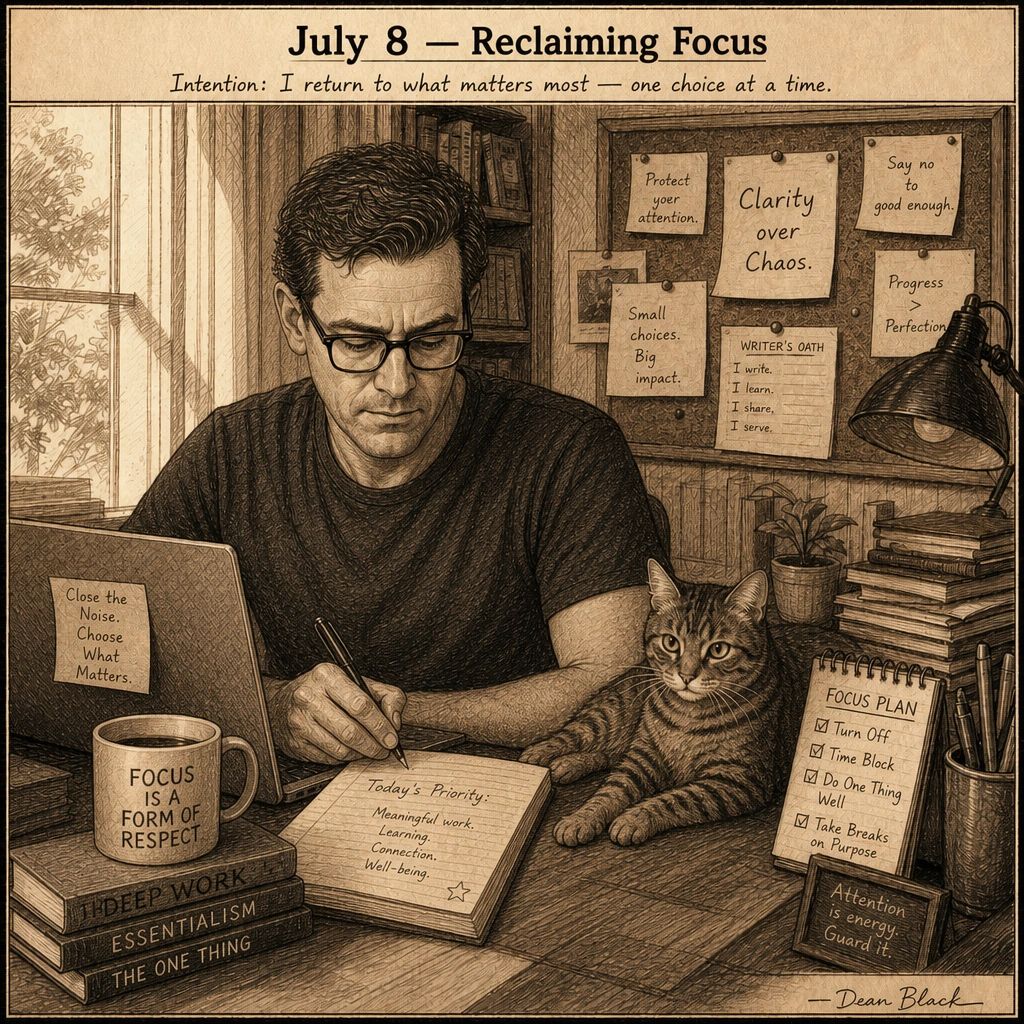
    July 8, 2026

    The cat is asleep. The coffee is warm. The keyboard is clear. And I’m trying to remember where I left off.

    Momentum doesn’t always return with fanfare. Sometimes it tiptoes back, cautious and quiet, waiting to see if you’ll notice. I do — and I welcome it like an old friend who forgives easily.

    The Quiet Between Interruptions

    There’s a strange peace after chaos. The pawprints have faded. The cursor blinks patiently. The story resumes.

    I’ve learned that focus isn’t about shutting the world out — it’s about letting it in, then choosing what to keep. The cat’s nap becomes my window of calm. The hum of the house becomes rhythm. The silence becomes space for words to land.

    The Writer’s Balancing Act

    Every creative day is a negotiation between distraction and discipline. The trick isn’t to win — it’s to dance. To let the interruptions remind you that life is happening, even while you write about it.

    The cat stirs, stretches, and glances at me as if to say, “Don’t get too comfortable.” I smile, sip my coffee, and type faster.

    The Lesson

    Focus isn’t fragile. It’s flexible. It bends around the noise, the naps, the unexpected. It waits for you to return — and when you do, it’s still there, ready to begin again.

    𝓢𝓲𝓰𝓷𝓮𝓭 𝔀𝓱𝓲𝓵𝓮 𝓽𝓻𝔂𝓲𝓷𝓰 𝓷𝓸𝓽 𝓽𝓸 𝓶𝓪𝓴𝓮 𝓮𝔂𝓮 𝓬𝓸𝓷𝓽𝓪𝓬𝓽 𝔀𝓲𝓽𝓱 𝓪 𝓬𝓪𝓽 𝓽𝓱𝓪𝓽’𝓼 𝓹𝓵𝓸𝓽𝓽𝓲𝓷𝓰 𝓱𝓮𝓻 𝓷𝓮𝔁𝓽 𝓶𝓸𝓿𝓮 — 𝓓𝓮𝓪𝓷 𝓑𝓾𝓻𝓰𝓮𝓼𝓼

  • Momentum, Interrupted

    Momentum, Interrupted

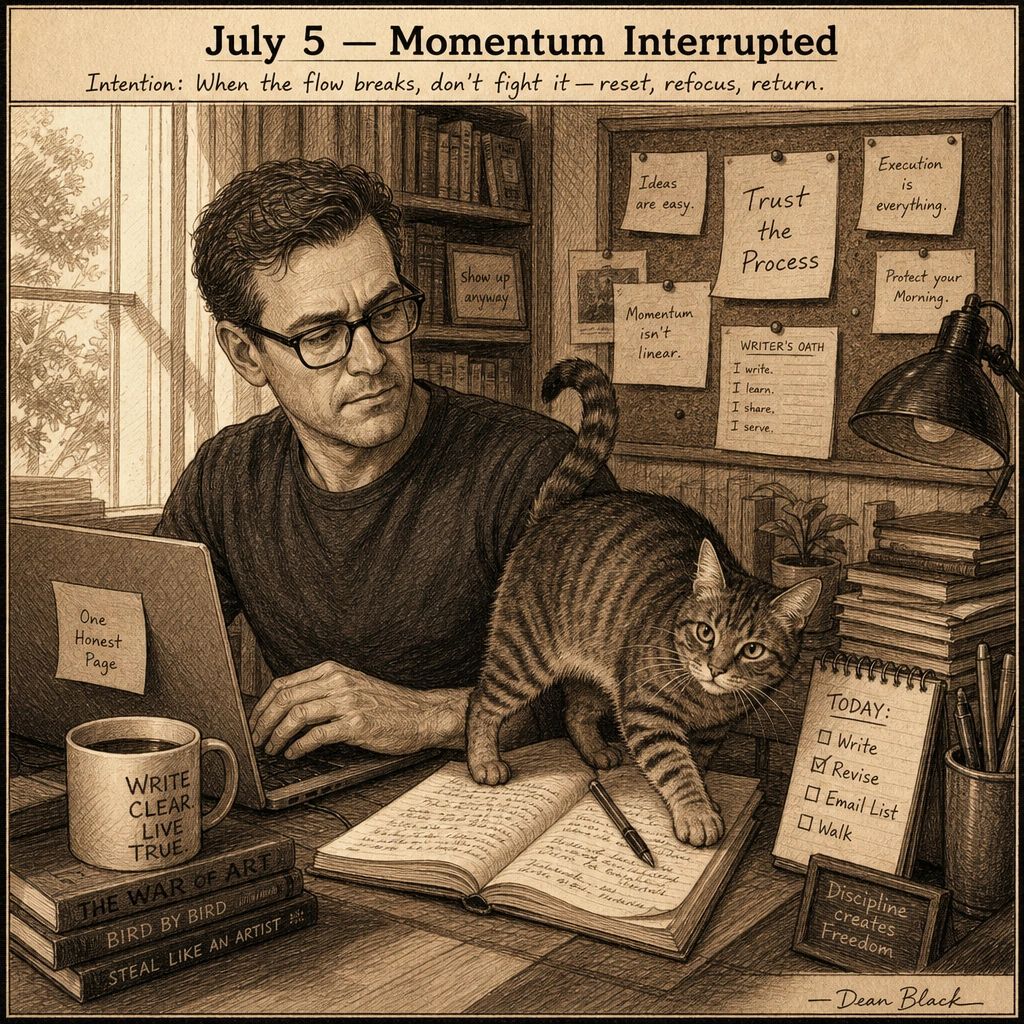
    July 5, 2026

    I was in the zone. Words flowing, coffee cooling, cat watching. Then — paw on the keyboard. Momentum: interrupted.

    It’s funny how creativity works. You chase it, catch it, cradle it — and then something small reminds you that control is mostly an illusion. The cat doesn’t care about my rhythm. She has her own.

    The Dance of Distraction

    Every writer knows this moment: the perfect sentence forming, the idea blooming — and then, chaos. A crash. A meow. A tail across the screen.

    I used to fight it. Now I laugh. Because sometimes, the interruption is the inspiration.

    The cat’s paw hits “Enter.” A new paragraph begins. And suddenly, the story shifts in a way I hadn’t planned — but maybe needed.

    The Lesson in Momentum

    Momentum isn’t about speed. It’s about return. The ability to pick up the thread again after life (or fur) gets in the way.

    I’ve learned to write through the noise — the purrs, the clatter, the occasional pawprint on the space bar. Because momentum isn’t fragile. It’s resilient. It bends, pauses, and waits for you to come back.

    The Humor of It All

    The cat sprawls across the keyboard, claiming victory. I sip my coffee, claiming patience. We coexist — two creatures chasing comfort in the same patch of sunlight.

    And somehow, the words keep coming. Not perfectly. Not uninterrupted. But persistently.

    𝓢𝓲𝓰𝓷𝓮𝓭 𝔀𝓲𝓽𝓱 𝓪 𝓹𝓪𝔀 𝓸𝓷 𝓶𝔂 𝓹𝓻𝓸𝓰𝓻𝓮𝓼𝓼 𝓪𝓷𝓭 𝓪 𝓼𝓶𝓲𝓵𝓮 𝓽𝓱𝓪𝓽 𝓼𝓽𝓪𝔂𝓼 𝓪𝓷𝔀𝓪𝔂 — 𝓓𝓮𝓪𝓷 𝓑𝓾𝓻𝓰𝓮𝓼𝓼

  • July 4, 2026 — Independence (and Other Illusions)

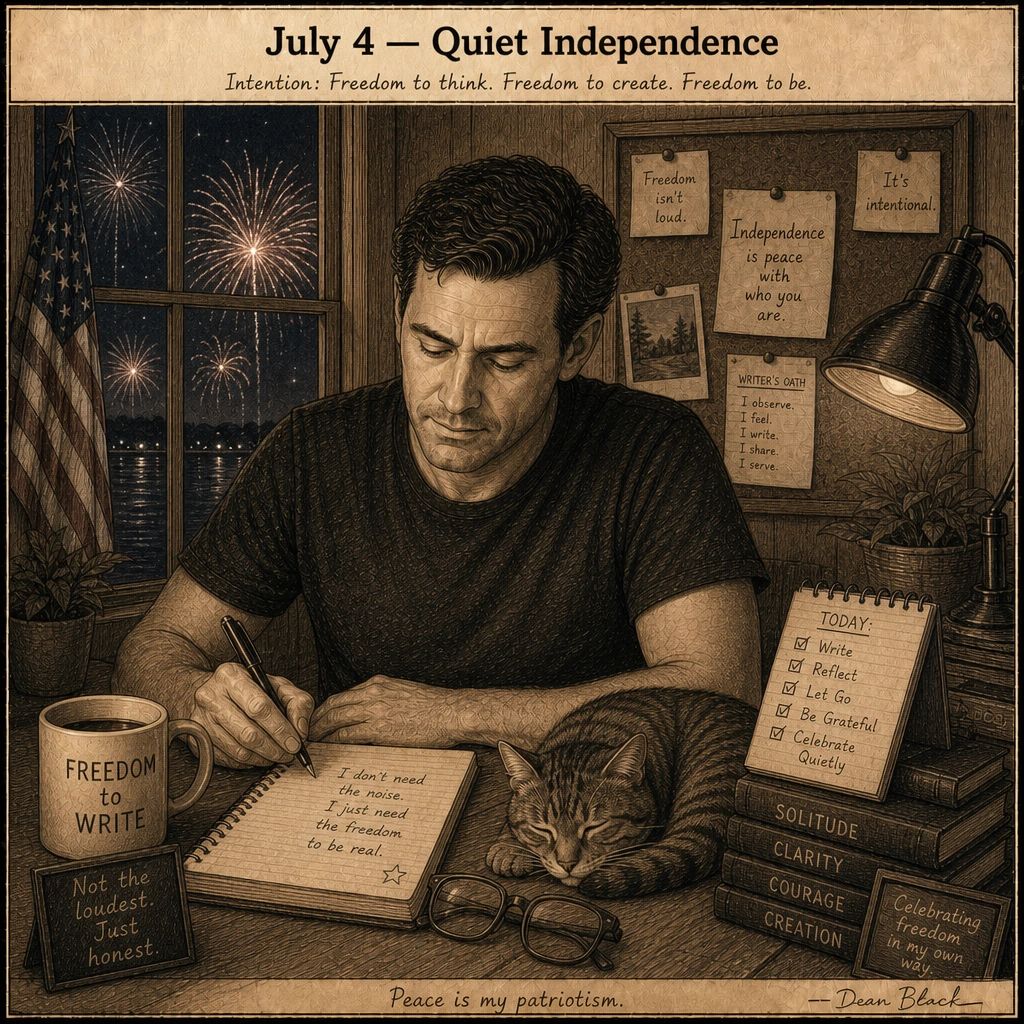
    July 4, 2026 — Independence (and Other Illusions)

    The fireworks are starting outside, but inside, I’m celebrating a quieter kind of independence — the kind that comes from finishing a sentence without interruption. The cat, mercifully, is asleep. The coffee, miraculously, is still warm. And for a moment, I’m free.

    Freedom, Reimagined

    Writers talk a lot about freedom — creative freedom, time freedom, freedom from distraction. But the truth is, most of us are just trying to escape our own overthinking. We chase independence from doubt, from deadlines, from the blinking cursor that seems to mock us.

    Today, I’m declaring independence from perfection. From the idea that every word must sparkle. From the notion that momentum can’t be messy.

    The Cat’s Perspective

    She stirs, stretches, and glances at me — unimpressed. Her version of freedom is simpler: nap when you want, eat when you please, ignore fireworks entirely. Maybe she’s right. Maybe independence isn’t about control — it’s about comfort.

    The Writer’s Fireworks

    Outside, the sky explodes in color. Inside, my thoughts do the same. Every spark reminds me that creativity is its own celebration — loud, unpredictable, and fleeting. You catch what you can before it fades.

    𝓢𝓲𝓰𝓷𝓮𝓭 𝔀𝓱𝓲𝓵𝓮 𝓽𝓻𝔂𝓲𝓷𝓰 𝓷𝓸𝓽 𝓽𝓸 𝓼𝓽𝓪𝓻𝓽𝓵𝓮 𝓪 𝓬𝓪𝓽 𝓭𝓾𝓻𝓲𝓷𝓰 𝓽𝓱𝓮 𝓷𝓪𝓽𝓲𝓸𝓷𝓪𝓵 𝓪𝓷𝓽𝓱𝓮𝓶 — 𝓓𝓮𝓪𝓷 𝓑𝓾𝓻𝓰𝓮𝓼𝓼

  • The Return to the Desk

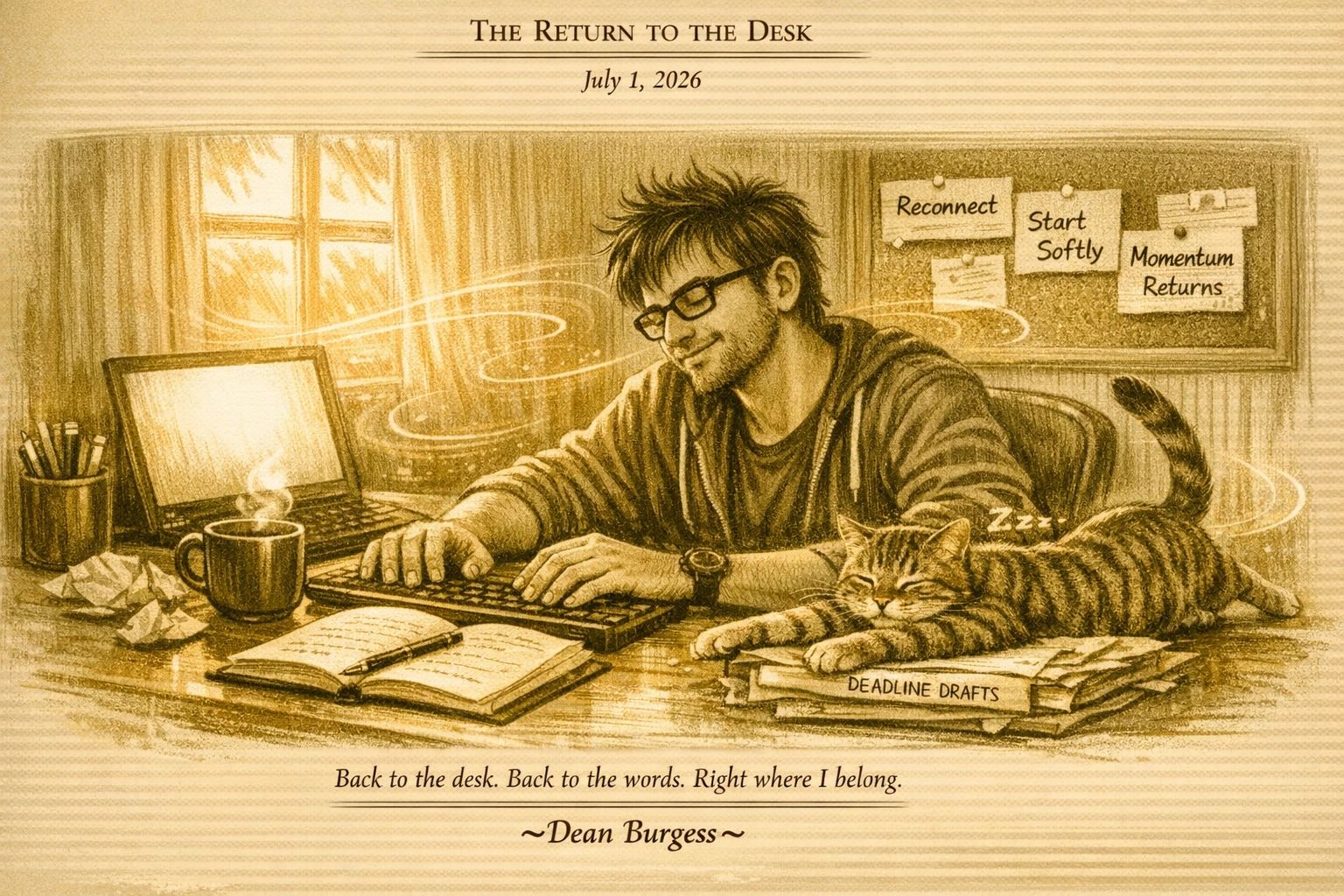
    July 1, 2026

    The coffee is fresh. The cat is awake. The notebook is open. And I’m back.

    There’s a quiet joy in returning — not because everything is perfect, but because it’s familiar. The desk still creaks. The pen still scratches. The words still hesitate before they arrive. But they do arrive.

    The Gentle Restart

    After rest, the world feels softer. Deadlines look less like cliffs and more like invitations. The cat stretches, yawns, and reclaims her spot beside the keyboard. I smile and start again.

    Momentum doesn’t roar back; it hums. It builds slowly, like sunlight through the blinds. And that’s enough.

    The Rhythm of Return

    Every creative rhythm has its pauses — the inhale before the next sentence, the silence before the next idea. I used to fight those pauses. Now I listen to them.

    The cat watches me type, tail flicking in approval (or judgment — it’s hard to tell). The words stumble, then find their footing. The story resumes, not where it left off, but where it needed to.

    The Lesson

    Coming back isn’t about catching up. It’s about reconnecting. With the work. With the self. With the small, steady heartbeat of creativity that never really stopped — it just waited.

    So I write. Not perfectly. But presently. And that’s enough for today.

    𝓢𝓲𝓰𝓷𝓮𝓭 𝔀𝓲𝓽𝓱 𝓪 𝓯𝓻𝓮𝓼𝓱 𝓬𝓾𝓹 𝓸𝓯 𝓬𝓸𝓯𝓯𝓮𝓮 𝓪𝓷𝓭 𝓪 𝓬𝓪𝓽 𝓽𝓱𝓪𝓽 𝓷𝓮𝓿𝓮𝓻 𝓵𝓮𝓯𝓽 — 𝓓𝓮𝓪𝓷 𝓑𝓾𝓻𝓰𝓮𝓼𝓼

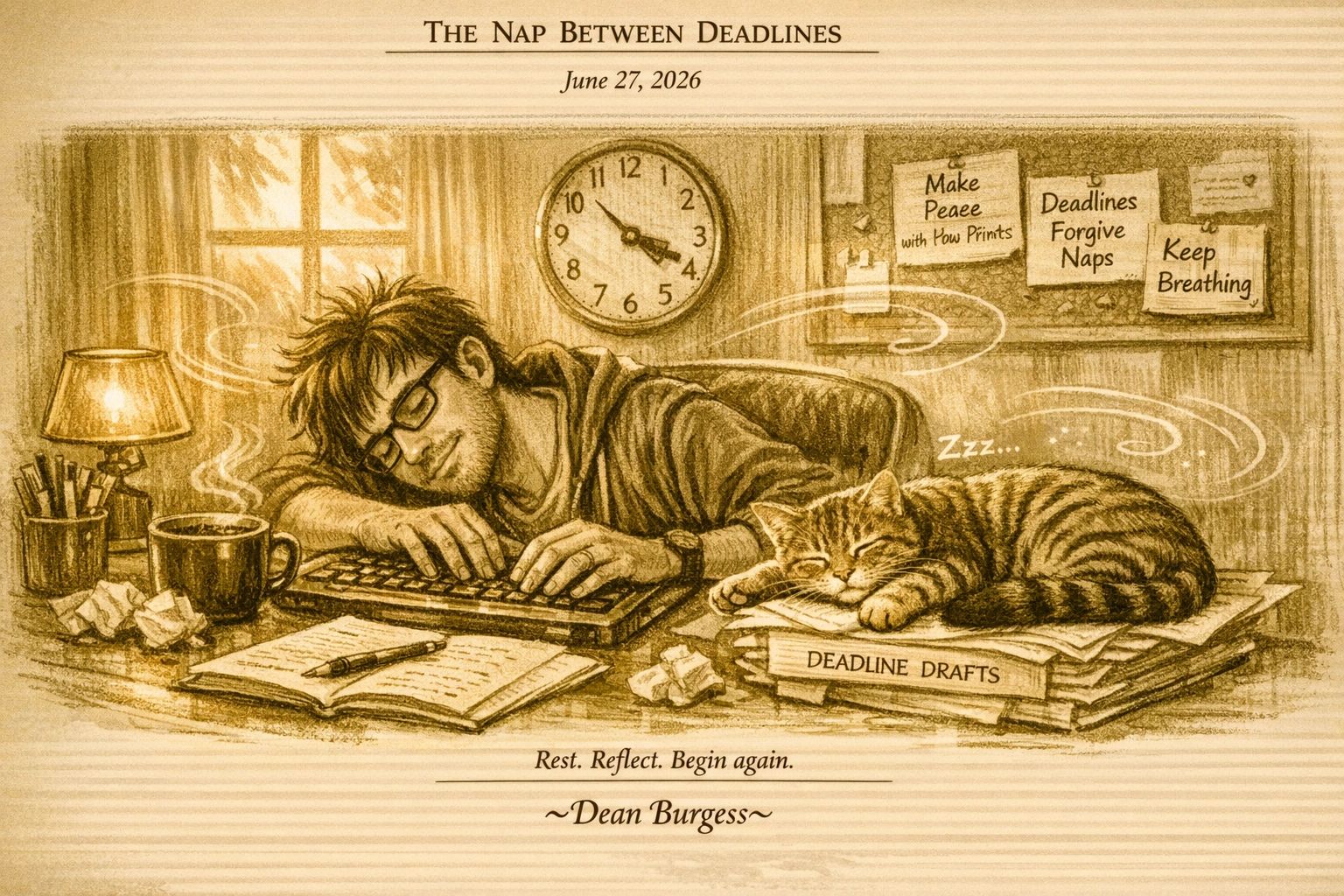
  • The Nap Between Deadlines

    June 27, 2026

    The cat fell asleep on my notes. I took that as permission.

    I stretched, stared at the blinking cursor, and realized I’d been chasing the finish line so hard I’d forgotten to enjoy the race. So I closed the notebook. And joined her.

    The Pause That Saves You

    There’s a kind of wisdom in stopping mid‑sentence. It’s not laziness — it’s preservation. The brain needs time to wander, to refill, to remember why it started. The cat knows this instinctively. She naps like it’s her job. Maybe it is.

    When I wake, the words are waiting — not perfect, but patient. They’ve been stretching too.

    The Dance of Deadlines

    Deadlines are funny things. They pretend to be immovable, but they bend for honesty. They soften for truth. They forgive naps.

    I’ve missed a few in my time. But I’ve also learned that rushing rarely makes the work better — it just makes it louder. And sometimes, the quiet is what the story needed all along.

    The Lesson

    Rest isn’t the opposite of progress. It’s the rhythm underneath it. The inhale before the next sentence. The cat’s purr between paragraphs.

    So I write. Then I rest. Then I write again. And somehow, the deadlines keep forgiving me.

    𝓢𝓲𝓰𝓷𝓮𝓭 𝔀𝓲𝓽𝓱 𝓪 𝓷𝓪𝓹 𝓲𝓷 𝓹𝓻𝓸𝓰𝓻𝓮𝓼𝓼 𝓪𝓷𝓭 𝓪 𝓬𝓪𝓽 𝓽𝓱𝓪𝓽 𝓷𝓮𝓿𝓮𝓻 𝓶𝓲𝓼𝓼𝓮𝓼 𝓱𝓮𝓻𝓼 — 𝓓𝓮𝓪𝓷 𝓑𝓾𝓻𝓰𝓮𝓼𝓼