Category: On Writing…

Reflections on craft, creativity, and the quiet joys of a life spent writing.

  • I Finished Something and Immediately Forgot How

    I Finished Something and Immediately Forgot How

    May 27, 2026

    I did it.
    I finished the chapter.
    I saved the file.
    I sat back and smiled.

    Then I tried to start the next one.

    The Vanishing Process

    I opened a new document.
    I stared at it.
    I forgot everything.

    How do words work?
    What is a sentence?
    Why is the cat licking the keyboard?

    The Mystery of Momentum

    Finishing something feels like magic.
    Starting something feels like math.
    And I was never good at math.

    The Writer’s Amnesia

    I know I’ve done this before.
    I have proof.
    There’s a finished chapter right there.

    But the method?
    The mindset?
    The miracle?

    Gone.

    Still Worth It

    I’ll figure it out again.
    I always do.
    Even if I have to trick myself with snacks and playlists and fake deadlines.

    Because finishing something — even once — means I can do it again.

    Eventually.

    𝓢𝓲𝓰𝓷𝓮𝓭 𝔀𝓱𝓲𝓵𝓮 𝓼𝓽𝓪𝓻𝓲𝓷𝓰 𝓪𝓽 𝓪 𝓫𝓵𝓲𝓷𝓴𝓲𝓷𝓰 𝓬𝓾𝓻𝓼𝓸𝓻 𝓪𝓷𝓭 𝓪 𝓬𝓪𝓽 𝓽𝓱𝓪𝓽 𝓭𝓸𝓮𝓼𝓷’𝓽 𝓼𝓮𝓮𝓶 𝔀𝓸𝓻𝓻𝓲𝓮𝓭 — 𝓓𝓮𝓪𝓷 𝓑𝓾𝓻𝓰𝓮𝓼𝓼

  • Writing Tips for Aspiring Authors

    Write Every Day, Grow Your Voice: The Author’s Real Secret Weapon

    Many aspiring authors wait for inspiration to strike—waiting for the perfect moment, mood, or muse. But the truth is, consistent writing isn’t just a habit; it’s the foundation of growth, clarity, and creative resilience. Authors who commit to regular writing sessions, even for just 15–20 minutes a day, report stronger narrative instincts, improved voice, and greater confidence in their work—no matter their genre or experience level.

    Finding inspiration doesn’t always mean waiting for a lightning bolt of genius. It’s often found in routine: a quiet morning in Austin with coffee and a notebook, a late-night session in a home office in Portland, or jotting ideas during a commute through Chicago. Inspiration thrives when you show up consistently, even when motivation lags. By building a sustainable writing rhythm, you train your brain to enter creative flow more easily and spot story potential in everyday moments.

    To stay consistent, try these proven strategies:

    • Set a daily writing goal—even 200 words counts.
    • Create a dedicated writing space that signals focus and creativity.
    • Use prompts or freewriting when stuck to keep momentum.
    • Track progress weekly to stay accountable and celebrate small wins.

    When you make writing a non-negotiable part of your routine, ideas multiply, characters deepen, and stories evolve—naturally. In the next sections, you’ll learn how to overcome blocks, develop rich narratives, and turn daily practice into publishable work.

    Build Your Writing Foundation with Consistent Practice

    Improving your writing skills isn’t about sudden inspiration—it’s built through intentional, repeatable habits that compound over time. Whether you’re drafting your first novel or polishing short stories for publication, daily practice paired with strategic reading is the cornerstone of growth. Follow these steps to create a sustainable routine that sharpens your voice, strengthens your technique, and keeps you moving toward your creative goals.

    1. Commit to Daily Writing (Even if It’s Brief)
    Set a non-negotiable time each day to write—15 to 30 minutes is enough. Focus on consistency, not volume. Use prompts, free-writing, or scene revisions to get started. The goal is to train your brain to generate ideas under routine conditions, just like any other craft.

    2. Read with a Writer’s Eye
    Don’t just consume books—dissect them. When reading fiction or memoirs, highlight passages that stand out and ask: Why does this sentence work? How is tension built here? What makes this character feel real? Take notes on structure, pacing, and dialogue patterns you can adapt.

    3. Analyze Genre-Specific Techniques
    Study successful works in your chosen genre—Southern literary fiction, Pacific Northwest thrillers, or Midwest-set historical novels—and identify common stylistic choices. This regional awareness helps your writing resonate with local audiences while meeting genre expectations.

    4. Revise with Purpose
    After your draft, step away for 24–48 hours, then return with fresh eyes. Focus each revision on one element: clarity, rhythm, or emotional impact. Tight writing emerges through deliberate editing, not initial inspiration.

    5. Join a Peer Feedback Loop
    Exchange work with other writers in your community—online groups, local meetups, or libraries in cities like Nashville, Portland, or Atlanta. Constructive critiques expose blind spots and introduce new perspectives.

    By treating writing as a practiced discipline, not a fleeting muse, you’ll steadily build the skills that turn aspiring authors into published voices.

    Power Up Your Writing: The 5 Essential Tools Every Aspiring Author Needs

    Every successful writer, from debut novelists in Portland to bestselling memoirists in Nashville, relies on more than just inspiration—crafting compelling stories demands the right toolkit. Whether you’re drafting your first chapter or polishing a final manuscript, leveraging these five essential tools can streamline your process, sharpen your voice, and keep you consistently productive.

    1. Distraction-Free Writing Software
      Choose a writing platform designed to eliminate clutter and support deep focus. Look for features like dark mode, automatic saving, and seamless cross-device sync. These tools help maintain momentum, especially during daily writing sprints in your home office or favorite Asheville café.
    2. Grammar and Style Enhancer
      A real-time editing assistant helps catch subtle errors in grammar, punctuation, and tone. Focus on refining sentence rhythm and clarity without interrupting your creative flow—ideal for authors balancing emotional storytelling with technical precision.
    3. Digital Thesaurus and Word Bank
      Break free from repetitive phrasing by using an integrated vocabulary builder. Customize word lists by theme, character, or setting—perfect when crafting scenes rooted in Southern traditions or military remembrance.
    4. Plot and Outline Organizer
      Keep complex story arcs on track with a visual plotting tool. Organize chapters, track character development, and map emotional beats to ensure narrative consistency from draft to final edit.
    5. Cloud Backup and Version Tracker
      Never lose progress due to technical failures. Automatic cloud saving ensures your work is protected, while version history lets you revisit earlier drafts—essential for long-term projects evolving over months or years.

    Equip your writing routine with these foundational resources and write with greater confidence, clarity, and control.

    Break Through the Blank Page: Conquering Writer’s Block with Proven Tactics

    Every writer, from novices typing their first short story in a café in Nashville to seasoned authors working on a follow-up novel in Portland or Atlanta, faces the same silent adversary: writer’s block. It’s not a sign of failure—it’s a natural part of the creative cycle. The key to moving forward isn’t waiting for inspiration but implementing actionable strategies that keep momentum alive.

    Start by redefining your writing environment. A shift in setting—working from a quiet library in Savannah, a bustling co-working space in Asheville, or even switching rooms in your home—can signal your brain it’s time to create. Pair this with structured writing sprints: set a timer for 15–20 minutes and write without stopping, editing, or overthinking. Quantity fuels quality, and even raw, messy text can be revised later.

    Another powerful method is freewriting with prompts. Instead of aiming for perfection, ask yourself: What if my character made the wrong choice today? or What’s hidden in the attic of this house in Marietta? These questions bypass the inner critic and spark narrative possibilities.

    Finally, build a ritual around your process. Light a candle, play ambient sounds, or sip the same drink each time you write. Over time, these cues train your mind to slip into creative flow more easily—turning resistance into routine.

    Your Writing Process & Publishing Questions—Answered

    How long does it take to write a book?
    Timelines vary based on genre, length, and writing schedule. Most authors complete a first draft in 3 to 9 months with consistent effort. Writers in Nashville or Portland who dedicate focused morning hours often progress faster. The key is setting word count goals—like 500–1,000 words daily—and sticking to them, even if editing feels premature.

    Do I need an agent to get published?
    Not always. Traditional publishers in New York often require agents, especially for competitive genres. However, regional presses and independent publishers in cities like Atlanta or Asheville may accept direct submissions. For genres like memoir or local interest, self-publishing through digital platforms gives you full control and faster time-to-market.

    How do I know if my manuscript is ready?
    A finished draft isn’t the same as a ready one. Ask: Have I revised for plot holes, character consistency, and pacing? Then seek feedback from beta readers or critique groups in your area. A manuscript is typically ready after 2–3 rounds of substantial revisions and a final proofread.

    What’s the difference between editing and proofreading?
    Developmental editing addresses structure, narrative flow, and character arcs. Copyediting refines sentence clarity, tone, and consistency. Proofreading is the last pass, catching typos and formatting issues. Don’t skip any step—each ensures your voice remains strong while maintaining professionalism.

    How do I build an author platform before publishing?
    Start small: share writing tips on your website, post updates on social media, or speak at local libraries in Savannah or Marietta. An email list built around free writing resources helps connect with readers early. Your platform isn’t about size—it’s about engagement with a specific audience.

    Is self-publishing seen as less credible?
    Not anymore. With polished covers, professional editing, and strong distribution, self-published works now compete alongside traditional titles. Readers in Georgia and beyond judge books by quality, not publishing path. Focus on delivering value, and credibility follows.

    Keep Writing: Your Words Matter More Than You Know

    As we wrap up this journey through the craft of meaningful storytelling, especially around poignant themes like Memorial Day, remember this: every word you write carries weight. You’ve learned how to move beyond clichés, tap into emotional authenticity, and ground your narratives in real human experiences—whether you’re crafting fiction in a quiet corner of Asheville or drafting memoirs inspired by family history in Savannah. These skills aren’t just about improving technique; they’re about deepening connection, honoring truth, and serving your readers with stories that resonate long after the final sentence.

    Now it’s time to take action. Revisit your current project with fresh eyes—can you deepen a character’s motivation with a moment of quiet reflection? Can a simple object, like a weathered letter or folded flag, carry emotional weight? Challenge yourself to write one scene this week that centers on remembrance, not spectacle. Share it with a trusted reader. Revise. Repeat.

    The most enduring stories aren’t written in a single burst of inspiration—they’re built through consistent effort, courage, and compassion. No matter where you’re writing from—rural Georgia, a Portland loft, or suburban Nashville—you have a unique voice and perspective the literary world needs.

    So keep showing up. Keep writing with purpose. Your story matters. And we’re here to read it.

  • Honoring Memorial Day: Stories & Writing Inspiration

    More Than Just a Long Weekend: Why Memorial Day Matters for Writers

    Memorial Day isn’t just the unofficial start of summer or a chance for backyard barbecues in cities like Atlanta, Nashville, or Portland. For writers, it’s a profound opportunity to pause, reflect, and reconnect with deeper narratives—those rooted in sacrifice, service, and the human experience. While many observe this federal holiday with parades and moments of silence, storytellers can use it as a powerful wellspring of inspiration.

    This day honors the men and women who gave their lives in military service—a solemn reminder of courage, loss, and collective memory. For authors crafting fiction, memoirs, or personal essays, tapping into these themes can elevate your work with authenticity and emotional weight. Whether you’re writing in a quiet study in Asheville, a downtown Atlanta loft, or a coastal home in Oregon, the resonance of Memorial Day offers rich ground for exploring character depth, moral dilemmas, and transformative arcs.

    In the following sections, you’ll learn how to thoughtfully incorporate themes of remembrance into your writing, interview veterans or family members with respect and purpose, and turn patriotism into compelling, nuanced storytelling—without cliché. You’ll also discover practical ways to observe the day as a creative practice, helping you generate meaningful content that honors both the fallen and the craft of writing itself.

    Turn Tribute into Text: Meaningful Ways Writers Can Honor Memorial Day

    Memorial Day isn’t just a long weekend—it’s a powerful moment for reflection, remembrance, and storytelling rooted in purpose. For writers, this observance offers a profound opportunity to honor sacrifice through the written word, blending narrative craft with emotional depth. Whether you’re drafting fiction, memoir, or creative nonfiction, your work can serve as a lasting tribute to those who served.

    Begin by amplifying authentic voices. Research personal accounts from veterans or their families in your community—perhaps from local Georgia VFW halls or Asheville historical societies—and integrate those perspectives into your characters’ motivations and dialogue. This grounding in real experience adds credibility and emotional resonance.

    Next, consider structuring your narrative around acts of remembrance. A character visiting a gravesite, unfolding a flag, or hearing a bugle’s echo can become pivotal moments that convey legacy without sermonizing. Use sensory details: the chill of morning air at a cemetery in Savannah, the crisp fold of uniform fabric, the silence after “Taps.”

    You can also explore intergenerational storytelling—how memory passes from one family member to the next. A child learning about a great-uncle’s service becomes a vehicle for both history and heart.

    Finally, support local observances by writing short pieces for community newsletters or reading original work at Memorial Day events. Your words don’t have to be grand—just sincere. When story meets service, literature becomes legacy.

    Unlock Powerful Themes in Memorial Day Stories

    Memorial Day offers rich emotional terrain for compelling narratives, but tapping into its depth requires more than surface-level patriotism. To craft stories that resonate, follow this step-by-step approach to uncover meaningful themes that honor the day’s true spirit.

    1. Shift Focus from Celebration to Reflection
    Start by reframing Memorial Day as a time of honoring sacrifice, not just a long weekend. Ask: Who is being remembered? What did they give up? This mindset uncovers themes like duty, loss, and legacy—foundations for authentic storytelling.

    2. Explore Universal Human Experiences
    Connect military service to broader emotions: grief, courage, homecoming, and remembrance. Frame stories around families in Georgia towns lighting candles or veterans quietly sharing stories on porches in Asheville. These moments ground grand ideas in relatable settings.

    3. Highlight Local Traditions and Voices
    Incorporate regional customs—parades in small Southern towns, community memorials, or flags placed on graves at dawn. These details add geographic relevance and help your content connect with local audiences searching for meaningful observances.

    4. Use Sensory Details to Deepen Impact
    Describe the sound of Taps echoing at dusk, the weight of a folded flag, or the scent of fresh-cut grass at a cemetery. Sensory writing builds empathy and transforms abstract themes into lived experiences.

    5. Challenge Clichés with Authentic Perspectives
    Avoid generic hero tropes. Instead, explore complex emotions—guilt, pride, confusion, resilience. Let characters wrestle with memory, not just revere it.

    By anchoring your narrative in emotional truth and regional nuance, you create stories that honor the past while speaking powerfully to readers today.

    Top 5 Writing Prompts Inspired by Memorial Day and Remembrance

    Memorial Day isn’t just a long weekend—it’s a powerful touchpoint for reflection, storytelling, and emotional depth in your writing. For authors crafting narratives in genres from historical fiction to contemporary memoir, this observance opens doors to explore courage, sacrifice, legacy, and personal connection to history. If you’re searching for fresh, resonant ideas that align with both seasonal themes and timeless human experiences, these five writing prompts will help you dig deeper while staying relevant.

    1. “The Letter That Never Reached Home”
      Imagine a soldier writes a final letter during a quiet moment before a mission, intending it for a loved one—but it’s never sent. Years later, a descendant discovers it in an attic in Marietta or a vintage trunk in Savannah. Write the letter, then tell the story of how it surfaces and who reads it. This prompt blends historical empathy with present-day emotional discovery.
    2. “One Day in May”
      Set an entire story on a single Memorial Day in a small Southern town. Follow multiple characters—veterans, grieving families, young students placing flags—who intersect during a local ceremony. Focus on sensory details: the scent of fresh-cut grass, the echo of Taps, the weight of silence after a name is called.
    3. “The Memory Keeper”
      Create a character whose only role in their community is to remember the fallen—reciting names at events, maintaining a digital archive, or writing short biographies. Explore the emotional toll and honor of this duty. What happens when they start forgetting?
    4. “Objects Left Behind”
      Write a scene centered around a personal item donated to a Memorial Day exhibit: dog tags, a folded uniform, a photo with faded ink. Use close description to anchor the story in tangible grief and love.
    5. “What the Flag Stands For—To Me”
      Challenge yourself to write from a first-person perspective answering this question honestly, not sentimentally. Is it pride? confusion? inherited tradition? This reflective exercise sharpens voice and deepens character authenticity in any narrative.

    Blending Patriotism and Personal Voice: Your Writing Questions Answered

    How can I honor Memorial Day in my writing without sounding cliché?
    Avoid overused phrases like “freedom isn’t free” by focusing on specific, human moments—like a folded flag, a quiet moment at a local cemetery in Atlanta, or a veteran’s hands holding a coffee cup. Ground patriotism in sensory details and personal reflection, not grand statements.

    Is it okay to share my personal beliefs alongside patriotic themes?
    Yes—authenticity resonates. Readers connect with honesty, not perfection. If you’re wrestling with the meaning of sacrifice or service, say so. Your internal dialogue can mirror broader cultural conversations happening in communities across Georgia and beyond.

    How do I write about loss respectfully without being overly sentimental?
    Focus on action and memory rather than emotion alone. Describe a worn dog tag, a routine interrupted, or a tradition carried forward by family in Asheville or Savannah. Let the details evoke emotion instead of telling readers how to feel.

    Can I use patriotic symbols like the flag or anthem in my stories?
    Absolutely, but use them with intention. A flag isn’t just decoration—it can symbolize conflict, pride, grief, or confusion depending on context. Show how a character interacts with it, not just that it’s there.

    How do I balance national themes with intimate storytelling?
    Zoom in to go big. A child tying a ribbon on a memorial fence in Marietta carries more weight than a vague tribute. Personal rituals reflect national values without needing to spell them out.

    What if my audience has different views on patriotism?
    Acknowledge complexity. You don’t need to take sides—explore questions instead. Writing that invites reflection, not just agreement, builds deeper engagement and trust with diverse readers.

    How can I make Memorial Day themes relevant year-round?
    Weave remembrance into your narrative fabric—the quiet act of visiting a grave in July, a text exchange between military siblings, or a hometown parade revisited years later. Keep the spirit alive through continuity, not just annual observance.

    Carrying Forward the Legacy of Remembrance Through Your Craft

    Honoring Memorial Day isn’t just about moments of silence or flying flags at half-staff—it’s about integrating the spirit of remembrance into meaningful action, especially in creative work. As storytellers, writers, and creators, you hold a unique responsibility: to transform reflection into narrative, and loss into legacy. The most powerful tributes aren’t always loud; they’re found in carefully chosen words, authentic characters, and stories that honor sacrifice without spectacle.

    To infuse your writing with purpose, start by grounding it in truth. Draw from historical accounts, personal anecdotes from your community in places like Atlanta, Asheville, or small-town Georgia, and themes of service, resilience, and unity. Let your narratives reflect not just tragedy, but courage, camaraderie, and quiet heroism.

    Consider these actionable steps:

    • Anchor stories in emotion, not just facts—what did a moment feel like?
    • Highlight unsung voices—the support crews, families, and everyday heroes behind the front lines.
    • Use setting as symbolism—a folded flag, a porch light left on, a hometown parade.

    Your creative work becomes a living memorial when done with integrity. Keep the mission clear: educate, honor, and inspire. Share stories worth remembering—because remembrance, when written with care, lasts forever. Start today. Write with purpose.

  • The Muse Brought Snacks

    The Muse Brought Snacks

    May 23, 2026

    I was stuck.
    Again.
    The cursor blinked.
    The cat blinked.
    I blinked.

    Nothing happened.

    The Arrival

    Then, like magic, the muse arrived.
    She didn’t say much.
    She just handed me a cookie.

    It was oatmeal raisin.
    I forgave her.

    The Shift

    Suddenly, the words came.
    Not all at once.
    But enough to remind me that I still knew how.

    The cat purred.
    The coffee warmed.
    The outline stopped mocking me.

    The Lesson

    Sometimes inspiration doesn’t roar in.
    It tiptoes.
    It offers snacks.
    It sits beside you and waits.

    And that’s enough.

    𝓢𝓲𝓰𝓷𝓮𝓭 𝔀𝓱𝓲𝓵𝓮 𝓮𝓪𝓽𝓲𝓷𝓰 𝓪 𝓬𝓸𝓸𝓴𝓲𝓮 𝓪𝓷𝓭 𝓽𝓱𝓪𝓷𝓴𝓲𝓷𝓰 𝓶𝔂 𝓶𝓾𝓼𝓮 — 𝓓𝓮𝓪𝓷 𝓑𝓾𝓻𝓰𝓮𝓼𝓼

  • Five Glorious Minutes of Flow

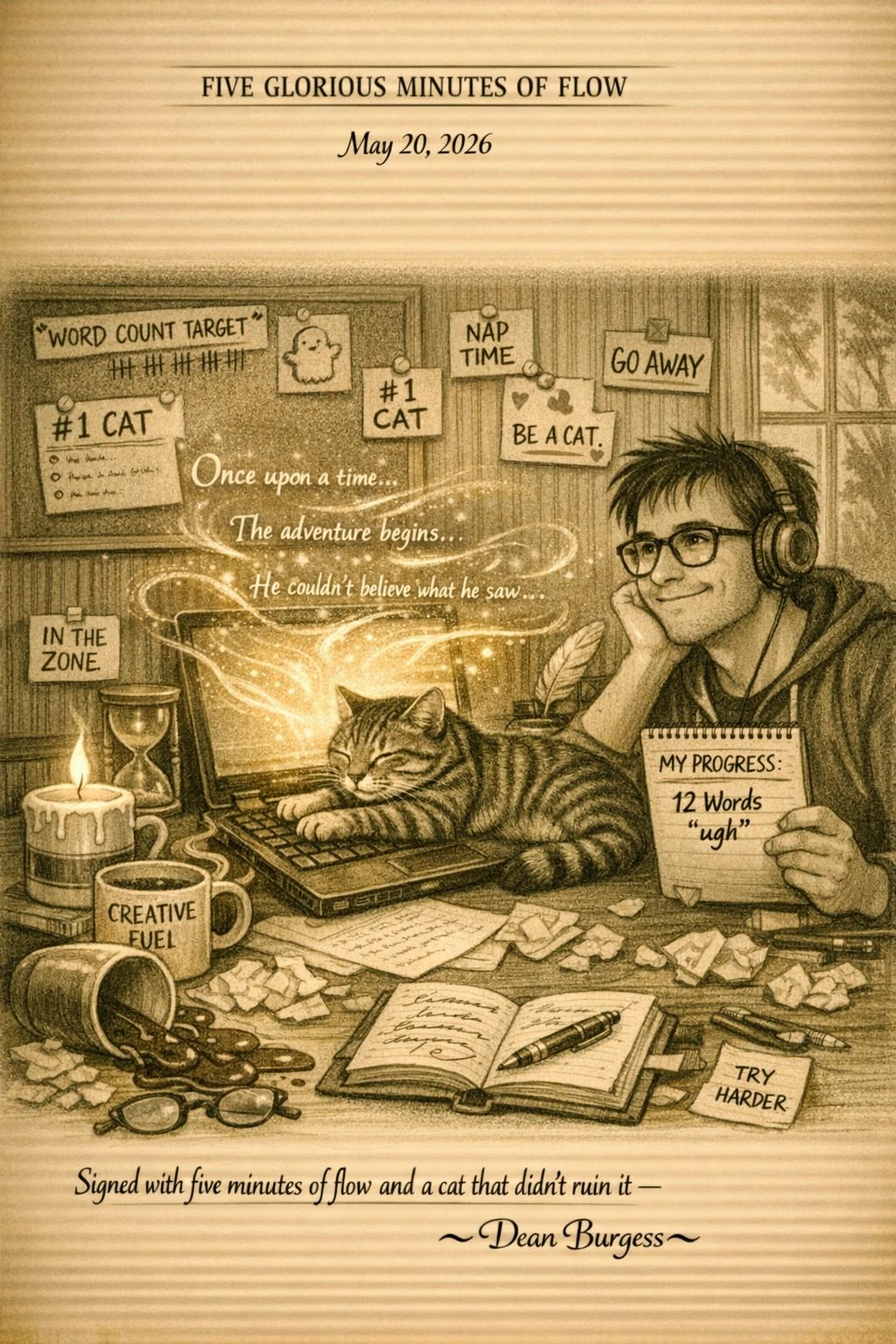
    Five Glorious Minutes of Flow

    May 20, 2026

    It happened.
    I sat down.
    I wrote.
    It made sense.

    The Rare Alignment

    The coffee was perfect.
    The cat was asleep.
    The playlist was just right.
    And the words — they flowed.

    For five whole minutes.

    What Flow Feels Like

    It’s like flying.
    It’s like dancing with your own thoughts.
    It’s like the story is telling you what happens next.

    And then the phone rang.

    The Aftermath

    I tried to get it back.
    I stared at the screen.
    I rearranged the pens.
    I begged the muse.

    She laughed and left.

    Still Worth It

    Five minutes of flow is enough to remember why I do this.
    Why I chase the words.
    Why I keep showing up.

    Even when it’s hard.
    Even when it’s slow.
    Even when the cat walks across the keyboard.

    𝓢𝓲𝓰𝓷𝓮𝓭 𝔀𝓲𝓽𝓱 𝓯𝓲𝓿𝓮 𝓶𝓲𝓷𝓾𝓽𝓮𝓼 𝓸𝓯 𝓯𝓵𝓸𝔀 𝓪𝓷𝓭 𝓪 𝓬𝓪𝓽 𝓽𝓱𝓪𝓽 𝓭𝓲𝓭𝓷’𝓽 𝓻𝓾𝓲𝓷 𝓲𝓽 — 𝓓𝓮𝓪𝓷 𝓑𝓾𝓻𝓰𝓮𝓼𝓼

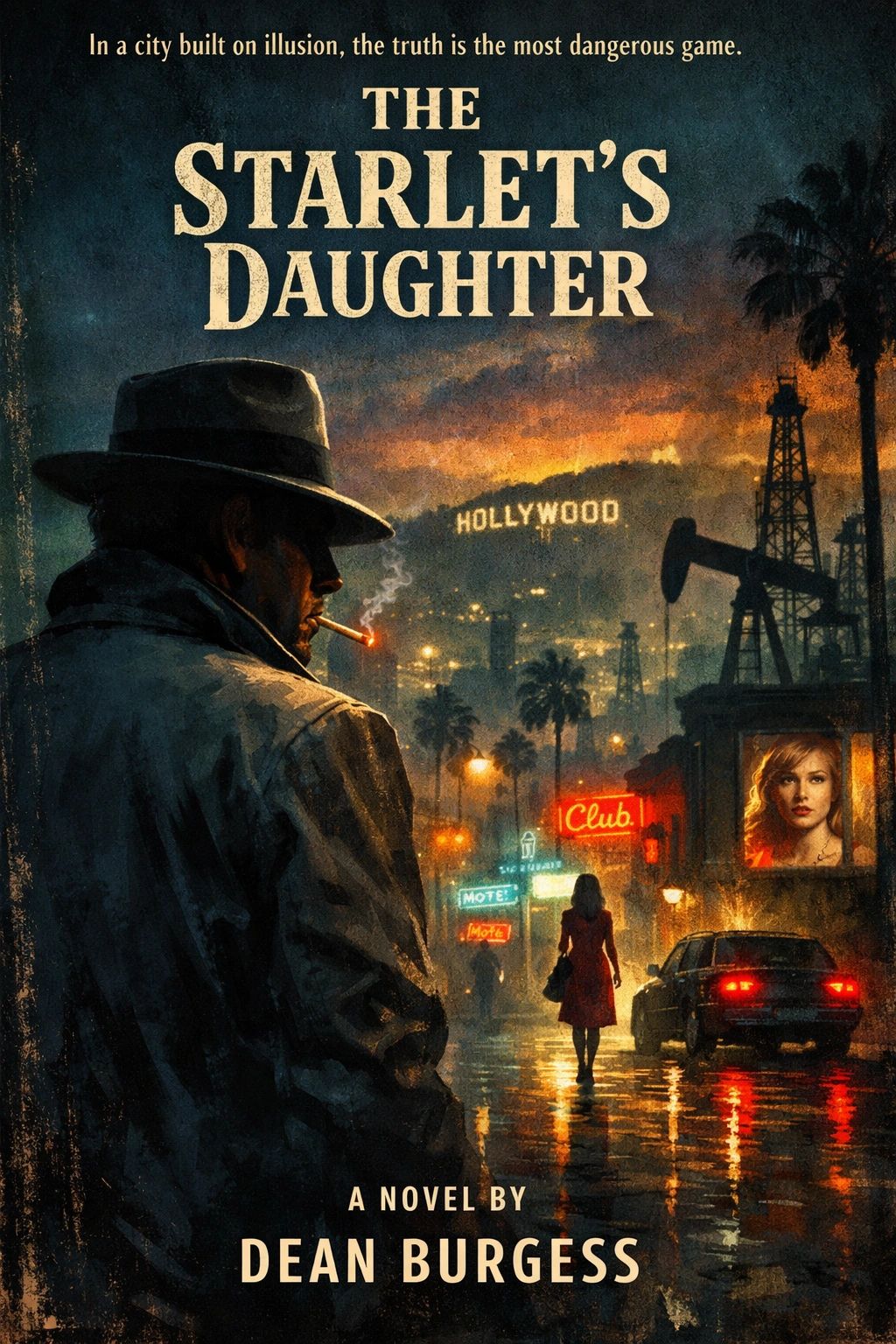
  • Dutch : The Starlet’s Daughter

    Dutch

    Book 1: The Starlet’s Daughter

    Dutch counted the cigarettes in the ashtray. Eleven. Number twelve smoked itself to a nub in his left hand, the filter gone a little dark from blood and something else. The phone on his desk hadn’t rung since Tuesday, and it was Thursday if the calendar above the radiator hadn’t started lying. The hand-wound clock on the file cabinet was frozen at 8:16, which put it four hours and change behind his need to care.

    Outside the office window, South Figueroa already baked under the promise of another June scorcher. The heat wasn’t bad yet but the smell was. Lard, mostly, but the chili grease from Ruiz’s Taco Stand below came up in greasy drafts, slicking the back of Dutch’s throat even with the window shut. He sipped coffee from a mug whose glaze had the map of the Yukon Territory crackled into it. The coffee was cold enough to grow things.

    He set the mug down and watched the surface shudder, the way it used to in the bar back of Higgins boat, right before you hit sand. He’d never gotten the hang of metaphors. The real thing did the job.

    He stared at the phone until his knee started in. The left one. The ache crept up from shin to groin, crawling like a centipede, mean and slow. The Solomons made a souvenir of his cartilage, and what the Army doctor couldn’t fix, the Los Angeles weather finished off. He was thirty-four and walked like a prizefighter’s grandfather.

    The only sign of life in the room, besides Dutch, was the fly that worked the rim of the glass ashtray, hopping from stub to stub like an insurance agent counting policies. Dutch didn’t bother with it. He looked over the rim of his desk at the door, warped from the last time he slammed it. The frosted pane spelled out S. BRENNAN—INVESTIGATIONS in gold paint that flaked off if you looked too hard.

    A sound behind the door: the hush of Dottie’s nylons against linoleum, the click of her heels.

    He waited.

    The knock was two quick taps, one cautious pause.

    “You awake in there?” Dottie said, her voice coming through the crack as a dry scrape.

    “Not yet,” Dutch said.

    He heard her consider that. “Eleven o’clock canceled. She said to tell you something’s come up. That was the whole message.”

    Dutch pulled the filter from his mouth and set it on the desk, leaving a crescent burn. “What’s the clock say, Dottie?”

    A sigh. “Nine-fifteen.”

    “Go to lunch.”

    She didn’t answer at first. Then: “You want anything from Ruiz’s?”

    “I want a client. And a new phone.”

    Another pause. “You’re a hard man, Dutch.”

    He didn’t bother with a reply. The smell from below was getting worse.

    He waited until Dottie’s steps receded, then flicked the dead cigarette into the ashtray, watched it bounce off the others. He rolled his neck. He looked around his office: the one window, dirty enough to fog the daylight but not enough to keep the heat out; a water stain on the ceiling the shape of Nevada, state lines traced by mildew; the PI license in its frame, the glass cracked on the bottom left, hanging next to a nail where a diploma had been before he pawned it for bail money on a case that went nowhere.

    There were two file cabinets. One locked, one left to the mercy of dust and the occasional break-in by Dottie when she needed scrap paper. His desk was military issue, stamped 1942 underneath. The bottom drawer never closed all the way, and inside was a bottle with the label worn to pulp. He could reach it with his right hand without looking. He didn’t, not yet.

    He opened the drawer anyway, checked the bottle, checked the level. Closed it again.

    The light outside was a little whiter, a little less forgiving. The traffic down on Figueroa moved slow enough for a blind man to cross, and on the far sidewalk, a man in a green cap sold copies of the Examiner, the headlines big enough for Dutch to make out from the window: “D.A. BLASTS RED INFILTRATION.” “ACTRESS VANISHES FROM SUNSET TOWER.” “JURY TIED IN BRIDEGROOM SLAY.”

    He wondered if the vanished actress had ever walked into his office. If she would, tomorrow, with an envelope and a story and not quite enough cash for the retainer.

    His knee ached. He reached for the fresh pack on the desk and palmed out another, number thirteen. Lit it with the last match in the book, a crumpled souvenir from some bar whose name he didn’t remember. He didn’t close the matchbook; he liked the look of it splayed open, like a burst bug.

    Dutch drew in, held it, exhaled at the phone. Watched it not ring. He leaned back in the chair, which groaned under the weight like it was considering a lawsuit. He let the smoke settle in his chest until it burned as much as the knee.

    The window was stuck half an inch open, not enough for breeze but enough to let in the city. Oil derricks somewhere east hammered at the ground with a rhythm he didn’t remember approving. A siren rose and died. A delivery truck’s airbrakes barked twice and the tailpipe farted oily blue. He could smell the difference between gasoline and diesel and once, years ago, had taken a bet on it and won a sawbuck. That was in a better office, with a better view.

    The cigarette burned down and Dutch let the ash tap itself onto the desk, joining the ring of others he never cleaned. The wood under the finish was Army oak, or close enough, and didn’t care about a few more scars.

    He crushed the stub out right there, not in the ashtray, and stood. The chair nearly tipped. He steadied it with the heel of his hand and straightened the papers on the desk, pointlessly. He looked at the phone one last time.

    Still nothing.

    He picked up the mug and sipped the skin off the top. Swallowed. Set the mug down. Stood at the window and watched the green-cap man fold his newspapers and pocket his take. He waited for a sign, or for the ache to change direction, but it didn’t.

    So he stood there, alone in the office, and waited for someone else to make the first move.

    Dutch took the stairs slow, one at a time, fighting the suspicion his knee was lying about how bad it hurt. The daylight hit him in the face and stayed there. Los Angeles didn’t do morning; it did exposure, everything too bright, even the shadows loud and permanent. Out front, Ruiz’s taco stand was already open, griddle hissing under a skin of grease thick enough to float a dime.

    Dutch stood on the cracked concrete step and rolled his shoulders. The air tasted like old tortillas and new gasoline. Down the block, two kids with slicked hair loitered by the curb, shoes shining black as patent leather. They watched Dutch the way cats watched sparrows: no hurry, just a practiced calculation of distance.

    He squinted east, saw the oil derrick on Vermont working its piston rhythm, slow as Sunday mass. It looked out of place, the skeletal iron against sky the color of dirty ice. He remembered a time the city hadn’t been so full of machines, but maybe he was thinking of someone else’s childhood.

    A delivery truck rumbled by, painting his shins in dust. Dutch turned away from the street, leaned against the brick. The heat from the wall worked up his back and through the shirt, the kind of warmth that made a man sleepy if he stood in it too long. He knew enough not to.

    The beat cop came around the corner at Olympic, not the regular guy but Ferris. Ex-vice, transferred after the thing with the city councilman’s daughter. Dutch knew him from before, which was never an advantage. Ferris moved like a cop who expected to be shot before lunch, eyes always narrowing, hand always half an inch from the holster. His uniform fit like he wore it to bed.

    Dutch lit a fresh cigarette and held it where Ferris would see. Ferris glanced up at the building, eyes scanning over Dutch like he was another unpaid bill stapled to the doorframe. He didn’t break stride. The look wasn’t friendly, but it wasn’t the worst Dutch had ever gotten.

    The kids took off, bored or spooked, and Dutch watched the street clear. He smoked to the filter and tried to remember what his doctor had said about tobacco. Something about boats and cancer. He’d stopped listening after the second sentence.

    A ‘41 Ford was parked at the corner, motor running low and even. There was a spiderweb in the windshield, tight around the edge, not enough to keep a man from driving but enough to keep him off the good jobs. Dutch counted two men inside, maybe a third in the back seat. The Ford idled longer than it should, and Dutch thought about the odds: three to one was bad if you cared about the outcome.

    They looked at him once. Then the car eased off, signal blinking right even though the street was empty. Dutch watched it until it was gone, and then a little longer. Nothing in this city liked to be watched.

    He stood outside because that’s what you did if you didn’t have a reason to be inside. He let the sun bore holes in his forehead and thought about the envelope he hoped would come and the client who wouldn’t. The back of his neck felt slick, a kind of sweat that was ninety percent nerves and ten percent leftover fever. He’d run a fever for months after the war. The nurse said it would pass.

    He flicked his cigarette into the gutter. It landed in a puddle that looked black until the sun hit it, then flared up neon green, catching the Open All Night sign in the window across the street. Even at ten in the morning the sign glowed, but only the “Open” part worked. The “All Night“ buzzed and flickered, half the tubes dead. Dutch took it as a metaphor and liked it.

    He let the rest of the city go about its business. He pressed two fingers to his knee until the ache numbed out, then hitched up his belt and walked back to the door. The stairs up to the office felt longer than before. At the landing he saw that Dottie had left for her early lunch after all. The hallway was empty except for the aroma of bleach and old newsprint.

    Inside the office, the phone still wasn’t ringing. It was the one thing you could count on.

    He shut the door behind him and saw the envelope. White, small, no markings, laying just inside the threshold like it had walked itself in and gotten tired. Dutch scanned the hallway, but all he saw was an empty floor and the smudged print of Dottie’s shoe crossing the linoleum.

    He bent, knees barking, and picked up the envelope by the top right corner. It was heavy paper, the kind that cost more than he made in a week. He held it up to the window, squinting against the backwash of city glare. Inside, one slip of paper, folded once.

    No return address. No postmark. No fingerprints that he could see, not that it mattered—whoever sent it knew better than to get caught by something as obvious as a fingerprint.

    Dutch carried it to his desk and set it on the blotter. He stared at it until the nerves in his bad hand started ticking, then slid his thumbnail under the flap and opened it clean. The paper inside was crisp, also expensive, and typed on a manual with a dying ribbon. The letters jumped out:

    She didn’t run away.

    No signature, no date. Just that.

    Dutch read the line three times. He set the paper on the desk. He sat back, legs stretched out and crossed at the ankles, like a man who might be thinking about nothing at all. He opened the bottom drawer and took out the bottle, thumbed the cap, put it back. He left the drawer open.

    He picked up the paper again. Read it, turned it over, nothing on the back. He put it down, face-up this time.

    He looked at the phone. Still nothing.

    He reached for the mug, realized he’d left it empty, and set it back. He watched the stain on the ceiling, followed the outline of Nevada with his eyes, tried to remember why the state mattered.

    The paper on the desk didn’t answer.

    Dutch placed his hand flat on the message, covering the words, and waited for the world to tell him what to do about it.


  • I Met Someone Funny Today

    You Won’t Believe What Happened at the Coffee Shop Today

    It was just another slow Tuesday in downtown Asheville—gray skies, drizzle tapping the awnings, and the usual hum of laptops and lattes at my favorite corner café. I’d settled in with a notebook, hoping to crack a stubborn plot twist, when he walked in: a man wearing mismatched socks, one lime green, the other printed with tiny toasters, calmly ordering a “double-shot oat milk situation.” What followed wasn’t just a funny moment—it was a masterclass in how humor disarms, connects, and transforms the everyday into something memorable.

    In creative fields like writing, we often overlook the power of spontaneity. We chase structure, discipline, and perfect phrasing, but real breakthroughs? They often come when we least expect them—through a stranger’s joke, a bizarre observation, or an utterly ridiculous conversation. That’s because humor shifts perspective. It lightens the mental load, reduces creative resistance, and opens pathways to original ideas.

    In this series, you’ll discover how seemingly trivial interactions—like meeting someone hilariously unpredictable—can fuel your writing process. You’ll learn to:

    • Spot comedic gold in ordinary moments
    • Use observational humor to develop richer characters
    • Stay mentally agile during long drafting phases
    • Turn awkward or absurd experiences into compelling content

    Whether you’re writing in Atlanta, Asheville, or your local neighborhood nook, staying open to the unexpected can be your secret creative advantage.

    5 Hilarious (But Telling) Traits That Reveal a Writer’s True Nature

    Spending time with someone immersed in storytelling often unveils quirks that are equal parts entertaining and insightful. Here are five distinct, funny moments that spotlight the mindset of creative thinkers—especially valuable for anyone navigating the writing world.

    1. They Dramatize Mundane Tasks Like Scripted Scenes
      Watching someone narrate their coffee order as if auditioning for a one-person play isn’t just funny—it’s a clue to how narrative thinkers operate. This habit reveals a mind trained to find drama in details, a skill useful when crafting engaging scenes. Try borrowing this technique by speaking your story aloud to test pacing and authenticity.
    2. Overcommitting to Inside Jokes That Only Make Sense to Them
      Ever been handed a metaphor comparing laundry piles to “the emotional weight of unresolved family trauma”? Classic. This tendency shows how deeply writers link abstract ideas. To leverage this, keep a humor journal—record oddball comparisons that could inspire fresh angles in blog posts or dialogue.
    3. Frequent Pauses to “Capture the Vibe” of a Random Moment
      That sudden silence while staring at a cracked sidewalk? They’re not zoning out—they’re mining atmosphere for future settings. Writers in Atlanta, Asheville, and beyond use sensory snapshots to ground stories in realism. You can too: take 60-second observation breaks to fuel descriptive detail.
    4. Using Excessive Hand Gestures While Explaining Simple Ideas
      Big movements often mean big imagination at work. This physical storytelling is tied to cognitive engagement—acting out a scene helps clarify structure. Next time you’re stuck, try walking through your narrative to unlock flow.
    5. Correcting Grammar in Casual Speech—Then Laughing at Themselves
      The reflex to fix “me and him went” isn’t snobbery—it’s muscle memory. But the self-aware chuckle after? That’s humility. It’s a reminder: precision matters, but so does relatability. Balance both by writing clearly first, then polishing for impact.

    How Unexpected Moments Spark Better Stories

    Every writer knows that inspiration rarely arrives on schedule—sometimes, it shows up wearing a ridiculous hat during an ordinary coffee run. These unplanned encounters, like meeting someone unexpectedly funny at a downtown Atlanta café or overhearing a bizarre but brilliant line in an Asheville bookstore, often become the seed of a compelling narrative. The truth is, real-life moments full of humor, awkwardness, or charm carry emotional authenticity that resonates with readers far more than forced plot devices.

    When you’re crafting stories—fiction, essays, or even long-form content—leaning into these spontaneous experiences adds depth and relatability. A stranger’s odd mannerism might inspire a character quirk. An absurd misunderstanding could evolve into a story’s central conflict. These raw, unpolished moments are goldmines for writers seeking to create vivid, living worlds.

    To make the most of these encounters:

    • Carry a small notebook or use a voice memo app to capture dialogue snippets or impressions
    • Reflect on why a moment was funny or striking—was it timing, contrast, or vulnerability?
    • Revisit these notes during brainstorming to inject organic humor or realism into your work

    Humor rooted in real human behavior strengthens voice and builds connection, especially with local audiences who recognize their own communities in your writing. Let life surprise you—some of the best stories begin with a simple, “I met someone funny today.”

    How to Turn Everyday Encounters Into Funny, Shareable Stories

    Ever wonder how some writers transform a casual chat at a coffee shop in Asheville or a quirky moment on the MARTA train in Atlanta into a viral anecdote? You don’t need a stand-up comedy gig to find humor in real life—just the right mindset and a few storytelling techniques. Here’s how to capture and craft funny real-world moments into engaging content that resonates with local and broader audiences alike.

    How do I know if a real-life moment is worth writing about?
    Look for moments with emotional contrast or unexpected twists. If a situation made you laugh out loud, do a double-take, or mutter “only in Atlanta” under your breath, it’s likely relatable. The key is specificity—details like overhearing a man argue with a parking meter or watching a dog steal a sandwich at Piedmont Park create vivid, shareable scenes.

    Should I change names and details when writing about real people?
    Yes—especially if the story could embarrass or identify someone. Use fictionalized names, tweak locations slightly, and focus on universal emotions rather than exact dialogue. This protects privacy while keeping the humor intact.

    How can I make a small moment feel meaningful?
    Use narrative framing: open with the absurdity, then reflect on what it reveals—about human nature, city life, or your own quirks. A 30-second interaction with a chatty barista can become a meditation on southern hospitality or the art of small talk.

    What if the joke falls flat when I write it down?
    Humor often lives in delivery. Try varying your pacing—short sentences for punchlines, longer ones for buildup. Read the piece aloud to catch awkward phrasing, and don’t over-explain the punchline.

    How do I avoid offending people when poking fun?
    Keep the target lighthearted and inclusive. Laugh with people, not at them. Regional quirks—like traffic on I-85 or sudden afternoon thunderstorms—are safer bets than cultural stereotypes.

    Can I turn these stories into recurring content?
    Absolutely. Start a “Moment of the Month” series featuring funny local interactions. Consistency builds reader anticipation and gives you a creative outlet for everyday inspiration.

    How do I store ideas before I can write them?
    Keep a voice memo folder or a notes app list titled “Funny Bits.” Jot down moments immediately—they fade faster than humidity in a Georgia winter.

    Keep Your Pen Light and Your Heart Open

    Writing isn’t just about crafting perfect sentences—it’s about finding the rhythm in the messiness and the narrative thread in seemingly ordinary moments. Whether you’re drafting in a quiet corner of Atlanta or brainstorming dialogue in a bustling Asheville café, the most memorable stories often begin with a spark of humor, a quirky character trait, or an absurd situation that makes you pause and smile. These aren’t distractions from serious writing—they’re essential ingredients. When you stay open to the funny, human moments, your work gains authenticity, relatability, and emotional depth.

    To keep your creative journey vibrant:

    • Stay curious about everyday interactions—a brief conversation, a misheard phrase, or a minor mishap can plant the seed for a compelling scene
    • Maintain a “story idea” log where you capture quirky observations, regional expressions, or small-town nuances that reflect your location’s character
    • Welcome imperfections—let your first drafts be messy, awkward, and even unintentionally hilarious
    • Share your work early with trusted readers who appreciate both your voice and your willingness to experiment

    The best writing doesn’t come from pressure—it comes from presence. Let go of rigid expectations and allow space for whimsy, surprise, and connection. After all, the story you’re meant to tell might start not with a grand idea, but with a simple, “I met someone funny today.” Keep your notebook open, your senses sharp, and your sense of humor closer than ever.

  • The Funny Side of Writing

    The Secret Weapon Every Writer Needs (But Rarely Talks About)

    What if the key to overcoming creative blocks isn’t more discipline or better tools—but laughter? Behind every polished manuscript is a trail of typos, plot holes, and moments so absurd they belong in a sitcom. Writers in Atlanta, Asheville, and beyond know that humor isn’t just relief—it’s a resilience strategy. When your protagonist refuses to cooperate or your laptop crashes mid-climax, finding the funny can be the difference between giving up and powering through.

    This isn’t about turning your novel into a comedy. It’s about recognizing that the writing process is inherently messy—and human. The same emotional sensitivity that fuels powerful storytelling can also magnify self-doubt. That’s where humor steps in: as a pressure valve, a perspective shifter, and a way to reclaim control when the words won’t flow.

    In this series, you’ll learn how to:

    • Spot the comedy in common writing struggles—from autocorrect fails to awkward metaphors
    • Use laughter to reset during creative burnout
    • Turn frustration into fuel by reframing setbacks with wit
    • Keep your voice authentic, even when the draft feels disastrous

    Writing doesn’t have to be a heroic battle. Sometimes, the most productive move is to step back, chuckle at the chaos, and remember: every great story has a few ridiculous drafts hiding in its past.

    7 Hilarious (But Relatable) Writing Habits You’ve Probably Experienced

    Writers know the creative process is equal parts passion and absurdity. Behind every polished manuscript are moments so strange, they’d make non-writers question your sanity. From muttering dialogue in an empty room to launching full-blown debates over synonyms, the writing life is full of comedy you can’t plan—but absolutely live.

    1. Arguing With Characters Like They’re Real People
      It’s 2 a.m., and you’re standing in the kitchen, passionately explaining to your protagonist why they cannot betray their best friend in Chapter 14. Sound familiar? When characters feel vivid, it’s natural to “talk through” plot points aloud—especially when stuck. Try voice recording these impromptu sessions; they often reveal emotional truths no outline can capture.
    2. Spending 20 Minutes Choosing Between “Walked” and “Strolled”
      Precision matters, but at what cost? Obsessing over diction is a rite of passage. Instead of getting trapped in minutiae, flag the word and keep writing. Return during edits with a clear head—and maybe a thesaurus nearby.
    3. Naming Minor Characters After Grocery List Items
      “Introducing… Mr. Avocado.” When inspiration runs dry, absurd placeholder names sneak in. Keep a dedicated “naming notes” document with cultural references, baby name sites, and overheard café conversations to avoid salad-based surnames.
    4. Laughing (or Crying) at Jokes Only You Understand
      Inside jokes buried in your draft? Normal. You’ve lived with these characters for months—of course their obscure potato pun hits hard. Just ask beta readers if the humor lands.
    5. Defending Your Protagonist to Friends Who Think They’re Unlikable
      “They’re not selfish—they’re complex!” Emotional investment blurs fiction and reality. Use this passion to deepen motivations in later drafts.
    6. Typing While Talking to Yourself in a Café
      That random mutter? You’re workshopping dialogue. Own it. Most writers in Atlanta to Asheville have done the same.
    7. Celebrating a Perfectly Placed Comma Like You Won a Trophy
      Grammar victories are real. Punctuation shapes pacing and tone—so yes, that em dash was worth the fist pump.

    When the Page Fights Back: The Comedy of Creative Resistance

    Writer’s block isn’t a creative crisis—it’s a full-blown farce, complete with invisible opponents and absurd rituals. Every author, from those drafting novels in their Atlanta studios to poets hiding in Savannah cafés, has faced the blank page like a stand-up comedian facing a silent crowd: terrified, hopeful, and slightly ridiculous. Yet within this struggle, humor thrives. The truth? Most breakthrough strategies are less science, more spectacle—walking backward around the desk, typing in bizarre fonts, or whispering sweet nothings to your laptop like it’s a moody muse.

    Creative resistance often disguises itself as perfectionism, but the solution lies in imperfection. Try these proven, if slightly silly, tactics:

    • Change your environment dramatically – Write in bed with socks on backward, or at a library in Asheville with zero distractions. Novelty tricks the brain into play mode.
    • Use a “distraction draft” – Write the worst version possible on purpose. Over-the-top drama, ridiculous plots—free your inner clown to unlock real creativity.
    • Switch input methods – Type with toes (not really), or dictate into a voice recorder while pacing. Physical shifts disrupt mental blocks.
    • Set absurdly small goals – “Write one boring sentence.” More often than not, that sentence sparks ten others.

    The page isn’t your enemy—it’s a co-conspirator in a comedy only writers understand. Embrace the weird, write through the laughter, and let your voice rise, one odd tactic at a time.

    The Heartbreak of Letting Go: Comedy in the Edit

    Editing isn’t just about fixing commas—it’s an emotional gauntlet where writers must commit literary murder with a smile. Every draft contains sentences so clever, so perfect, that parting with them feels like losing a dear friend. Yet, the health of the story often depends on killing your darlings, and therein lies the humor: the dramatic internal monologue over a single deleted phrase.

    Writers in Atlanta to Asheville know this ritual well. You craft a beautifully intricate metaphor—perhaps comparing a character’s indecision to Georgia humidity clinging to a screen door—only to realize it stalls the scene’s momentum. You mourn. You argue with yourself. Then, with one keystroke, poof, it’s gone.

    The comedy emerges in the absurd attachment we form to phrases that serve no purpose but our ego. To navigate this with grace:

    • Flag, don’t delete immediately: Use comments or highlight instead of cutting cold turkey
    • Read the full passage aloud without the sentence—does the story breathe easier?
    • Keep a “graveyard” doc for excised lines; it softens the blow and can spark future ideas

    Letting go isn’t failure—it’s refinement. And laughing at your own drama makes the process lighter. After all, the best edits often come not from precision, but from the courage to hit delete on something you loved.

    How to Keep Humor Alive in Your Writing Journey

    Can humor really improve my writing process?
    Absolutely. Injecting humor into your writing routine reduces mental fatigue and lowers the pressure of perfectionism. When you allow yourself to be playful, creativity flows more freely—especially during long projects or tough revisions. Think of humor as a pressure valve: it keeps frustration at bay while encouraging imaginative risk-taking.

    How do I stay funny when I’m stuck or stressed?
    Start by reframing your mindset. Instead of chasing “hilarious,” aim for “human.” Readers connect with authenticity—awkward metaphors, self-deprecating asides, or exaggerated scenarios based on real-life snafus. Keep a “laugh log” where you jot down funny moments, misheard phrases, or ridiculous situations. These become goldmines for relatable, lighthearted content.

    What if my genre doesn’t seem “funny”?
    Humor isn’t just punchlines—it’s perspective. Even in serious genres like historical fiction or memoir, subtle wit in narration or character voice adds depth and memorability. Try giving a side character a quirky obsession or letting your narrator make dry observations. This builds engagement without undermining tone.

    How often should I use humor in my writing?
    Balance is key. Inconsistent tone confuses readers, while overused jokes dilute impact. Use humor strategically: during transitions, to defuse tension, or to reveal character traits. Ask: Does this moment need levity, or would sincerity work better?

    Does writing with humor work for local audiences like Atlanta or Asheville readers?
    Yes—especially when you tap into regional quirks. Referencing local coffee shops, weather quirks, or small-town traditions with a wink builds connection. Just avoid inside jokes that exclude newcomers.

    The Last Laugh: Why Humor Keeps Your Writing Alive

    Let’s face it—writing is hard work, but it doesn’t have to be a grim march through endless drafts and self-doubt. In fact, some of the most resilient and prolific writers aren’t the ones with the most talent, but those who’ve learned to laugh with their craft instead of at it. When your protagonist suddenly develops three arms in Chapter 7, or your carefully planned plot twist collapses like a wet paper bag, a sense of humor isn’t just helpful—it’s essential for creative survival.

    Embracing the funny moments in writing does more than lift your mood. It reduces burnout, sparks unexpected breakthroughs, and keeps your passion alive during long-term projects. Whether you’re drafting a novel in your Decatur study or brainstorming blog ideas in an Asheville coffee shop, laughter resets your mindset and invites fresh perspectives. It transforms frustration into play, and play is where creativity thrives.

    So, how can you make humor part of your process?

    • Keep a “blooper reel” of your funniest writing mistakes
    • Share absurd plot turns with fellow writers to test ideas
    • Allow room for playful experimentation—even in serious genres

    Let go of perfection. Celebrate the awkward, the ridiculous, and the unexpected. Because the more you laugh with your writing, the more joy you’ll find in the journey—word by imperfect word. Keep your pen light, your heart open, and never underestimate the power of a well-timed chuckle.

  • Unlock Your Story: Writing Tips

    The Quiet Struggle Behind Every Great Story

    Every writer has faced it: the blinking cursor on a blank page, the silence where inspiration used to hum, the creeping doubt that maybe this time, the words won’t come. Being a professional author isn’t just about brilliance—it’s about perseverance through creative hurdles that test your resolve. From early mornings in Decatur home offices to late-night revisions in Savannah libraries, the journey is paved with moments of frustration, isolation, and unexpected joy.

    What separates those who write from those who publish? It’s not talent alone—it’s routine, resilience, and a toolkit for when motivation fades. The truth is, creative blocks don’t discriminate. Whether you’re crafting a Southern gothic novel or blogging from Asheville, the challenge remains: how do you keep going when the muse goes quiet?

    In this series, you’ll discover practical strategies used by seasoned writers to maintain momentum. You’ll learn how to:

    • Build writing habits that survive dry spells
    • Turn everyday moments—like a rainy afternoon or a café conversation—into creative fuel
    • Reframe mental blocks as opportunities for innovation

    Writing isn’t about waiting for perfection. It’s about showing up, word after imperfect word—until your story finds its voice.

    Master Your Writing Voice in 5 Repeatable Steps

    Developing a distinct writing voice doesn’t require waiting for inspiration—it’s built through intentional practice. Whether you’re drafting fiction in Atlanta or blogging from Asheville, these steps help you refine your tone, overcome creative hurdles, and maintain momentum—even on low-energy days.

    1. Write a 200-word “ugly first draft” every morning
      Set a timer and free-write without editing. Focus on raw expression, not polish. This daily habit strengthens your voice by bypassing self-censorship and uncovering natural rhythms in your phrasing.
    2. Read your work aloud to identify awkwardness
      Our ears catch what our eyes miss. Reading aloud reveals stilted dialogue, repetitive sentence structure, or passive constructions. Listen for flow and adjust until it sounds like you speaking.
    3. Imitate three favorite authors—for one day only
      Choose writers whose style you admire. Rewrite a scene in each of their voices. This exercise stretches your range and surfaces unconscious patterns in your own work.
    4. Define three voice keywords (e.g., witty, direct, introspective)
      Pin them above your workspace. Before editing, ask: Does this passage reflect my core voice traits? This filters revisions through intention, not impulse.
    5. Swap formats to test versatility
      Turn a blog post into a script, a novel chapter into a letter. Shifting mediums exposes voice inconsistencies and reinforces adaptability.

    Consistency builds authenticity. Stick with the process, and your voice will emerge—clear, confident, and unmistakably yours.

    Discipline vs. Inspiration: The Sustainable Writer’s Dilemma

    When writer’s block strikes, the debate between disciplined routines and waiting for inspiration becomes critical. One approach builds momentum; the other relies on fleeting bursts of creativity. For authors, content creators, and storytellers across cities like Atlanta, Savannah, and Asheville, understanding this balance is key to long-term success.

    Routine-Driven Writing thrives on consistency:

    • Set daily word count goals (e.g., 500–1,000 words)
    • Write at the same time each day to condition creative focus
    • Use time-blocking to protect writing hours from distractions
    • Track progress with simple logs or apps to maintain accountability

    This method turns writing into a practice, not a performance. It’s especially effective for managing deadlines, building backlogs, and reducing the anxiety of starting from silence.

    Inspiration-Based Writing, while exciting, has limitations:

    • Output depends on emotional or environmental sparks
    • High creativity spikes are unpredictable and often unsustainable
    • Long gaps between ideas can stall projects indefinitely
    • Works best for short-form or experimental pieces, not long-term commitments

    The most resilient writers don’t wait for inspiration—they create conditions where it can flourish. By treating writing as a craft honed through repetition, rather than a gift granted by mood, you develop creative endurance. Whether drafting fiction, blog content, or narrative non-fiction, sustainable output comes from showing up, even when the spark feels distant. Let inspiration enhance your work, not dictate it.

    Tackling the Tough Questions: Your Writing FAQs Answered

    Creative hurdles are part of every writer’s journey—whether you’re drafting a novel in Asheville or maintaining a content calendar in Atlanta. Here are some of the most common questions authors face, with actionable answers to keep you moving forward.

    How do I stay productive when inspiration is gone?
    Focus on routine, not mood. Set a daily writing window—even 20 minutes—and commit to showing up. Productivity thrives on consistency, not bursts of motivation. Use prompts or freewriting to spark ideas, and remember: done is better than perfect.

    What if I can’t find time to write?
    Rewrite “I don’t have time” as “I haven’t made it a priority.” Audit your daily habits: reduce screen time, wake up 30 minutes earlier, or block calendar slots like any other appointment. Writers in Savannah to Midtown Atlanta protect writing time like client meetings—because it is.

    How do I overcome perfectionism?
    Give yourself permission to write badly. Start with a “garbage draft” on purpose. The goal isn’t polish—it’s progress. Edit later. First, get the story out. Think of it as sculpting: you can’t shape clay that isn’t on the table.

    Should I stick to one project or switch when stuck?
    Rotate strategically. If blocked, shift to a different scene, character, or even a short writing sprint on a side idea. This keeps momentum without abandonment. Just track progress so you don’t lose focus.

    How do I stay motivated long-term?
    Break big goals into micro-milestones. Celebrate finishing a chapter, not just the full manuscript. Join a local or virtual writers’ group for accountability. And revisit why you started—your purpose fuels persistence.

    Keep Writing, Keep Growing: Your Story Is Worth Telling

    Every writer’s journey includes quiet spells, stubborn blocks, and moments of doubt—but these aren’t dead ends. They’re part of the process, natural pauses where growth happens beneath the surface. By now, you’ve explored practical ways to navigate creative hurdles, reframe setbacks with humor, and build routines that outlast fleeting inspiration. The real breakthrough isn’t a perfectly polished draft; it’s the courage to keep showing up, word after imperfect word.

    Growth doesn’t demand genius—it asks for consistency, curiosity, and the willingness to revise not just your manuscript, but your mindset. Embrace the messy middle. Let your characters stumble, your plot twist unexpectedly, and your voice evolve. Whether you’re drafting in Atlanta, revising in Asheville, or brainstorming on a rainy porch in Savannah, your unique perspective matters.

    Take action today: revisit a stalled piece and add just one sentence—funny, flawed, or fearless. Share your work with a trusted reader. Join a local or online writing group to exchange feedback. Most importantly, celebrate small wins. Progress compounds.

    Your story isn’t just worth telling—it’s worth the work. Stay patient, stay playful, and keep writing. The world needs your words.

  • The Cat Is More Productive Than I Am

    The Cat Is More Productive Than I Am

    May 16, 2026

    Today, the cat wrote 300 words.
    I wrote 12.
    And one of them was “ugh.”

    The Morning Shift

    She climbed onto the keyboard at 7:14 a.m.
    She typed a long string of characters.
    She knocked over my mug.
    She curled up and fell asleep.

    Meanwhile, I stared at the blinking cursor like it owed me money.

    The Metrics Don’t Lie

    Cat:

    • 1 spilled beverage
    • 1 accidental paragraph
    • 1 nap

    Me:

    • 0 paragraphs
    • 3 deleted sentences
    • 1 existential crisis

    The Philosophy of Paw Prints

    Maybe she’s onto something.
    She doesn’t overthink.
    She doesn’t outline.
    She just shows up, presses keys, and naps.

    Honestly, it’s a solid workflow.

    A New Benchmark

    I’m not saying I’ll let her ghostwrite the next chapter.
    But I’m not not saying it.

    𝓢𝓲𝓰𝓷𝓮𝓭 𝔀𝓱𝓲𝓵𝓮 𝓽𝓻𝔂𝓲𝓷𝓰 𝓽𝓸 𝓶𝓪𝓽𝓬𝓱 𝓶𝔂 𝓬𝓪𝓽’𝓼 𝓹𝓻𝓸𝓭𝓾𝓬𝓽𝓲𝓿𝓲𝓽𝔂 — 𝓓𝓮𝓪𝓷 𝓑𝓾𝓻𝓰𝓮𝓼𝓼