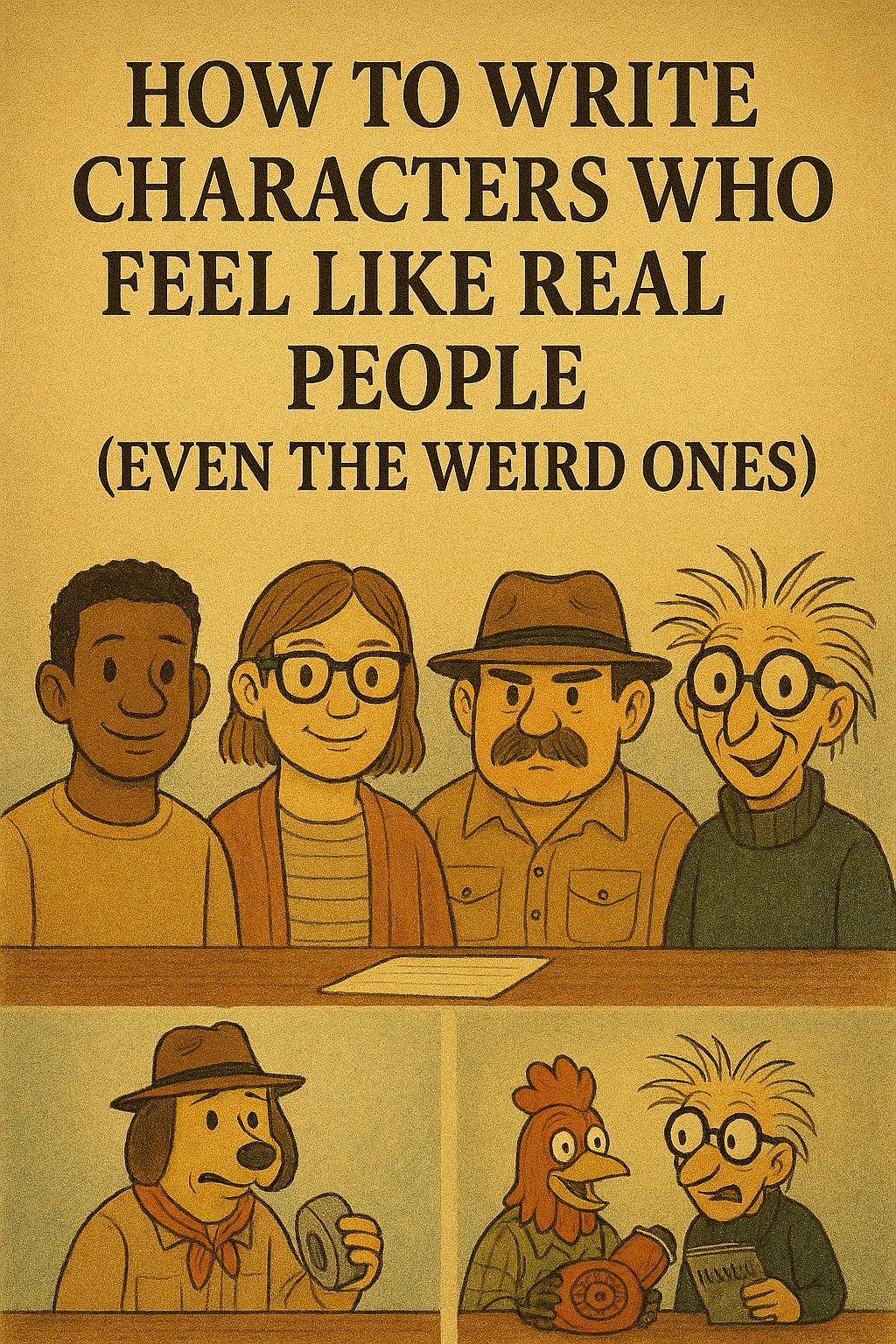
How To Create Characters That Feel Like Real People (Even The Weird Ones)
Readers will forgive you a lot of things, but they won’t forgive you flat characters.
Even the craziest plots and most spellbinding settings won’t make up for emoticons disguised as human beings.
I spent years learning to write characters who feel vivid and specific — which sounds fancy, but really means that you’d recognize them if you saw them at Hank’s Gas-n-Go on a Sunday morning.
Give each character a secret
Not a “plot secret” or a murder mystery, but a real, lived-in truth that defines the character from the inside.
- The school principal who writes poetry
- The cheerful grandma who regrets having kids
- The post-apocalyptic vigilante with a soft spot for ducks
Let the weird stuff stay weird
Shirley can hand out frog stickers at the pharmacy or sleep in a canopy bed, but once she starts doing both, she starts feeling real.
First drafts are the audition. Rewrites are the job.
Characters come in loud and broad at first. That’s fine. But in the second, third, and fourth drafts, I leave room for them to surprise me. That’s when they start talking back.
Then they boss me around for the next 150 pages.