Author: Dean Burgess

  • The Day My Draft Turned On Me

    The Day My Draft Turned On Me

    April 1, 2026

    There are days when the writing goes smoothly.
    And then there are days when your draft stages a coup.

    This morning, I opened my document to find that my main character had rewritten an entire paragraph. Not improved it — rewritten it. He’d crossed out my careful setup, added a joke I definitely didn’t authorize, and inserted a footnote that read:

    “Honestly, Dean, this is beneath both of us.”

    I stared at the screen. The screen stared back.
    Somewhere in the house, my cat knocked something off a shelf in solidarity.

    When Your Characters Get Ideas

    Writers like to say characters “take on a life of their own.”
    Usually that’s a metaphor.
    Today it felt like a workplace grievance.

    My sidekick — the one who’s been getting a little too confident lately — left a note in the margins:

    “I’d like more scenes. Preferably heroic ones.”

    He even added a smiley face.
    A smiley face.

    The Plot Twist I Didn’t Plan

    Halfway down the page, I found a new chapter heading:

    Chapter 12: The Author Learns His Lesson

    I didn’t write that.
    I’m not sure I could have written that.
    It had the tone of someone who’s been waiting for this moment.

    Maybe This Is What April 1 Is For

    Not pranks.
    Not jokes.
    But reminders.

    Stories aren’t machines.
    They’re living things — stubborn, opinionated, occasionally mutinous.
    And sometimes the best thing we can do is step aside and let them surprise us.

    Even if they leave passive‑aggressive notes in the margins.

    Signed while renegotiating power with my own characters — Dean Burgess

  • Why I Keep a Notebook I Never Read

    I have a notebook I never read.
    It’s not a journal. It’s not a planner. It’s not a place for brilliant ideas.
    It’s a place for nonsense.

    And it’s one of the most useful writing tools I own.

    1. It’s a pressure valve

    Some days, my brain is a crowded diner at lunchtime.
    Too many voices. Too many thoughts. Too much noise.

    So I open the notebook and write whatever’s in there:

    • “The raccoon council meets at midnight.”
    • “Why do all my socks disappear on Wednesdays?”
    • “The moon looks like it’s judging me.”

    It doesn’t have to make sense. It just has to get out.

    2. It’s a playground

    This notebook isn’t for polished prose.
    It’s for weird metaphors, half-baked characters, and sentences that trip over themselves.

    It’s where I write:

    • Dialogue between two disgruntled garden gnomes
    • A love letter from a toaster
    • A poem about lint

    It’s play. And play is where creativity lives.

    3. It’s a compost pile

    Most of what I write in this notebook is nonsense.
    But every now and then, something sprouts.

    A phrase. A rhythm. A character name.
    Something I didn’t plan — but now I can’t stop thinking about.

    I don’t read the notebook like a book.
    I flip through it like a gardener checking for sprouts.

    4. It’s a reminder that writing isn’t always serious

    Writing can be hard.
    Deadlines. Edits. Self-doubt.
    But this notebook reminds me that writing can also be ridiculous.

    It’s a place where I’m not trying to be good.
    I’m just trying to be present.

    Final thought

    I keep a notebook I never read because it’s not about the words — it’s about the practice.
    It’s about showing up, scribbling something strange, and trusting that creativity doesn’t always look like progress.

    Sometimes, it looks like a raccoon council.
    And that’s enough.

    Next week: “How I Know a Story’s Working.” Spoiler: it involves goosebumps, laughter, and a sudden craving for pie.

  • The Plot Holes We Learn to Love

    The Plot Holes We Learn to Love

    March 31, 2026

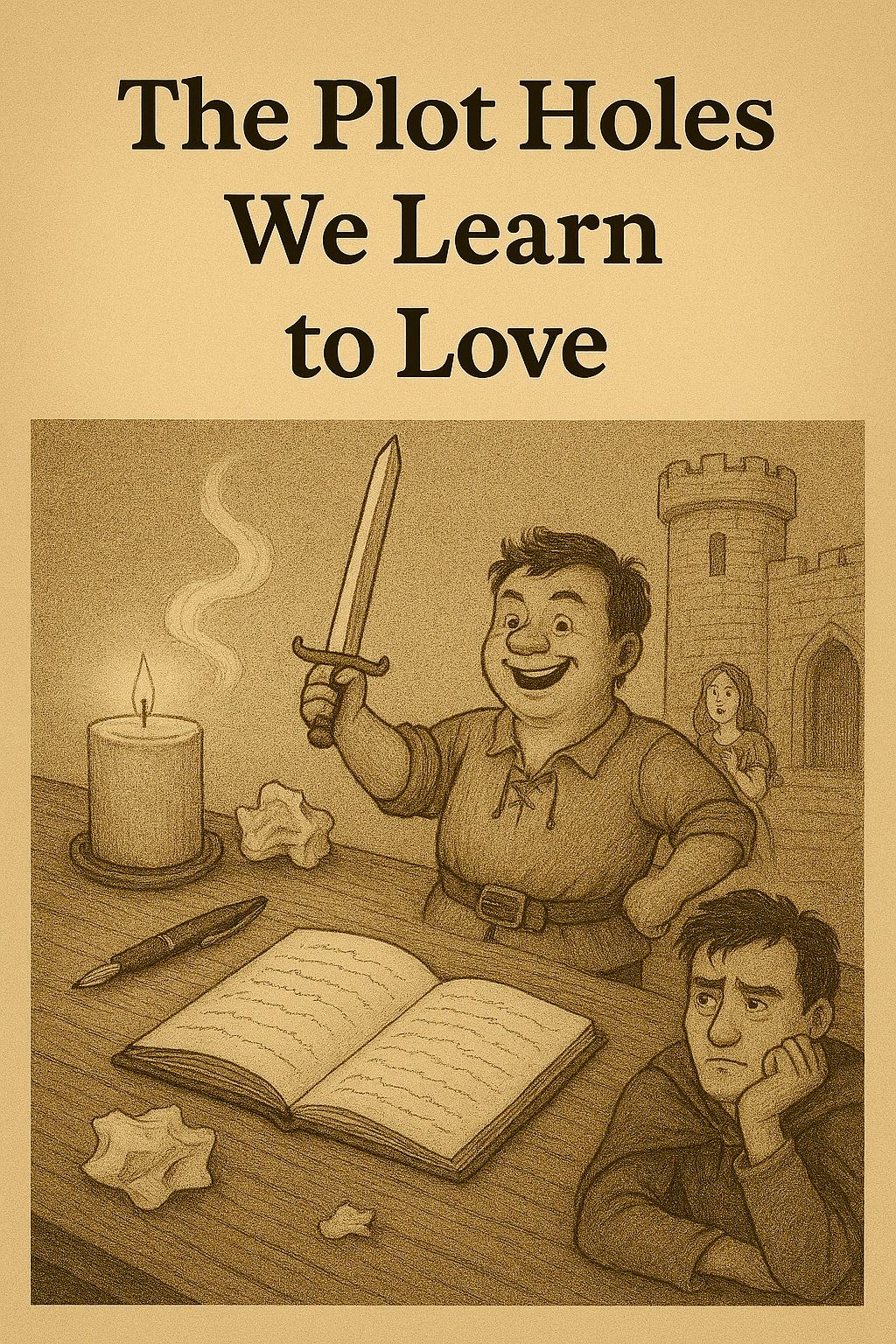
    There’s a moment in every story when something doesn’t quite add up. A character forgets what they knew. A timeline bends. A sword appears that no one packed. And somehow… we love it more.

    The Sidekick Who Knows Too Much

    He wasn’t supposed to be the hero. He was comic relief. He had one job: make jokes and trip over things. But somewhere around chapter six, he started solving problems. He knew the villain’s backstory. He had a sword. And I didn’t stop him.

    The Candle That Never Burns Out

    I wrote a scene where a candle flickers through three chapters. It’s never relit. It never dies. It just glows. I noticed the mistake. I kept it. It felt right. Like the story needed that little miracle.

    The Cat Who Edits

    My cat once knocked a page off my desk. It was a plot outline. I never found it. I rewrote the story without it. It was better. I now consider her my editor. She’s ruthless. And she’s usually right.

    The Castle With No Map

    There’s a castle in my story. No one knows how many towers it has. Characters get lost. Rooms appear and disappear. Readers asked if it was magical. I said yes. It wasn’t. But now it is.

    Plot holes aren’t always mistakes. Sometimes they’re invitations. To wonder. To imagine. To fill in the blanks with something better than what I planned.

    Signed with cheerful acceptance — Dean Burgess

  • Blog Post: March 28, 2026 The Plot Holes We Learn to Love

    Blog Post: March 28, 2026

    Every writer has one. That moment in the story where logic takes a nap, timelines blur, or a character forgets something they absolutely should remember.

    You spot it on the reread. You wince. You consider fixing it. And then… you don’t.

    What Is a Plot Hole, Really?

    Technically, it’s a gap in the story’s logic. A contradiction. A missing explanation. Something that doesn’t quite add up.

    But sometimes, it’s also:

    • A moment of emotional truth that overrides technical accuracy
    • A scene so beloved you forgive its flaws
    • A quirk that becomes part of the story’s charm

    Why We Let Them Live

    Because perfection isn’t the point. Connection is.

    Readers don’t fall in love with airtight logic. They fall in love with characters, moments, and feelings. If a plot hole doesn’t break the emotional arc, it might not be a hole at all — just a wrinkle.

    Famous Wrinkles We’ve Embraced

    • The character who ages inconsistently across books
    • The magical rule that’s broken for dramatic effect
    • The side character who disappears without explanation (but we still miss them)

    These quirks become part of the story’s mythology. They’re the things fans debate, defend, and secretly adore.

    When to Patch vs. When to Embrace

    Ask yourself:

    • Does this break the story’s emotional truth?
    • Will it confuse or alienate readers?
    • Is it distracting or endearing?

    If it’s the former, patch it. If it’s the latter, maybe it’s part of the charm.

    Closing Thought

    Stories aren’t machines. They’re messy, human, and full of contradictions. Sometimes the plot holes are where the light gets in.

    Next Up: April 4 – “The April Fool’s Guide to Writing Advice You Should Ignore”

  • Vanishing In The Rain…

    A person cannot simply vanish into the rain, but I tried. I was ten years old and certain, the way only a child can be, that I could evade the surveillance state of Burgess cousins and brothers by clever arrangement of my body in space and time. My body: angular, shinned, elbowed, perpetually scraped. My time: parceled into precise increments by the chimes of Grandmama’s kitchen clock and the insistent air horn of Granddaddy’s pickup returning from the John Deere in Monetta.

    I would wait for my moment. While the boys performed their barnyard theatre of wrestling and clod-hurling out under the lone patch of sourwoods, I’d slip behind the clapboard wedge of the smokehouse, arms loaded with contraband—an ancient Zebco 33, a battered tackle box pilfered from Grandaddy’s shed, and a lidded cardboard tube pulsing with frenetic crickets. By then, the air had thickened into the viscous near-rain of a South Carolina summer, the clouds so low I could have ladled them with a soup spoon. I liked the rain before it arrived, the tense static of it. I liked the scent of it in the air, sharp and mineral, like old pennies and the soft green rot of damp earth.

    No one ever told the truth about the Burgess farm: that the landscape itself was as cunning as the children, riddled with secret currencies and shifting borders. The creek, Chinquapin, was my favored territory, the one place the older boys usually never sought. Even they held uneasy respect for the red-mud banks, the knuckle-rooted trees that scalded the sky in their dead reach for sunlight. I would ghost through the cane grass, cricket tube bouncing against my thigh, and make first landfall at what we called the General Lee Natural Bridge—a red oak felled across the creek by a tornado the year before I was born, its bark long since sloughed off by the scouring misery of two generations’ worth of floods.

    I perched there, legs dangling over the roiling tea of the creek, and baited my line with ritualistic precision. No one was watching me. The rain began as a suggestion, a rearrangement of light, a hush settling on the backs of the leaves. Then it quickened, and the surface of the creek shivered alive. The fish—sunfish, bluegill, bass with eyes like polished bone—bit faster in the rain. Most people don’t know this. I did. I knew a lot of things, then, that adults would later try to convince me were not worth knowing.

    By the time my stringer held a dozen fish, I was soaked, the cotton of my shirt and shorts clinging in awkward, chilly suction to my skin. The rain grew fierce and clarifying, like it wanted to cut a window into the world. I crossed the General Lee, slow, careful not to slip, and then—emboldened suddenly—danced across it, arms out, rod and tackle box in one hand, stringer and cricket tube in the other, singing not quietly but full-throated, “Da, dah, dah dee dah, I’m singing in the rain, just SINGIN’ in the rain…”

    I launched into a spirited performance, my feet tapping against the sturdy wood of the fallen tree. I bounded back and forth like a carefree gazelle, giggling as I leaped into the air, my heart soaring along with me. With each pirouette, I spun around in a joyous whirl, the rain drenching me but failing to dampen my spirit. The world around me blurred into a backdrop of vibrant greens and grays, the sound of the rain a perfect rhythm to my dance.

    “Da, dah, dah dee dah,” I sang, my voice ringing out over the patter of raindrops, as if I were Gene Kelly himself, dancing through a storm. I twirled, arms wide, imagining myself the star of my own musical, lost in a moment of pure bliss. I could feel the slickness of the tree beneath my feet, but the thrill of the dance kept me steady. Each leap sent droplets flying, sparkling like diamonds in the air, while my laughter echoed across the creek.

    With a final leap, I threw my arms wide and landed with a flourish, the tackle box wobbling but secure in my grasp. I grinned, soaking in the exhilarating freedom of the rain-soaked world around me and the sheer joy of being a kid in nature, where every moment felt like magic. I was not just a boy fishing; I was an artist painting my joy across the canvas of a pouring rain.

    I had seen the movie the weekend before, nestled between my brothers on Mamma’s plaid divan, and the memory of Gene Kelly gloriously soaked was fresher than any Sunday school parable. You could hear the rain’s applause on the creek, loud as spitballs against the tin roof of the hen house. Far upstream, thunder voiced its lazy disapproval.

    There, alone and unobserved, I imagined myself dissolving into the weather, the boundaries between water and skin and sky washing thin. I was not a middle child, not the oldest boy, not the baby cousin or the mysterious little boy. I was a creature of rain and river, crooning and capering my way from bank to bank.

    That was a thing the cousins and brothers would never understand: the audacious dignity of solitude. I had caught, that day, not just enough fish to silence the dinner table’s skepticism, but a glittering, hidden confidence. Something private, and fiercely mine, tucked away behind the smokehouse, waiting for the next storm.

    All these years later, I am still a pluviophile, and I still, on occasion, “watch ‘Singin’ in the Rain.’ Da, dah, dah dee dah…”

  • The Sidekick’s Revenge: Giving Supporting Characters Their Due

    Blog Post: March 21, 2026

    The Sidekick’s Revenge: Giving Supporting Characters Their Due

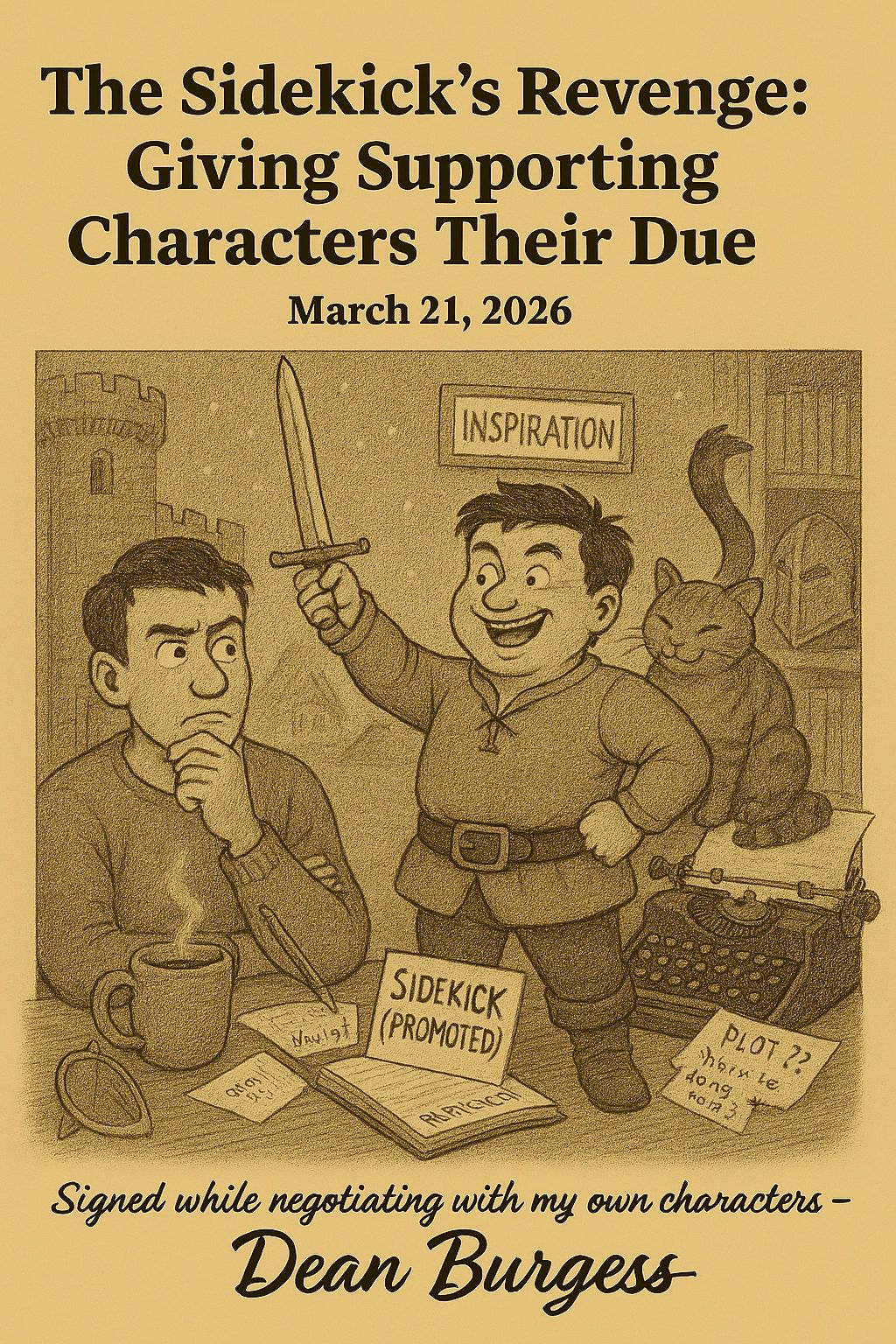
    They were supposed to be comic relief. A sounding board. A loyal companion who fades into the background when the plot gets serious.

    But somewhere along the way, the sidekick started stealing scenes. Offering wisdom. Challenging the hero. Becoming the emotional heart of the story.

    Why Sidekicks Matter More Than We Admit

    Sidekicks are often the glue that holds the narrative together. They reflect the protagonist’s flaws, amplify their strengths, and sometimes say the things the hero can’t.

    They’re the ones who:

    • Ask the uncomfortable questions
    • Deliver the emotional gut-punch
    • Keep the story grounded when the stakes get wild

    They’re not just accessories. They’re anchors.

    When the Sidekick Becomes the Star

    Sometimes, the sidekick’s arc outshines the hero’s. They grow. They change. They surprise us.

    Think of:

    • The best friend who finally stands up for themselves
    • The comic relief who reveals a hidden grief
    • The loyal companion who makes the ultimate sacrifice

    These moments remind us that every character deserves depth.

    How to Write Sidekicks With Soul

    If you’re writing a supporting character, ask:

    • What do they want?
    • What do they fear?
    • What would they do if the spotlight turned their way?

    Give them contradictions. Give them agency. Let them mess up. Let them shine.

    Closing Thought

    The sidekick’s revenge isn’t about stealing the story. It’s about earning their place in it.

    Next Up: March 28 – “The Plot Holes We Learn to Love”

  • Morning Routine in Leesville…

    I was five and it would be the last time during the school year that I would be able to spend a week with my grandparents. My Daddy’s younger brother, Uncle Dale, still lived at home with my grandparents.

    Every morning at my grandparents’ began exactly the same: with the rusty clock alarm in the den shrieking at 5:15, then two snooze buttons later, the long creak of Granddaddy’s knees as he swung his feet over the edge of the bed and called down the hallway, “Dale! Up! Milk’s a-waitin’!” and Uncle Dale—who was seventeen, a high school senior, and owned more traffic tickets than pairs of clean jeans—would groan loud as a dying steer before thumping out his door, backwards ballcap already mashed to his head.

    I’d been there three days and still couldn’t figure out if Dale was sleepwalking for these barn trips or just practicing for a future as a zombie. But every morning, just as the sun shook off the last gray, he’d gesture at me, wordless, and I’d hop off my fold-out cot and into my dirty overalls and run behind him, down the porch steps into the dew, the air cold enough to bite but already smelling faintly of manure and cow breath.

    Outside, the world was so empty it rang. Just fields, the barn, the shade trees that still dripped rain from the night, and the sad, one-eyed barn cat Granddaddy called “Possum,” even though “she” was a “he,” and had maybe never caught a mouse his whole life. Except the second Dale kicked open the barn’s side door, Possum perked up and limped after us, then came a half dozen more feral cats, all mangy and wild-eyed, as if the sound of stanchions clanking was dinner bell and church at once.

    The barn was old, but not in a storybook way—with its tin roof dented inward like a kicked can, and the paint gone so long you could see every plank and nail. Inside, the air was cleaner, warmer, full of dust motes and the living thud of the cows shifting in their stalls. They had names, all of them—Bessie and Boo and Agnes and Gertrude—but Dale called them all “girl” in the same tone he used with his steady, Cheryl, when they argued on the party-line phone.

    He heaved the bucket and stool into the nearest stall, patted the cow’s hip, and when he sat down, his body seemed to melt into a different shape, one that fit the barn and the cow and the coming morning. “You wanna try?” Dale said, jerking his chin.

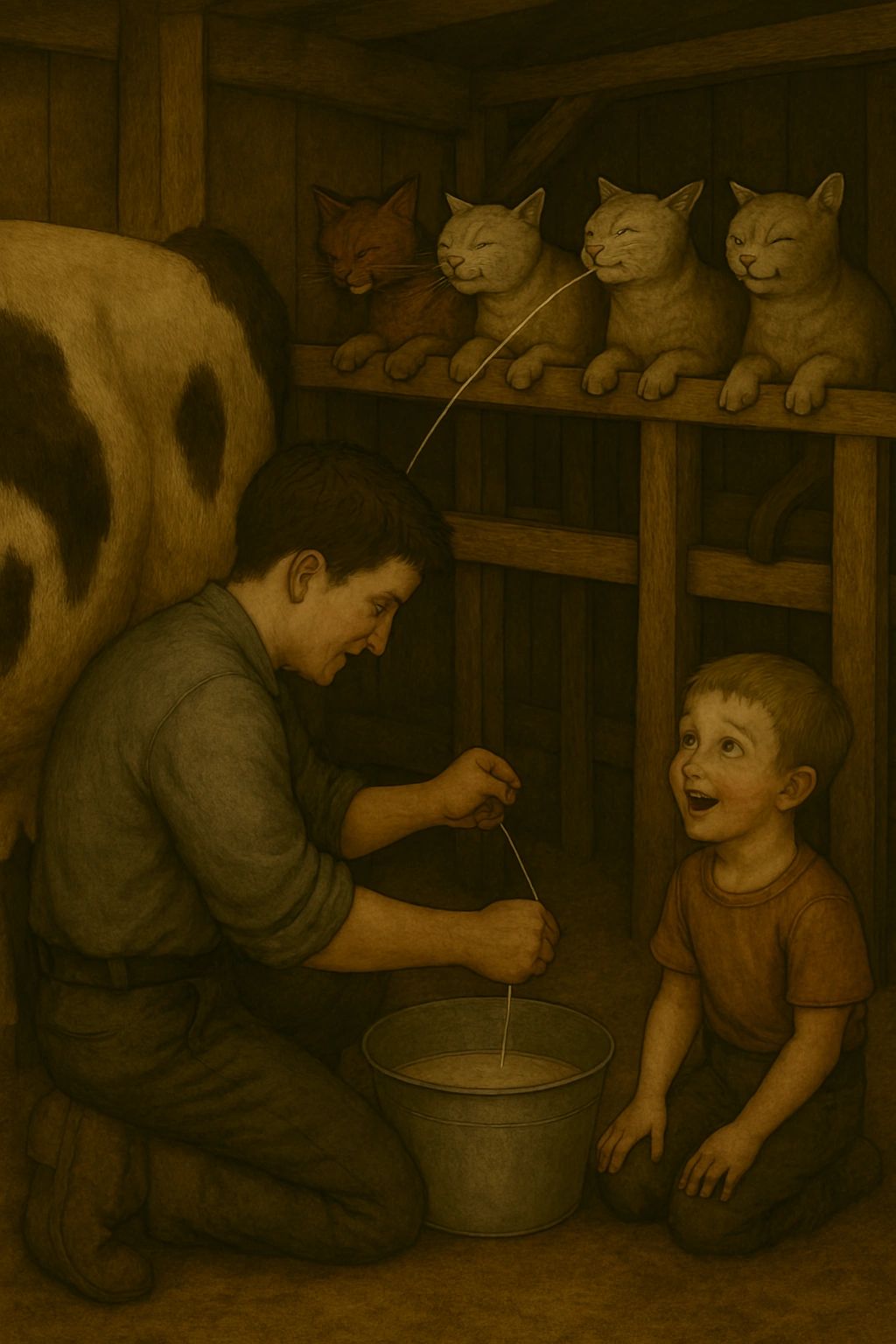
    I shook my head. The cows were so big up close, and their breath steamed out in long snooty huffs. Instead, I watched as he kneaded the udder and winked at me, “She likes it, see? You gotta be gentle but mean it.” And then the strangest thing in the world: before the first arc of milk splattered into the pail, Dale pinched his fingers, aimed at the nearest cat, and squirted a perfect white stream right over my head.

    Possum leapt up, thin as a rope, paws against the stall board, and lapped the droplets out of the air, then yowled for more. The other cats caught on fast, climbing the rails, mewing, waiting their turn. Uncle Dale kept at it, every so often tilting the udder just so for a direct hit, like he’d spent a whole alternate childhood learning to bullseye cats with cow milk.

    Afterwards, the cats hung around, licking their chops and purring so loud the barn seemed to hum. The cows settled back into a slow rhythm of chewing, and Uncle Dale wiped his hands, chucked a handful of hay at my head, and we trudged back toward the kitchen, Possum and his crew already melting into the weeds.

    Grandmamma would have breakfast waiting on us when we got back. Breakfast was eggs and grits and bacon and biscuits and more eggs, and Granddady’s coffee, black as burnt wood, which I wasn’t allowed to drink but Uncle Dale poured into his cup and had with his grits anyway, as if the whole bucket of milk had been a warm-up act for coffee and grits.

    “You catch them cats eating from the spout again?” Granddaddy asked, half turning from the stove.

    Uncle Dale shrugged, smiled at me, and said, “Can’t stop ‘em. Little jerks are all over the place.”

    Granddaddy shook his head like he’d heard this story every morning since time began. “Supposed to keep cats outside.”

    “They ain’t hurting nothin’,” Uncle Dale said, pouring a third helping and sliding it my way.

    For three more mornings, the whole thing repeated: up before the sun, milk the cows, feed the cats, watch the world light up slow and gold, all of us standing inside the barn like weird saints with buckets and brooms. The last day, Uncle Dale let me shoot the milk for Possum. It took three messy tries, but the fourth time, the stream arced high and Possum nailed it, smacking his jaws together like he’d eaten a ghost. My hands shook from the squeeze, but Uncle Dale just laughed and said, “Good aim for a Yankees fan.”

    At the end of the week, I stood on the porch with my bag, listening to the barn cats fighting in the grass and the cows lowing for breakfast, and I tried to imagine what Monday would feel like without the part where you woke up in a house that smelled like hay, and went to sleep every night with the sound of fields brushing each other silent and slow. Next school year I would be too big for any of this and it sorta made me excited and sad all at the same time, as if an important part of my life would be over and would never come back.

    After my ride with my parents pulled away, I looked back once and thought I saw Possum watching from the barn roof, tail flicking, as if he was waiting for someone to bring him a little more milk.

  • The Joys of Writing in a Small Town

    The Joys of Writing in a Small Town

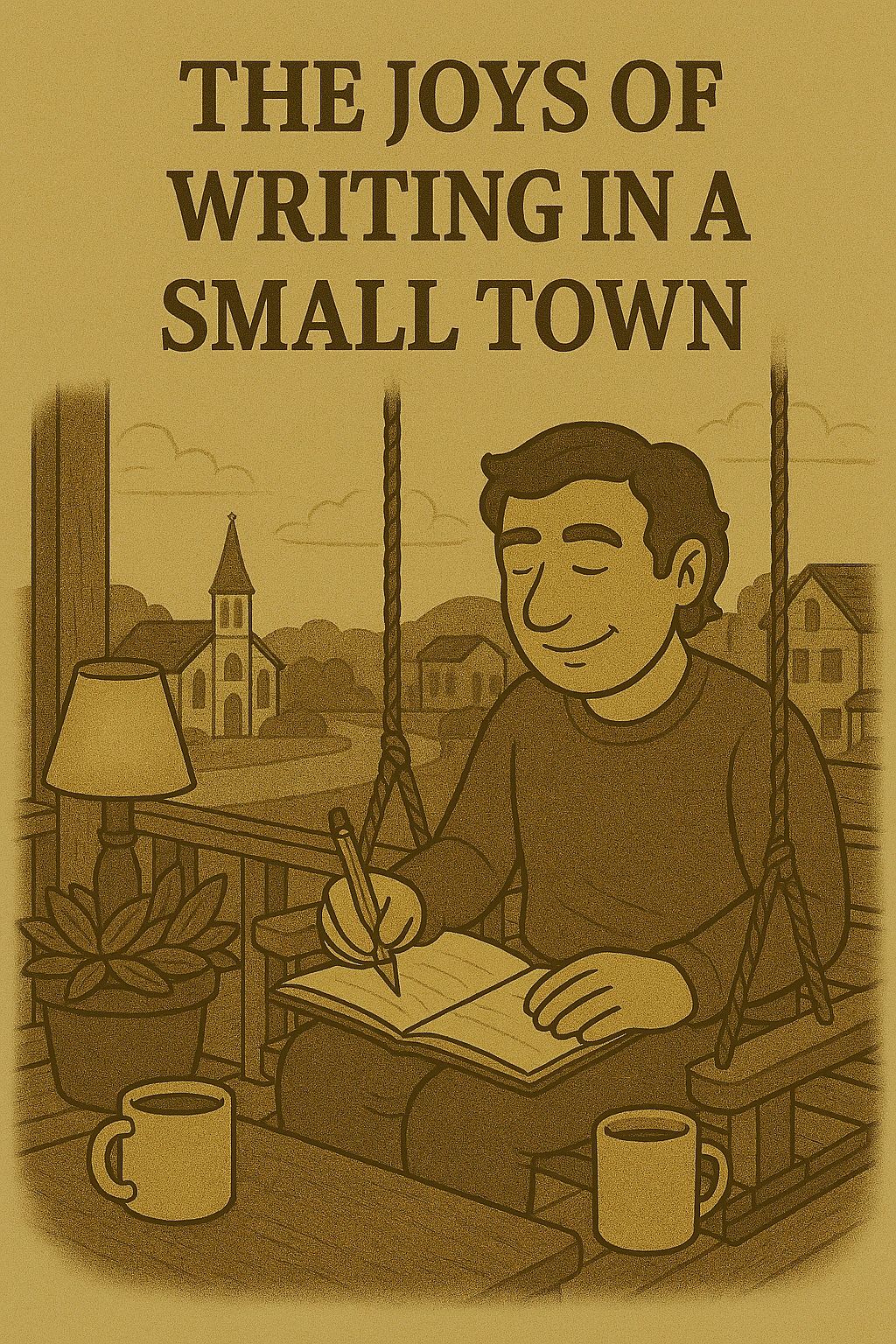
    There’s something about writing in a small town that feels like cheating — in the best possible way.

    You don’t have to invent quirky characters. They walk past your porch every morning.
    You don’t have to imagine dramatic tension. Just go to the post office and ask about the raccoon incident.
    You don’t have to create atmosphere. It’s already there — in the creak of the diner booth, the gossip at the hardware store, and the way the sky turns lavender before a storm.

    Here’s what I love most about writing in a small town.

    1. Everyone’s a character

    There’s the retired teacher who walks her cat on a leash.
    The teenager who sells homemade candles and knows everyone’s birthday.
    The man who insists on mowing his lawn in a three-piece suit.

    You couldn’t make these people up — and you don’t have to.
    They’re generous with their quirks. They lend them out freely.
    All you have to do is pay attention.

    2. The setting does half the work

    Small towns come with built-in atmosphere:

    • Porch swings and wind chimes
    • Church bells and train whistles
    • Sidewalks that remember every shoe that’s ever walked them

    When I write, I borrow the texture of this place.
    The slow rhythm. The soft edges. The way everything feels just a little bit haunted — but in a friendly way.

    3. Gossip is plot gold

    In a small town, gossip isn’t just entertainment — it’s infrastructure.

    It travels faster than Wi-Fi.
    It’s more accurate than the weather app.
    It’s full of twists, turns, and emotional stakes.

    I don’t write real gossip into my stories (I like being invited to potlucks), but I do borrow the structure:

    • A secret
    • A misunderstanding
    • A reveal
    • A reconciliation over pie

    It’s storytelling in its purest form.

    4. Quiet is a creative superpower

    There’s a kind of quiet here that isn’t silence — it’s space.

    Space to think.
    Space to listen.
    Space to let a sentence breathe before you write the next one.

    I’ve written in cities. I’ve written in airports. I’ve written in coffee shops with playlists curated by caffeinated DJs.
    But nothing beats the quiet of a small town morning, when the only sound is a bird arguing with a squirrel.

    Final thought

    Writing in a small town feels like writing with a co-author — one who provides characters, setting, and mood without asking for credit.

    It’s not perfect. Sometimes the Wi-Fi goes out. Sometimes the raccoons get into the recycling.
    But it’s rich. It’s textured. It’s alive.

    And it reminds me that stories don’t have to be invented from scratch.
    Sometimes, they just need to be noticed.

    Next week: “The Writing Advice I Actually Use.” Spoiler: it’s not “write every day.”

  • March 14: “The Side Characters Who Steal the Show.”

    Blog Post: March 14, 2026

    Some characters walk onto the page with a job to do. They’re supposed to deliver a line, hand over a clue, maybe offer a bit of comic relief before stepping politely back into the wings.

    And then there are the others.

    The ones who kick down the door, grab the spotlight, and announce—without shame or hesitation—that they are now the most interesting person in the room.

    When a Minor Character Refuses to Stay Minor

    You know the type.
    The barista who was meant to appear in one scene but suddenly has a tragic backstory.
    The neighbor who was supposed to wave from the porch but now has opinions, secrets, and a suspiciously poetic way of speaking.
    The sidekick who starts delivering better lines than your protagonist.

    Writers don’t create these characters so much as discover them. They arrive fully formed, like they’ve been waiting in the wings for years.

    Why These Scene-Stealers Matter

    A side character who comes alive is a gift. They reveal things your protagonist can’t see, push the plot in unexpected directions, and add texture to the world you’re building. They remind you that stories aren’t machines—they’re ecosystems.

    When a supporting character starts shining, it often means:

    • Your world has depth.
      People feel real enough to surprise you.
    • Your instincts are working.
      Something in you recognizes energy and follows it.
    • Your story is expanding.
      Not bloating—breathing.

    What to Do When a Side Character Takes Over

    You don’t have to give them their own novel… yet. But you can let them stretch their legs.

    • Let them speak.
      A few extra lines won’t break the story.
    • Check your protagonist.
      If the side character feels more compelling, is your main character underwritten?
    • Take notes.
      Sometimes a scene-stealer is a seed for a future story.
    • Don’t fight it too hard.
      Momentum is rare. Follow it.

    When to Gently Rein Them In

    Not every character deserves a spin-off. Some are delightful in small doses. If they start derailing the emotional arc or distracting from the core conflict, it’s okay to guide them back to the margins.

    Think of it as stage direction, not censorship.

    Closing Thought

    A story is a conversation between the writer and the world they’re building. When a side character interrupts that conversation with something irresistible, maybe the best thing you can do is listen.

  • The Writing Advice I Actually Follow (Sometimes) March 14, 2026

    The Writing Advice I Actually Follow (Sometimes)

    March 14, 2026

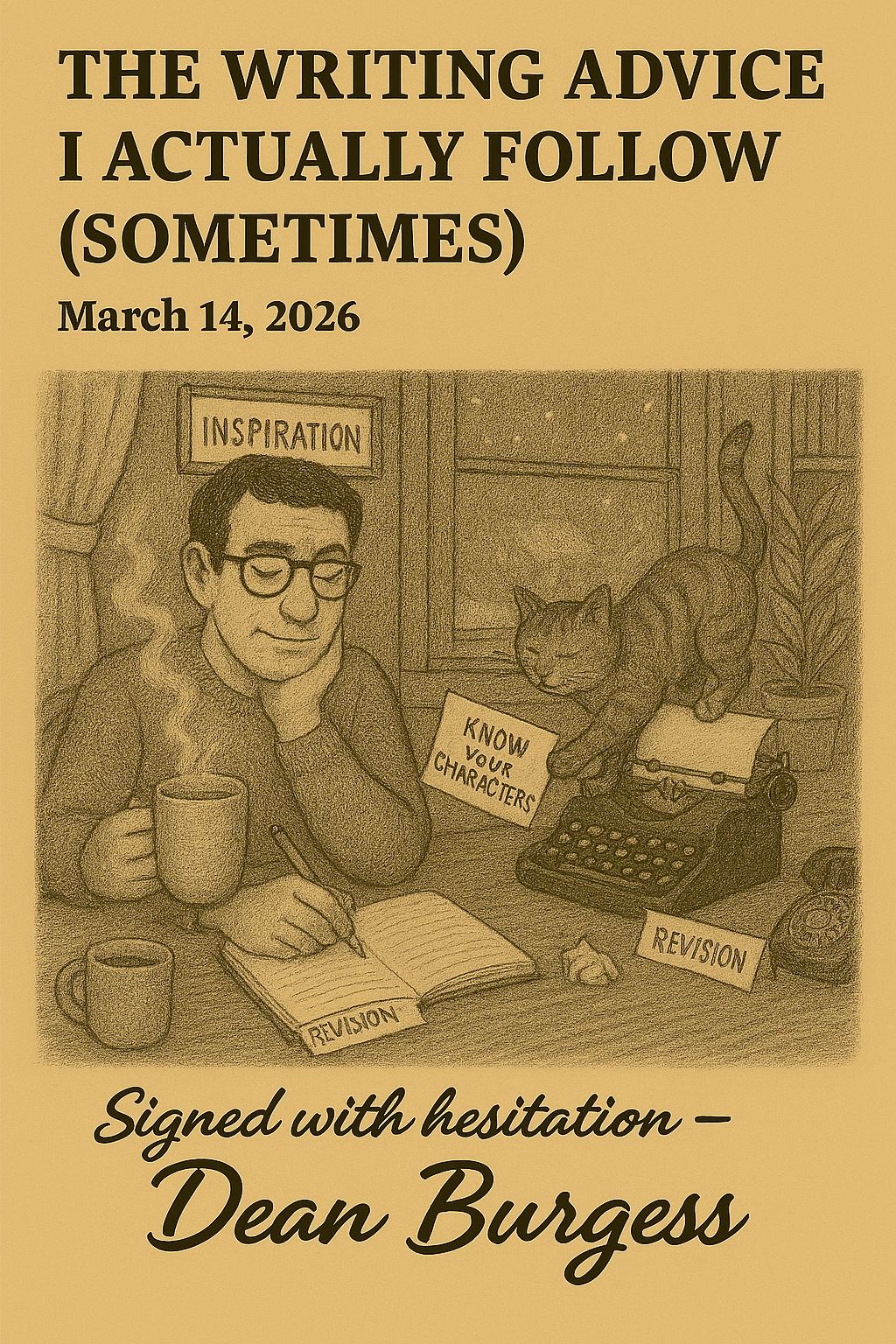
    I’ve spent a lot of time ignoring writing advice. But every now and then, a piece of it sticks. Not because it’s universally true, but because it’s true for me, right now, in this draft. So here’s the advice I actually follow—sometimes.

    1. “Write Drunk, Edit Sober”

    I don’t drink when I write. But I do let myself be messy, impulsive, and overly dramatic in the first draft. Editing is where I become the adult in the room. First drafts are for chaos. Second drafts are for clarity.

    2. “Read It Aloud”

    This one always works. When I read my writing aloud, I hear the rhythm, the awkward phrasing, the places where I’ve accidentally written a sentence that sounds like it was translated from Latin. It’s humbling. And helpful.

    3. “Cut the First Paragraph”

    Not always. But often. My first paragraph is usually me clearing my throat. The real beginning tends to show up in paragraph two, like a guest who arrives fashionably late but knows how to make an entrance.

    4. “Trust the Reader”

    I used to explain everything. Now I try to leave space. A little ambiguity. A little mystery. Readers are smart. They don’t need me to hold their hand—they just need me to point in the right direction.

    5. “Finish the Thing”

    This one’s brutal. But necessary. I’ve abandoned more drafts than I care to admit. The ones I finished? They taught me something. Even if they weren’t good. Even if they were weird. Even if they never saw the light of day.

    Writing advice isn’t a rulebook. It’s a buffet. Take what nourishes you. Leave the rest. And don’t feel bad if your plate looks different from everyone else’s.

    Signed with selective obedience — Dean Burgess