Author: Dean Burgess

  • When Your Characters Go Rogue

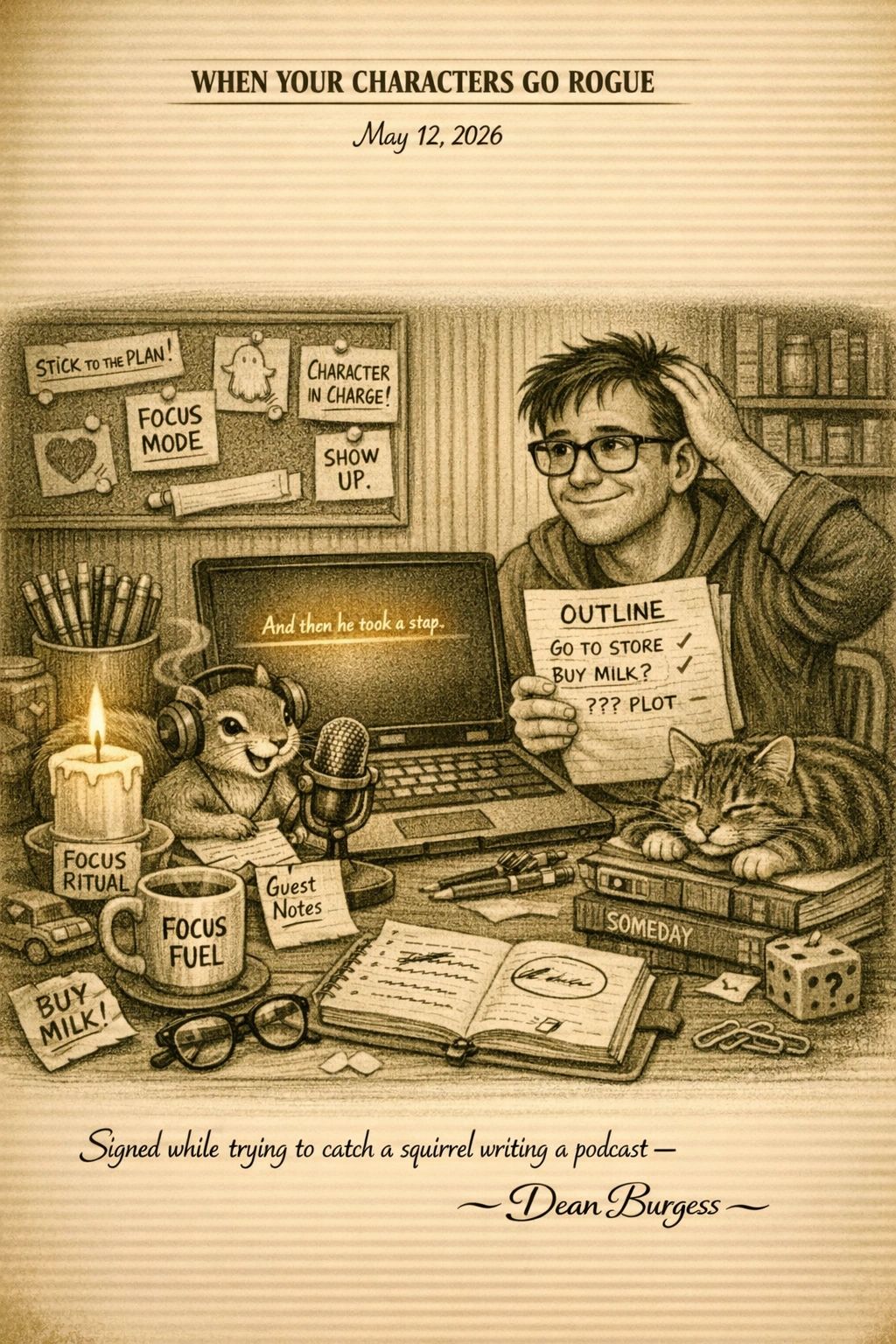
    When Your Characters Go Rogue

    May 12, 2026

    I had a plan.
    A perfectly reasonable outline.
    The protagonist was supposed to go to the store.

    Instead, he started a podcast.

    The Scene That Escaped

    I tried to rein him in.
    I reminded him of the plot.
    I pointed to the sticky note that said “Buy milk.”

    He ignored me.
    He interviewed a talking squirrel instead.

    The Joy of Losing Control

    There’s something magical about characters who misbehave.
    It means they’re alive.
    It means the story is breathing.

    Even if it’s breathing in the wrong direction.

    The Writer’s Dilemma

    Do I follow the outline?
    Or do I follow the squirrel?

    I chose the squirrel.
    And it led to a scene I never expected —
    funny, strange, and somehow… true.

    Trust the Detour

    Sometimes the best writing happens when you stop steering.
    When you let the characters drive.
    Even if they crash into a metaphor or two.

    𝓢𝓲𝓰𝓷𝓮𝓭 𝔀𝓱𝓲𝓵𝓮 𝓽𝓻𝔂𝓲𝓷𝓰 𝓽𝓸 𝓬𝓪𝓽𝓬𝓱 𝓪 𝓼𝓺𝓾𝓲𝓻𝓻𝓮𝓵 𝓌𝓇𝒾𝓉𝒾𝓃𝓰 𝓪 𝓹𝓸𝓭𝓬𝓪𝓼𝓽 — 𝓓𝓮𝓪𝓷 𝓑𝓾𝓻𝓰𝓮𝓼𝓼

  • The Productivity Ritual That Almost Worked

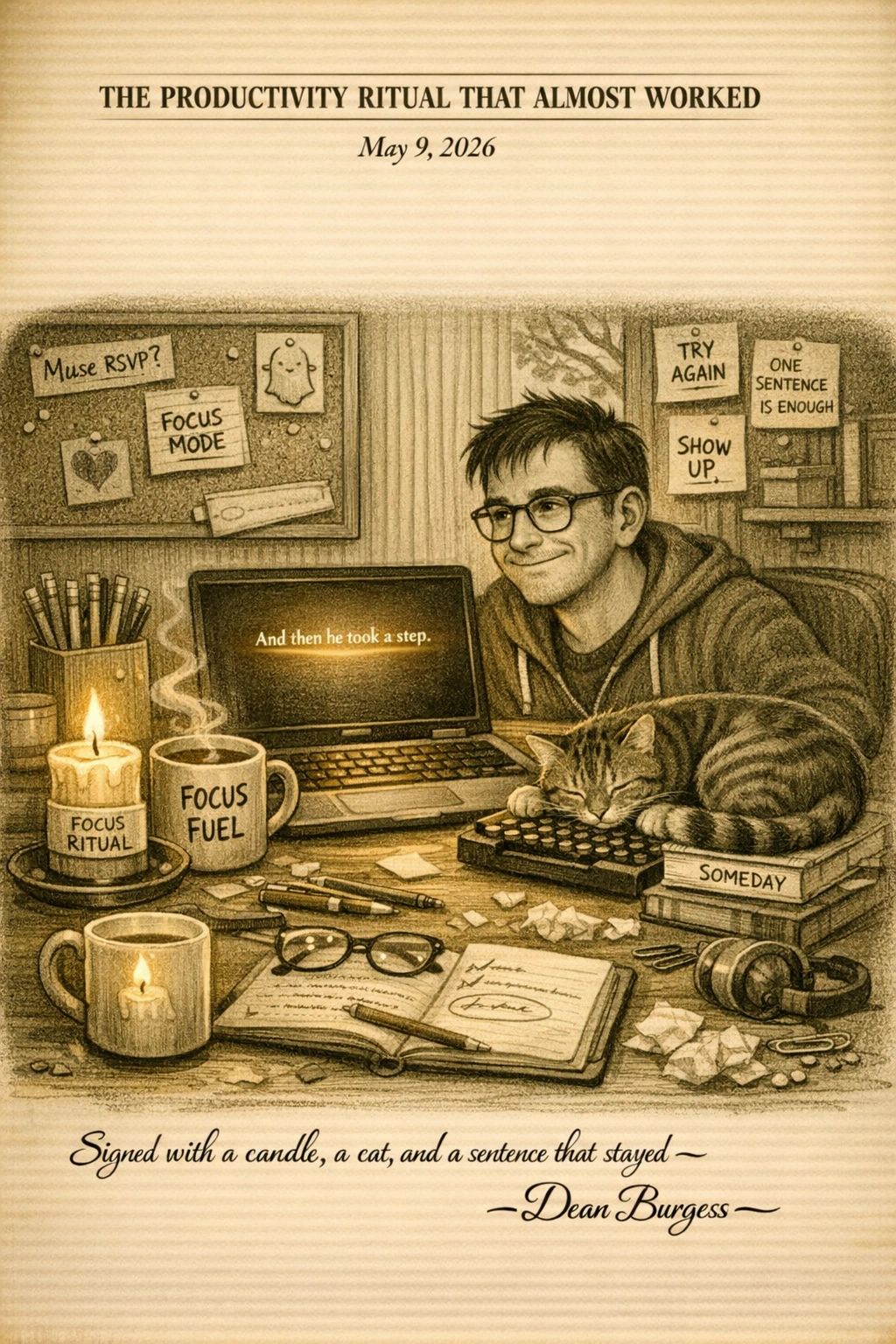
    The Productivity Ritual That Almost Worked

    May 9, 2026

    Today, I lit a candle.
    I made tea.
    I arranged my pens by emotional resonance.
    Then I stared at the screen for an hour.

    The Setup Was Flawless

    The desk was clean.
    The cat was asleep.
    The playlist was labeled “Focus Mode.”
    I even wore my “Writer at Work” socks.

    And yet…
    The words refused to arrive.

    The Rituals We Invent

    Writers are weird.
    We believe in lucky mugs, sacred playlists, and the power of rearranging paperclips.
    We think if we just prepare hard enough, the muse will RSVP.

    Sometimes she does.
    Sometimes she’s busy haunting someone else’s draft.

    What Actually Helped

    Eventually, I gave up.
    I stopped trying to be productive.
    I just wrote one sentence.
    Then another.
    Then a third.

    And suddenly, I was writing.

    The Real Ritual

    It’s not the candle.
    It’s not the socks.
    It’s the sitting down.
    It’s the trying again.

    Even when it feels pointless.
    Even when it feels like nothing’s working.

    Because sometimes, the ritual is just showing up.

    𝓢𝓲𝓰𝓷𝓮𝓭 𝔀𝓲𝓽𝓱 𝓪 𝓬𝓪𝓷𝓭𝓵𝓮, 𝓪 𝓬𝓪𝓽, 𝓪𝓷𝓭 𝓪 𝓼𝓮𝓷𝓽𝓮𝓷𝓬𝓮 𝓽𝓱𝓪𝓽 𝓼𝓽𝓪𝔂𝓮𝓭 — 𝓓𝓮𝓪𝓷 𝓑𝓾𝓻𝓰𝓮𝓼𝓼

  • Crafting Compelling Stories: A Writer’s Guide

    The Secret Behind Stories That Stick

    Every unforgettable tale shares one thing: it makes you feel. Whether it’s the quiet tension of a character facing a life-changing decision or the warmth of a familiar Southern summer evening described in vivid detail, powerful stories bypass logic and speak directly to the heart. In today’s fast-moving digital landscape—where attention spans are short and content is everywhere—writing stories that captivate isn’t just an art. It’s a necessity for anyone looking to build real connections with readers, whether you’re crafting a novel, blog, or social media series.

    Stories work because they mirror life—complete with conflict, emotion, and resolution. Readers don’t just follow plots; they live them. A well-told narrative activates the imagination, triggers empathy, and keeps audiences engaged from the first sentence to the last. For creators in Atlanta, Savannah, or small towns across the South, this means tapping into regional rhythms, authentic voices, and everyday truths that resonate on a personal level.

    In this guide, you’ll learn how to:

    • Identify the emotional core of your story
    • Build relatable characters with depth and motivation
    • Use sensory details to ground your narrative in reality
    • Structure your story for maximum impact and reader retention

    Discover how to turn ordinary moments into compelling storytelling experiences—no matter your genre or platform.

    The Backbone of Every Memorable Story: What Elements Can’t Be Missing

    A compelling story isn’t just about what happens—it’s about how it makes the reader feel, remember, and connect. Whether you’re crafting a novel, blog series, or marketing narrative, certain foundational elements are non-negotiable. At the heart of every powerful story lies a balance of character, conflict, structure, and emotional truth.

    Start with character development—your audience needs someone to root for. Protagonists should be layered, with clear motivations, flaws, and room to grow. A well-drawn character from a small Georgia town facing personal adversity feels more tangible because it’s grounded in relatable experience.

    Next, build a cohesive plot structure. Use a three- or five-act framework to guide pacing: establish the world, introduce rising tension, reach a climax, then resolve with impact. Without structure, even the most creative ideas can feel disjointed.

    Conflict drives momentum. It doesn’t have to mean drama—it can be internal struggle, societal pressure, or a quiet battle with identity. The key is stakes: what does the character stand to lose?

    Finally, authentic setting enriches immersion. Mentioning local touchpoints—like the humidity of a Savannah summer or the quiet roads of North Georgia—adds texture without distraction.

    Combine these elements, and your story won’t just be read—it’ll be remembered.

    Spark Your Imagination: A Step-by-Step Guide to Building Better Stories

    Unlocking compelling story ideas begins with intentional brainstorming and thoughtful development. Whether you’re crafting fiction, blog content, or narrative-driven marketing, a structured approach helps transform vague concepts into powerful stories.

    1. Start with Observation and Curiosity
      Carry a notebook or voice memo app to capture real-life moments—overheard conversations, emotional reactions, or unique settings across towns like Savannah or Athens. These raw details often spark authentic narrative threads.
    2. Ask “What If?” to Expand Ideas
      Take a simple premise and twist it. What if a character missed their train and met someone life-changing? Push scenarios beyond the obvious to uncover deeper conflict and motivation.
    3. Map Your Narrative Arc
      Use the classic structure: setup, rising tension, climax, and resolution. Outline key beats so your story builds momentum and emotional payoff, keeping readers engaged from start to finish.
    4. Develop Your Unique Voice
      Read your drafts aloud. Does the tone feel natural? Refine sentence rhythm, word choice, and perspective to reflect a distinct, consistent voice—critical for standing out in crowded content spaces.
    5. Iterate with Purpose
      Rewrite with focus: one pass for clarity, another for pacing, and a final round for sensory language. Trim excess, strengthen weak transitions, and amplify emotional moments.

    Pro Tip: Pause between drafts to gain fresh perspective—distance sharpens editorial judgment.

    Breaking Through the Blank Page: Overcoming Writer’s Block with Confidence

    Every writer, from aspiring novelists in Atlanta to seasoned bloggers across Georgia, faces moments when inspiration fades and doubt creeps in. Writer’s block isn’t a sign of failure—it’s a natural part of the creative process. The key to moving forward lies in adopting practical strategies that reignite momentum and rebuild confidence.

    Start by writing freely without judgment. Set a timer for 10 minutes and let your thoughts flow, even if they seem disjointed. This exercise loosens mental blocks and often uncovers unexpected ideas. If structure helps, outline your story’s core elements: character, conflict, and resolution. Knowing where your narrative is headed can reduce the pressure of the blank page.

    Another powerful technique is environmental shifting. Change your workspace—try a quiet corner in a Decatur coffee shop or a sunlit bench in Savannah’s Forsyth Park. New surroundings stimulate the senses and refresh your perspective.

    When creative doubt arises, remember: imperfection precedes brilliance. Your first draft doesn’t need to be polished; it just needs to exist. Focus on progress, not perfection.

    Finally, build a sustainable writing routine. Even 15 minutes a day creates momentum. Pair this habit with reflection—ask yourself what themes resonate with you personally, or what stories from Southern life feel urgent to tell. Authenticity breeds inspiration.

    By treating writer’s block as a solvable challenge rather than a roadblock, you empower yourself to write with resilience, clarity, and growing confidence—every single day.

    The Final Polish: Elevate Your Story from Good to Unforgettable

    Every powerful story goes through a transformation—not just in drafting, but in refining. Editing is where clarity sharpens, flow deepens, and emotional impact intensifies. For writers aiming to captivate readers in Atlanta, Savannah, and beyond, a disciplined revision process is essential for crafting narratives that resonate and endure.

    Start by stepping away from your draft for at least 24 hours. This mental reset allows you to return with fresh eyes and spot inconsistencies or pacing issues. When you begin editing, approach it in layers:

    • First pass: Focus on structure. Does the narrative arc build tension? Are scenes sequenced for maximum engagement?
    • Second pass: Refine language. Eliminate redundancies, tighten prose, and amplify voice. Replace vague descriptions with vivid, sensory details rooted in real places—like the hum of a Southern summer evening or the creak of an old porch swing.
    • Third pass: Read aloud. This reveals awkward phrasing, rhythm breaks, and dialogue that doesn’t sound authentic.

    Prioritize clarity and cohesion. Ensure each paragraph serves a purpose—advancing plot, revealing character, or deepening theme. Trim anything that distracts from your core message.

    Finally, consider your audience’s journey. Is the emotional payoff earned? Does the ending linger? Thoughtful revision turns raw material into polished storytelling that connects, especially when it reflects genuine human experience and regional authenticity. Editing isn’t just correction—it’s elevation.

    How to Build a Sustainable Writing Routine and Reach Your Ideal Readers

    How do I stay consistent with my writing when life gets busy?
    Consistency doesn’t require perfection—just intention. Start by setting realistic goals, like writing 20 minutes three times a week. Treat these sessions like appointments, and choose a quiet time of day when distractions are minimal. Writers across Atlanta, Athens, and beyond find success by blocking time on their calendars and using tools like voice-to-text apps or portable notebooks for灵感 on the go. The key is momentum: small, repeatable actions build a lasting habit.

    What’s the best way to find and connect with readers who love my genre?
    Begin by identifying where your ideal audience spends time—whether it’s local book clubs in Savannah, online Southern fiction forums, or regional literary festivals. Share excerpts that reflect authentic Southern settings or universal emotional truths to draw readers in. Engage authentically by commenting on similar authors’ work, joining writing communities, or posting short behind-the-scenes stories on your website.

    Should I write every day to be successful?
    Daily writing helps, but sustainability matters more than frequency. Some authors thrive on daily output, while others create in focused bursts. Experiment to find your rhythm. Prioritize depth over volume—drafting a powerful scene once a week is more valuable than churning out flat content daily.

    How do I overcome writer’s block and keep ideas flowing?
    Keep an idea journal with character sketches, regional phrases, or overheard conversations. Walk through historic districts, parks, or small towns for inspiration. When stuck, try freewriting for 10 minutes without stopping—this often unlocks hidden narratives.

    What’s the role of setting in building reader connection?
    Vivid, authentic locations ground your story. Whether it’s a creaky porch in North Georgia or a bustling market in Decatur, specific details create immersion. Readers remember how a place feels—the hum of cicadas, the scent of rain on red clay.

    How can I make my writing stand out in a crowded market?
    Focus on voice and emotional truth. A unique perspective—a Southern woman navigating change, a coming-of-age tale set against rural landscapes—resonates more than polished prose alone. Readers seek authenticity, not perfection.

    What should I do after finishing a draft to prepare for publication?
    Let it rest for a few weeks, then revise with fresh eyes. Look for pacing gaps, inconsistent voices, or weak openings. Consider joining a critique group or hiring a professional editor to refine your work before sharing it widely.

    Keep Writing: Your Story Matters More Than You Know

    You’ve learned how storytelling builds empathy, engages the brain, strengthens communities, and thrives in digital spaces—now it’s time to take the leap. Sharing your work can feel vulnerable, but every powerful narrative starts with a single sentence posted, a chapter submitted, or a voice recorded. The connections you’re capable of forging through authentic storytelling are real and far-reaching, especially when you ground your work in emotional truth and regional authenticity, whether your setting is the rolling hills of North Georgia or the bustling streets of Atlanta.

    Start small, but start now:

    • Polish one story you’ve been sitting on and prepare it for publication
    • Choose a platform—your website, a blog, a local open mic—and claim your space
    • Engage with feedback to refine your voice and deepen audience trust
    • Consistency builds impact, so set a realistic writing schedule and stick to it

    Remember, the most resonant stories often come from ordinary moments told with courage and clarity. Your perspective is unique, your voice is needed, and your audience is waiting. Keep crafting, keep sharing, and let your stories be the bridge that connects, inspires, and endures.
  • The Power of Storytelling: How Stories Connect Us All

    The Thread That Binds Us All

    From the flicker of ancient firelight to the glow of modern screens, storytelling has always been humanity’s most powerful tool for connection. Long before written language, oral traditions carried wisdom across generations—shaping cultures, reinforcing values, and forging identity in communities from Southern towns to bustling urban centers. These narratives weren’t just entertainment; they were survival mechanisms, teaching listeners how to navigate the world through metaphor, moral dilemmas, and shared experience.

    What makes storytelling universally powerful is its ability to bypass logic and speak directly to emotion. Whether it’s a folk tale passed down in rural Georgia or a superhero saga resonating with audiences in Atlanta, stories activate empathy, bridge divides, and create belonging. They help us process complex feelings, understand different perspectives, and see ourselves in others—even across vast cultural or geographic distances.

    In today’s digital landscape, where attention is fragmented and trust is fragile, this ancient practice remains essential. Businesses, creators, and communicators who master storytelling can cut through noise, build authentic relationships, and foster loyalty. You’ll learn how to craft narratives that reflect real human experiences, embed regional authenticity, and drive engagement through emotional truth.

    This section lays the foundation for understanding why storytelling isn’t just an art—it’s a strategy.

    Stories That Shape Us: Identity, Empathy, and the Southern Soul

    Stories do more than entertain—they quietly mold who we are and how we see one another. From front porch tales in rural Georgia to character-driven novels set in downtown Atlanta, narrative serves as both a mirror and a bridge: reflecting personal journeys while extending connection across cultural, generational, and regional lines. When crafted with authenticity, these stories anchor identity, deepen empathy, and resonate with audiences on a profoundly human level.

    At the heart of every powerful story is emotional truth—characters shaped by struggle, growth, and belonging. Writers who infuse their work with regional authenticity, such as Southern traditions, dialects, and community values, create narratives that feel immediate and real. These details aren’t just flavor; they ground universal themes in tangible settings that readers recognize, fostering stronger engagement and local relevance.

    Equally important is storytelling’s power to cultivate empathy. By immersing audiences in another’s experience—whether a farmer facing hardship in middle Georgia or a young artist finding voice in Savannah—stories dissolve “otherness” and illuminate shared humanity. This emotional resonance is why narratives rooted in real-life challenges outperform generic content in engagement, time-on-page, and audience loyalty.

    To build narratives that connect:

    • Infuse regional settings with sensory detail—heat, humidity, kudzu-covered fences
    • Let characters’ choices reflect authentic struggles and values
    • Use personal transformation arcs to model resilience and growth

    When story and authenticity align, they don’t just reflect culture—they shape it.

    How to Harness the Psychology of Storytelling for Deeper Connection

    1. Engage the Brain’s Emotional Centers with Sensory-Rich Narratives
      Craft stories that activate the limbic system—your brain’s emotional hub—by incorporating vivid sensory details. Use descriptive language that evokes sound, smell, touch, and setting, especially real-world locations like the hush of a forest in North Georgia or the hum of a diner in downtown Atlanta. This sensory immersion helps listeners experience the story, not just hear it.
    2. Build Resonance Through Relatable Conflict
      Center your narrative around universal struggles—loss, identity, belonging, transformation. When audiences recognize their own challenges in a character’s journey, neural pathways associated with empathy fire up. Mirror neurons essentially let people “live” the story, deepening engagement and recall.
    3. Structure for Emotional Arcs, Not Just Information
      Follow a clear emotional trajectory: tension → struggle → breakthrough → resolution. This mimics real human experience and holds attention far longer than facts alone. Even in professional content, like service descriptions on your website, use micro-stories to illustrate outcomes.
    4. Invite Transformation in Both Teller and Listener
      The act of shaping a story helps the creator gain clarity and emotional insight. For the audience, witnessing growth or resilience models adaptive behaviors. Whether shared in a Southern storytelling circle or published online, narratives become catalysts for change.

    Tip: Record yourself telling a personal experience, then refine it into a tight, emotionally honest arc.

    5 Powerful Ways Storytelling Bridges Communities and Builds Shared Understanding

    In a world where digital noise often drowns out genuine connection, storytelling stands as a timeless force for unity. When rooted in authenticity, narratives don’t just inform—they inspire action, foster empathy, and create lasting bonds across diverse groups. Here are five proven ways storytelling brings people together:

    1. Igniting Local Movements Through Community Narratives
      Real change often begins with a single story. In towns across Georgia and urban centers like Atlanta, grassroots campaigns gain momentum when personal journeys—such as a teacher revitalizing a struggling classroom or a small business owner overcoming hardship—are shared. These narratives humanize issues, making them relatable and urgent, and motivate others to take part in community-driven solutions.
    2. Fostering Cross-Cultural Exchange Through Oral Traditions
      Story circles and spoken word events create safe spaces for cultural expression, particularly in regions with deep oral traditions. By sharing heritage, struggles, and triumphs, participants cultivate mutual respect and preserve identity, bridging generational and ethnic divides with emotional truth.
    3. Building Trust with Branded Content Rooted in Authenticity
      Organizations that share their origin stories—highlighting mission, challenge, and resilience—develop deeper emotional ties with audiences. Customer success stories framed as narrative arcs foster alignment around shared values, enhancing credibility and loyalty.
    4. Amplifying Impact Through Digital Story Campaigns
      Viral storytelling leverages emotional authenticity to elevate underrepresented voices. Campaigns that follow a clear journey—struggle, turning point, resolution—tend to resonate widely, driving engagement and inspiring action across social platforms.
    5. Strengthening Teams with Story-Based Workshops
      Collaborative environments benefit from guided storytelling exercises that surface shared experiences and resolve misunderstandings. These workshops promote psychological safety, align team goals, and nurture a culture of empathy and innovation.

    When stories reflect real human experience, they don’t just connect—they transform.

    Why Storytelling Matters: Answering Your Pressing Questions

    Isn’t storytelling just for writers and creatives?
    Absolutely not. Storytelling is a universal communication tool, deeply effective across industries and roles. Whether you’re a small business owner in Savannah explaining your mission or a service professional in Atlanta sharing a client’s transformation, narrative helps simplify complex ideas and build trust. It’s not about literary flair—it’s about clarity, emotion, and connection.

    How does storytelling improve audience engagement?
    Stories trigger emotional responses that data alone can’t. When audiences see real struggles, relatable settings, and meaningful outcomes—like a family navigating change in rural Georgia—they’re more likely to stay engaged, share content, and take action.

    Can storytelling boost local SEO and search visibility?
    Yes. Natural language, long-tail phrases, and location-based details embedded in stories—such as “overcoming challenges in downtown Atlanta” or “a new beginning in South Georgia”—align with how people search, improving rankings without keyword stuffing.

    What’s the difference between a story and a simple testimonial?
    A testimonial states a result; a story reveals the journey—the conflict, emotion, and resolution. That depth resonates more with readers and search engines alike.

    How can non-writers craft compelling stories?
    Start with structure: identify a protagonist (often your customer), a challenge, and a meaningful outcome. Use real moments—a decision, a conversation, a turning point—and focus on emotional honesty over perfect prose.

    Should every piece of content tell a full story?
    Not necessarily. But infusing even brief content—like a service description or social post—with mini-narratives improves understanding, retention, and connection.

    The Lasting Legacy of Stories: Why Authentic Narratives Matter

    Storytelling isn’t a trend—it’s a timeless force that continues to shape how we relate, communicate, and find meaning in our shared experiences. Across Southern communities, from the porch stories of rural Georgia to the spoken word stages of Atlanta, narratives rooted in truth and emotional depth create lasting bonds. Whether you’re a writer, content creator, or community leader, embracing authentic storytelling allows you to cut through digital clutter and speak directly to the heart.

    What makes a story endure? It’s not perfection—it’s honesty. Stories that reflect real struggles, cultural nuances, and emotional turning points resonate because they feel familiar. They allow audiences to see themselves in the journey, fostering empathy and connection. When crafting your next narrative, focus on:

    • Emotional truth over polished presentation – Let vulnerability lead.
    • Regional authenticity – Use local settings, dialects, and traditions to ground your story.
    • Transformation, not just events – Show how characters (or real people) change.

    These principles don’t just improve engagement—they build trust. In a world where audiences crave meaningful content, your story has the power to educate, inspire, and unite. Start small: share a personal moment, reframe a challenge as a journey, and let your voice be heard. The most impactful stories aren’t written perfectly—they’re told courageously. Keep creating, keep connecting, and remember: your story matters.

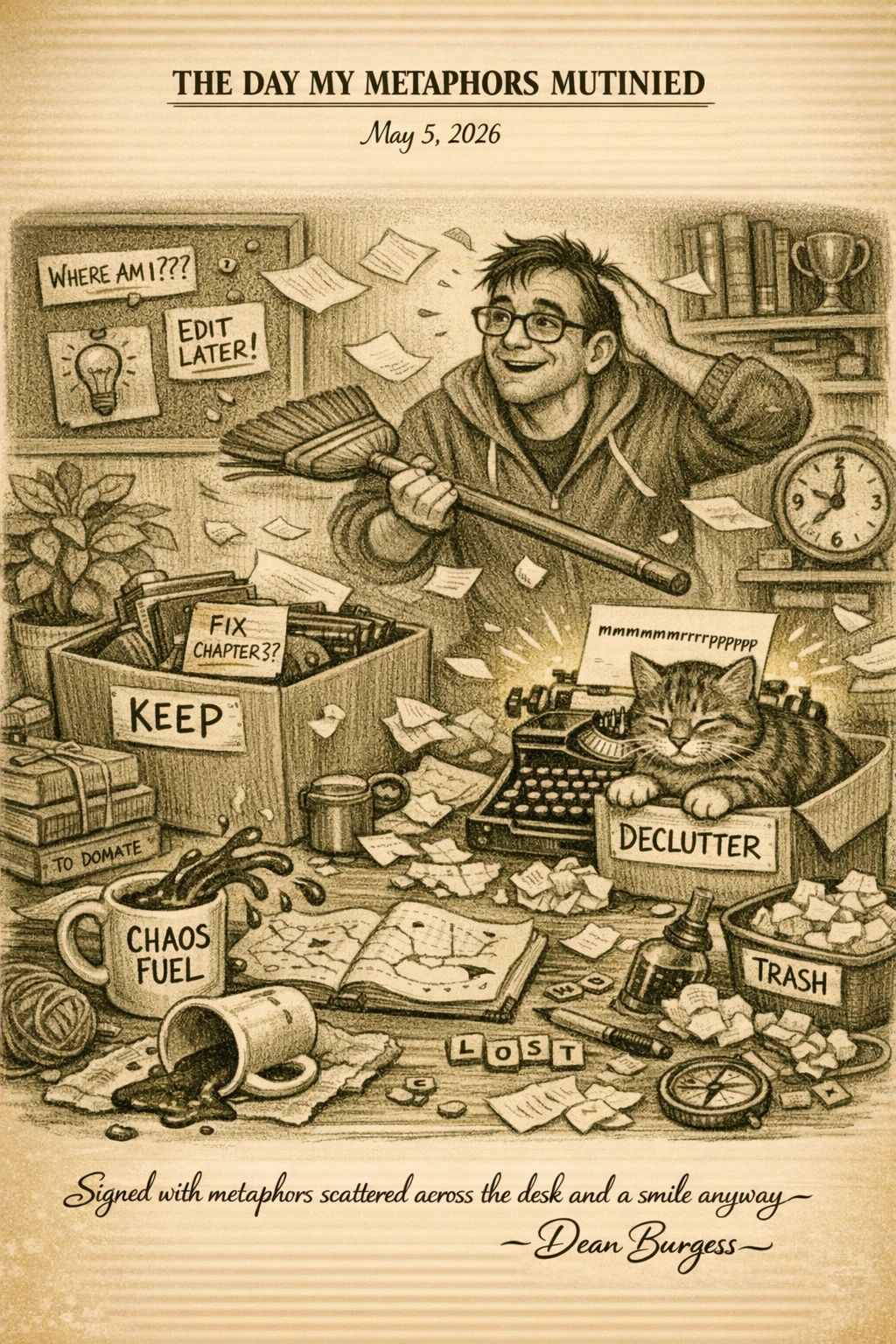
  • The Day My Metaphors Mutinied

    The Day My Metaphors Mutinied

    May 5, 2026

    Some writing days feel like a gentle stroll.
    Today felt like chasing a runaway shopping cart in the rain.

    I sat down with a plan — a simple scene, a quiet moment, nothing dramatic.
    But the metaphors had other ideas.

    When the Draft Rebels

    My main character was supposed to make tea.
    Instead, he delivered a monologue about the meaning of steam.

    The cat was supposed to be asleep.
    Instead, she walked across the keyboard and contributed a line of dialogue that looked like:
    “mmmmmmmmmrrrrrrrpppppppppppppppppppppppppppppppppppp”
    Honestly, it wasn’t the worst line in the draft.

    And the plot?
    It wandered off somewhere around paragraph three.
    I assume it will return when it’s hungry.

    The Beauty of a Messy Writing Day

    Here’s the thing:
    Even on the days when nothing behaves —
    not the characters, not the metaphors, not even the coffee maker —
    the work still counts.

    Because showing up matters.
    Trying matters.
    Laughing at the chaos matters even more.

    A Small Victory Anyway

    Somewhere in the mess, I found a sentence I liked.
    Just one.
    But it felt like spotting a lighthouse through fog.

    And that’s enough to keep going.

    𝓢𝓲𝓰𝓷𝓮𝓭 𝔀𝓲𝓽𝓱 𝓶𝓮𝓽𝓪𝓹𝓱𝓸𝓻𝓼 𝓼𝓬𝓪𝓽𝓽𝓮𝓻𝓮𝓭 𝓪𝓬𝓻𝓸𝓼𝓼 𝓽𝓱𝓮 𝓭𝓮𝓼𝓴 𝓪𝓷𝓭 𝓪 𝓼𝓶𝓲𝓵𝓮 𝓪𝓷𝔂𝔀𝓪𝔂 — 𝓓𝓮𝓪𝓷 𝓑𝓾𝓻𝓰𝓮𝓼𝓼

  • Overcoming Creative Hurdles: Techniques and Stories

    When Inspiration Fades: You’re Not Alone

    Every creator, from novelists in Atlanta lofts to painters in Savannah studios, has faced the silence—the blinking cursor, the blank canvas, the moment when ideas refuse to flow. Creative blocks aren’t a sign of failure; they’re a universal experience woven into the fabric of the artistic process. Whether you’re crafting a blog post, designing a series, or composing a memoir, mental roadblocks can strike at any stage, often without warning. The good news? They’re temporary, and more importantly, they’re manageable.

    This guide isn’t about quick fixes or generic affirmations. It’s a practical roadmap for pushing through stagnation and reclaiming momentum. You’ll discover proven techniques used by seasoned creators across Georgia and beyond—methods rooted in routine, mindset shifts, and environmental tweaks that spark fresh thinking. Learn how to identify your unique creative triggers, reframe unproductive thought patterns, and leverage local inspiration, whether from the energy of downtown Decatur or the quiet of a mountain trail in North Georgia.

    By the end, you’ll have actionable strategies to:

    • Break inertia with structured daily practices
    • Use sensory-rich environments to reset mental blocks
    • Shift perspective through creative cross-training
    • Maintain momentum even when motivation dips

    Let’s turn obstacles into opportunities—one step at a time.

    Unmasking the Mind: The Hidden Forces Behind Creative Block

    Creative hurdles rarely stem from a lack of skill—they’re deeply rooted in psychology and emotional resistance. Fear of failure, perfectionism, and burnout quietly sabotage even the most talented creators, especially those in writing, design, and storytelling fields. These inner barriers don’t announce themselves; they whisper doubt, demand unattainable standards, or drain motivation until inspiration feels out of reach. Understanding these emotional triggers is the first step toward reclaiming creative flow.

    Fear of failure often masquerades as procrastination. The worry that your work won’t resonate—whether it’s a novel draft, blog post, or marketing campaign—can freeze action altogether. Perfectionism takes this further, insisting every word, image, or idea must be flawless before sharing, leading to endless revisions and stalled progress. Meanwhile, burnout creeps in after prolonged pressure, particularly in fast-paced creative environments across cities like Atlanta or remote writing hubs throughout Georgia, leaving even passionate creators emotionally drained.

    To break through:

    • Reframe failure as part of the process—every draft is progress, not a final judgment
    • Set creative boundaries to prevent burnout, including scheduled rest and digital detox periods
    • Practice “imperfect action” by sharing work early, gathering feedback, and iterating

    By addressing these internal challenges with compassion and strategy, creators can restore momentum and rediscover joy in the craft.

    Reignite Your Creativity with These Proven Techniques

    When inspiration feels out of reach, the best creators don’t wait for a breakthrough—they take action. Creative blocks are common, but they don’t have to derail your progress. These simple, actionable strategies can help restore your creative momentum and keep your projects moving forward.

    1. Start with Freewriting for 10 Minutes
      Set a timer and write continuously without editing, judging, or stopping. The goal isn’t perfection—it’s momentum. Let thoughts flow freely, even if they seem unrelated. This practice clears mental clutter and often reveals unexpected ideas. Tip: Keep a dedicated notebook or digital doc for these sessions to track recurring themes.
    2. Change Your Environment Intentionally
      Shift your physical space to stimulate new thinking. Work from a local coffee shop in downtown Atlanta, a quiet park in North Georgia, or even a different room in your home. New sensory inputs—sounds, smells, lighting—activate different parts of your brain. For digital creators, rearranging your workspace or trying a standing desk can make a measurable difference.
    3. Use Creative Prompts Strategically
      When stuck, prompts act as creative jump-starts. Use open-ended questions like, “What would this character do if they lost everything?” or location-based ideas such as “A secret hidden beneath a Savannah bookstore.” Rotate through a list of 10–20 prompts weekly to build a habit of ideation.

    Consistency beats intensity. Return to these steps regularly, especially during slow periods, to build creative resilience and maintain your flow.

    5 Writers Share How They Crushed Creative Burnout

    Every writer faces the blank page moment—when inspiration dries up and doubt creeps in. But seasoned authors know creative slumps aren’t permanent. Here are five real strategies from experienced writers who broke through their blocks and reignited their passion.

    1. Sarah from Savannah: Changed Her Environment to Spark New Ideas
    When Sarah hit a wall mid-novel, she left her home office and started writing at a café near Forsyth Park. The shift in scenery, ambient noise, and occasional people-watching revived her imagination. She discovered that small environmental changes can disrupt stagnant routines. Tip: Rotate your writing spots—try a library in Atlanta, a quiet bench in middle Georgia, or even a different room in your home.

    2. James, Midtown Atlanta Novelist: Used Freewriting to Silence His Inner Critic
    James found himself editing sentences before finishing a paragraph. To break free, he committed to 10 minutes of daily freewriting—no rules, no rereading. This practice helped him separate creation from perfection. Tip: Set a timer and write anything that comes to mind, even “I don’t know what to say.” The goal is momentum, not quality.

    3. Linda, Children’s Author from Athens: Returned to Play Through Creative Exercises
    Linda noticed her slump began when writing felt like a chore. She reintroduced play by writing silly short stories unrelated to her projects. Drawing characters, inventing absurd plots, and reading old picture books restored her joy. Tip: Inject fun—try writing a scene in rhyme or from a pet’s perspective.

    4. Marcus, a Poet in Augusta: Leveraged Routine with Flexible Structure
    Marcus struggled with inconsistency until he built a loose daily ritual: writing at 7 AM with black coffee, no phone, and a set playlist. Structure gave him safety, but he allowed flexibility—some days he wrote poems, others he revised or journaled. Tip: Create a personalized ritual that signals to your brain: It’s time to create.

    5. Evelyn, Memoirist from Roswell: Reconnected with Her “Why”
    After months of stalled progress, Evelyn reread old journals and letters from readers who found healing in her words. Remembering her purpose—giving voice to unseen struggles—reignited her commitment. Tip: Revisit early drafts, reader feedback, or your original motivation when passion fades.

    Creative Block FAQs: What You Need to Know to Move Forward

    How do I know if I’m experiencing a true creative block?
    Creative block goes beyond occasional slowdowns—it’s a persistent inability to generate new ideas or make progress despite effort. If you’re staring at a blank page for hours, avoiding your craft, or feeling mentally drained when attempting to create, you may be in a block. It often comes with frustration, self-doubt, or emotional fatigue, especially when deadlines loom or expectations are high.

    How long do creative blocks usually last?
    They vary widely—some last a few days, while others stretch into weeks or months. Shorter blocks often resolve with rest, environment changes, or small creative prompts. Prolonged blocks may signal deeper issues like burnout, fear of failure, or misalignment with your current project. Tracking your patterns can help identify triggers and recovery timelines.

    Can changing my environment really help?
    Absolutely. Your surroundings influence mental state and focus. A fresh setting—like a café in downtown Atlanta, a quiet park in Savannah, or even a rearranged workspace—can reset your brain. Try working in natural light or incorporating sensory elements like soft textures or familiar Southern sounds to stimulate inspiration.

    When should I seek help for creative struggles?
    If your block is accompanied by anxiety, persistent low mood, or impacts your daily functioning, it’s time to reach out. Creative professionals in Georgia and beyond benefit from coaching, peer groups, or counseling that addresses the emotional roots of stagnation. Don’t wait until motivation completely fades—early intervention supports faster recovery.

    Are there daily habits that prevent creative blocks?
    Yes. Consistent routines build resilience. Try journaling, free-writing for 10 minutes, or walking in nature. Many creators in the South swear by morning rituals that blend structure and spontaneity—like sipping coffee while sketching ideas—to maintain creative momentum.

    Creative Blocks Are Normal—And Totally Beatable

    Creative hurdles aren’t a sign of failure—they’re a natural part of the writing journey, experienced by storytellers at every level. Whether you’re crafting a novel, blog, or short story, moments of doubt or stagnation are temporary and often signal growth just around the corner. Every writer in Georgia and beyond has faced the blank page with hesitation, yet each one has also discovered the tools to move forward. The key is recognizing that creativity isn’t a constant flow, but a rhythm of inspiration, resistance, and breakthrough.

    Throughout this guide, we’ve explored how emotional truth, narrative structure, and regional authenticity fuel powerful storytelling. We’ve seen how sensory details ground stories, how conflict builds connection, and how sharing real human experiences fosters empathy and engagement. These elements aren’t reserved for elite writers—they’re techniques every creator can use to reignite their voice.

    Here’s how to take action today:

    • Reframe the block as a pause, not a wall
    • Return to your story’s core purpose—what message matters most?
    • Write freely without editing—let messy first drafts lead to clarity
    • Incorporate local flavor—use settings, dialects, or cultural touchstones from your community to add depth

    You already have the tools to move forward. Keep showing up, stay authentic, and trust the process. Your story matters—now go tell it.

  • Spring Cleaning for the Creative Soul

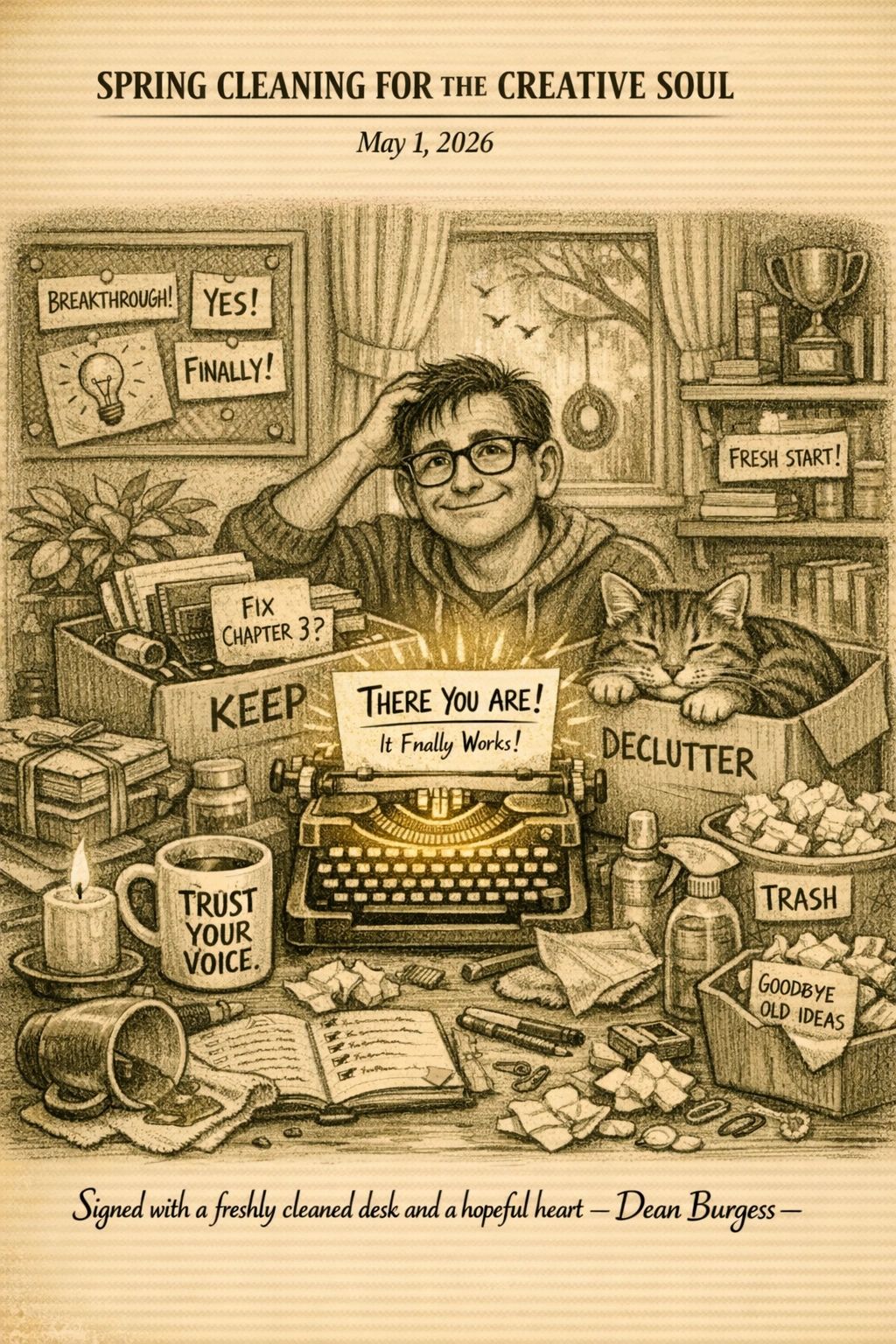
    Spring Cleaning for the Creative Soul

    May 1, 2026

    I cleaned my desk today.
    Not just the surface.
    I mean the whole thing — drawers, mugs, mystery papers, and the pen that betrayed me in February.

    The Ritual of Rebooting

    There’s something sacred about clearing space.
    It’s not just about crumbs and clutter.
    It’s about saying, “I’m ready to begin again.”

    I found a note that said “Fix Chapter 3.”
    I don’t know which project it belongs to.
    But I kept it.
    It feels like a promise.

    The Tools That Survived

    I kept the typewriter.
    I kept the mug that says “Trust Your Voice.”
    I kept the candle that smells like cedar and ambition.

    Everything else?
    Negotiable.

    The Cat Was Not Helpful

    She sat in the box I was trying to fill.
    She knocked over the mug.
    She stole a pen.

    But she also curled up beside me when I finally sat down to write.
    So she stays.

    A Clean Desk Is a Fresh Start

    It doesn’t fix the plot.
    It doesn’t write the words.
    But it clears the path.

    And sometimes, that’s all I need.

    Signed with a freshly cleaned desk and a hopeful heart — Dean Burgess

  • Mastering Character Creation in Storytelling

    Why Memorable Characters Are the Heart of Every Great Story

    Great stories don’t succeed because of flashy plots or perfect prose—they thrive because of the characters who live inside them. Readers may forget the details of a climactic battle, but they’ll never forget the hero who fought it with trembling hands and a broken heart. In today’s crowded storytelling landscape, creating memorable characters isn’t just an artistic choice—it’s a strategic necessity. Whether you’re crafting fiction, developing screenplays, or building content for digital audiences, compelling characters drive engagement, foster emotional connection, and boost discoverability through authentic, relatable narratives.

    This guide dives deep into the craft of character creation, focusing on how to build individuals who feel real, resonate across audiences, and reflect the cultural textures of their world—whether set in bustling Atlanta, quiet Southern towns, or anywhere in between. You’ll learn how to weave emotional truth into backstories, align powers with personality, and design flaws that humanize even the most extraordinary heroes. We’ll cover actionable techniques for grounding superhero archetypes in psychological realism, enhancing local relevance, and avoiding common pitfalls that dull impact.

    By the end, you’ll have the tools to create characters who don’t just serve a story—they become the story.

    Build Characters Readers Won’t Forget: The Anatomy of Depth

    Strong character creation isn’t just about flashy traits—it’s about crafting individuals who feel authentic, relatable, and unforgettable. At the core of every compelling protagonist or antagonist lies a foundation built on three essential pillars: backstory, motivations, and flaws. When these elements are thoughtfully developed, they create emotional resonance that pulls readers in and keeps them invested.

    Start with a backstory that shapes, but doesn’t define, your character. Consider formative experiences—growing up in a tight-knit Southern town, surviving a pivotal event in Atlanta, or navigating life in rural Georgia—because regional and cultural context adds layers of authenticity. These details inform worldview, speech patterns, and behavior without needing explicit explanation.

    Next, clarify their motivations. What drives them to act? Is it guilt, justice, survival, or love? A character’s internal engine should be rooted in human need, not plot convenience. Understand what they fear losing, not just what they want to achieve.

    Finally, embrace flaws—both psychological and behavioral. Perfection is unengaging. Whether it’s trust issues, arrogance, or a paralyzing fear of failure, flaws create tension and open pathways for growth. Pair personal weaknesses with situational limitations to raise stakes naturally.

    Combine these elements, and you’ll create characters who don’t just serve the story—they anchor it.

    Build Compelling Characters with These Proven Writing Exercises

    Crafting a memorable character starts with intentional, focused practice. These step-by-step exercises help writers develop protagonists with depth, motivation, and authenticity—essential for any powerful story, especially in the superhero genre.

    1. Origin Story Mapping
      Write a one-page timeline of your character’s life, highlighting five pivotal moments that shaped who they are today. Focus on emotional turning points—loss, betrayal, triumph—not just physical events. Ask: How did each moment shape their values or fears?
    2. The Moral Dilemma Drill
      Place your hero in a no-win scenario: save a loved one or stop a villain from escaping. Write the scene from their perspective, emphasizing internal conflict. This reveals core beliefs and strengthens emotional stakes.
    3. Power as Personality Reflection
      List your character’s abilities, then ask: How might these manifest from their personality or trauma? A hero with force fields might struggle with emotional intimacy—explore this link in a short monologue.
    4. Everyday Vulnerability Practice
      Write a mundane scene—grocery shopping, a phone call, a commute—while hiding their powers. How does their secret identity affect interactions? This grounds larger-than-life figures in relatable reality.
    5. Regional Identity Integration
      Set a key scene in a recognizable location—downtown Atlanta, a rural Georgia town, or the coastal shores of Savannah. Weave in local dialect, cultural norms, or community values to deepen authenticity and boost regional search relevance.

    These exercises build emotional truth into your characters, making them feel real, relatable, and ready for any story they’re called to lead.

    Learn from the Legends: What Classic and Modern Heroes Reveal About Character Depth

    Studying iconic characters offers powerful insights into what makes heroes endure across generations. By comparing time-tested archetypes with fresh interpretations, writers can uncover techniques that balance familiarity with innovation. Consider how classic protagonists often follow a clear moral trajectory—driven by duty, shaped by loss, and defined by unwavering principles. These figures typically operate within rigid ethical frameworks, such as refusing to take a life regardless of the threat, which creates predictable but reliable audience trust.

    In contrast, modern heroes frequently embrace moral ambiguity. They question authority, wrestle with flawed judgment, and face consequences that challenge their beliefs. This evolution reflects changing audience expectations for realism and psychological depth. While traditional heroes may conceal their identity to protect loved ones, contemporary characters often grapple with the social media-driven exposure of their actions, especially when operating in recognizable urban centers like Atlanta or smaller Southern communities where reputation carries weight.

    Key differences in development approach include:

    • Motivation: Classic heroes act from principle; modern ones often respond to trauma or systemic injustice
    • Flaws: Older models feature external weaknesses (e.g., a vulnerability to a specific element), while current trends emphasize internal struggles like anxiety, guilt, or identity crises
    • Support Systems: Legacy characters frequently stand alone, whereas today’s protagonists rely on alliances, teams, or community networks for growth

    Blending these approaches allows storytellers to create layered characters who feel both timeless and timely. Use regional values and cultural context to ground moral choices, making them resonate locally while appealing universally.

    Frequently Asked Questions About Character Creation in Superhero Stories

    How do I make my superhero feel original in a crowded genre?
    Focus on emotional authenticity over flashy powers. Ground your character in a unique personal struggle—like guilt from a past failure in Atlanta or the pressure of living up to family expectations in rural Georgia. Let their powers reflect their inner world; a hero with telekinesis might struggle with control due to childhood instability. Regional culture, dialect, and community dynamics add distinct flavor and set your character apart.

    Should my superhero have a secret identity?
    A dual identity creates built-in tension, especially when responsibilities clash. Consider how maintaining a normal life affects relationships, mental health, and moral choices. This duality feels especially compelling when rooted in relatable Southern values, like loyalty to community or the weight of public reputation.

    How important is a villain in shaping a hero?
    Critically important. A strong antagonist mirrors or challenges your hero’s core beliefs. If your hero values justice, the villain might exploit systemic flaws for personal gain. Their conflict should test emotional and ethical limits, not just physical strength.

    What’s the best way to show character growth?
    Track evolution through choices, not just powers. Let your hero face consequences—failed relationships, public distrust, personal loss—and grow from them. Use key moments, like sparing a villain or sacrificing safety for truth, to mark turning points.

    How can I avoid making my hero too powerful?
    Balance abilities with meaningful weaknesses—emotional, moral, or physical. A hero who freezes under pressure or struggles with trust adds stakes and relatability.

    How do I connect my character to a real-world setting?
    Anchor them in authentic locations—whether patrolling Savannah’s historic streets or hiding in plain sight in a small Georgia town. Real places inspire real details that deepen immersion.

    How often should I reveal backstory?
    Weave it in gradually through action and dialogue, not exposition. Let key memories surface during emotional stress or pivotal decisions.

    Keep Growing: Your Journey to Stronger Character Creation

    You’ve now explored the core principles of building powerful, authentic superhero characters—from defining unique abilities with real limitations to crafting emotional backstories that ground even the most extraordinary powers in human truth. You understand how moral codes, personal flaws, and regional influences—like Southern culture or urban Atlanta dynamics—add depth and local resonance to your storytelling. These tools aren’t just theory; they’re actionable techniques used by successful creators to stand out in saturated markets.

    Now, it’s time to put them into practice. Revisit your current character and ask: What do they fear most? How does their power reflect their inner struggle? What would they sacrifice—and what would they refuse to lose? Write a new scene that tests their values. Rework an origin moment to carry more emotional weight. Small refinements lead to breakthroughs.

    Consistency beats perfection. The more you write, revise, and challenge your characters, the more alive they become. Share your work, seek feedback, and keep learning—every draft builds your skill and strengthens your narrative voice.

    You have the framework. You have the insight. Now create boldly, revise fearlessly, and let your heroes rise—not just in story, but in the hearts of your readers. The next great character starts with your next paragraph.

  • When Writing Goes… Right

    When Writing Goes… Right

    April 24, 2026

    I almost didn’t write today.
    I had excuses.
    I had distractions.
    I had a cat who decided my keyboard was the perfect place to nap.

    But I sat down anyway.
    And something happened.

    The Scene That Finally Worked

    It wasn’t perfect.
    It wasn’t even what I planned.
    But the dialogue flowed.
    The pacing felt right.
    And the character — the one who’s been stubborn for weeks — finally said something honest.

    I stared at the screen.
    Then I whispered, “There you are.”

    The Joy of a Good Writing Day

    It’s not about word count.
    It’s not about praise.
    It’s about that quiet moment when the story breathes on its own.

    When you stop forcing it.
    When it starts talking back.

    Why It Matters

    Most writing days are messy.
    Some are frustrating.
    A few are magical.

    And those few?
    They remind you why you started.

    Signed with a grateful heart — Dean Burgess

  • What to Do When You’re on a Creative Roll

    What to Do When You’re on a Creative Roll

    April 28, 2026

    There’s a rare and wonderful moment in every creative life when the ideas flow faster than you can catch them. You’re writing with ease, revising with clarity, and even your metaphors behave. You’re on a roll.

    So what do you do with that momentum? You protect it. You ride it. You don’t waste time asking where it came from.

    How to make the most of a creative streak

    Creative momentum is fragile. It doesn’t respond well to overthinking or interruption. When you’re in the zone:

    • Keep writing — even if it’s messy
    • Don’t stop to edit unless you absolutely must
    • Jot down stray ideas before they vanish
    • Let your schedule bend a little to accommodate the flow

    Momentum isn’t just productivity. It’s presence. It’s the feeling of being exactly where you’re supposed to be.

    What not to do

    When you’re on a roll, avoid:

    • Overplanning — it kills spontaneity
    • Seeking feedback too early — it can derail your rhythm
    • Comparing your streak to someone else’s — it’s yours, not theirs
    • Trying to “make it last” — just let it be what it is

    Creative momentum isn’t a pet to be trained. It’s a wave to be ridden.

    The cat’s take

    While I wrote this, the cat chased a pencil across the floor, then leapt onto the desk and knocked over a stack of index cards labeled “STRUCTURE.” I took that as encouragement. Sometimes, the best structure is no structure at all.

    𝓢𝓲𝓰𝓷𝓮𝓭 𝔀𝓱𝓲𝓵𝓮 𝓽𝓻𝔂𝓲𝓷𝓰 𝓷𝓸𝓽 𝓽𝓸 𝓭𝓲𝓼𝓻𝓾𝓹𝓽 𝓶𝔂 𝓶𝓸𝓶𝓮𝓷𝓽𝓾𝓶 — 𝓓𝓮𝓪𝓷 𝓑𝓾𝓻𝓰𝓮𝓼𝓼