Post 6 — March 7, 2026
Blog Post: March 7, 2026
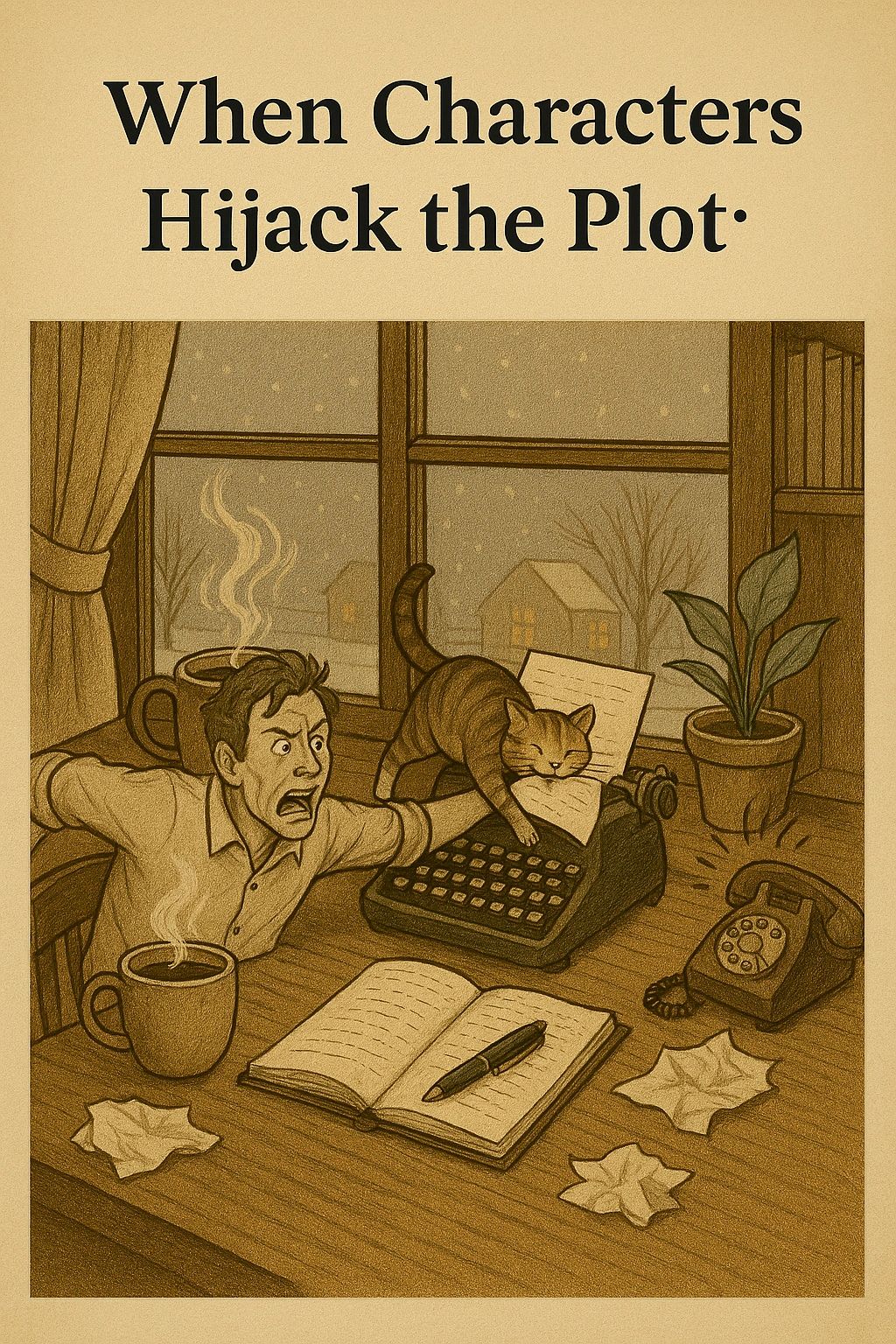
When Your Characters Hijack the Plot
You had a plan. A tidy outline. A clear arc. And then — somewhere between chapter three and the midpoint — your character took the wheel and veered off-road.
The Moment It Happens
It starts innocently enough. A line of dialogue that wasn’t in your notes. A reaction that feels too strong. Suddenly, your protagonist is making choices you didn’t authorize. They’re falling in love with the wrong person. They’re ignoring the inciting incident. They’re refusing to be heroic.
And you — the writer — are left blinking at the page, wondering who’s really in charge here.
Why It’s a Good Sign
When characters hijack the plot, it means they’ve come alive. They’re no longer puppets dancing to your outline; they’re people with agency, contradictions, and inconvenient desires. That’s where the magic happens.
Letting go of control can be terrifying. But it’s also the moment your story starts breathing.
How to Navigate the Chaos
- Listen first. What is your character trying to tell you?
- Revisit your outline. Does it still serve the emotional truth of the story?
- Don’t panic. You can always revise. But don’t squash the impulse too soon.
Sometimes the detour is the real story. Sometimes the hijacker is the hero.
Closing Thought
If your character is tugging the plot in a new direction, maybe it’s not a hijacking. Maybe it’s a rescue.
Creative Rituals That Actually Work
Writers love rituals. We love them almost as much as we love procrastinating by researching rituals.
We light candles.
We brew tea.
We rearrange our desks.
We sharpen pencils we don’t actually use.
We create playlists with titles like “Moody Forest Sorcerer Energy.”
But which rituals actually help?
Here’s what I’ve learned:
The best creative rituals are the ones that signal your brain, “Hey, we’re doing the thing now.”
It doesn’t matter if the ritual is elaborate or simple. What matters is consistency.
Here are a few that genuinely work:
1. The First Line Ritual
Write one sentence — any sentence — to open the door to the work.
2. The Five‑Minute Promise
Tell yourself you only have to write for five minutes.
You’ll almost always keep going.
3. The Sensory Anchor
A candle, a specific mug, a certain song — something that becomes shorthand for “writing mode.”
4. The Gentle Ending
Stop before you’re empty. Leave a breadcrumb for tomorrow.
Creative rituals aren’t magic spells. They’re small kindnesses we offer our future selves. They make the work feel less like a battle and more like a return.
And in February — the month of slow starts and quiet persistence — that’s exactly what we need.