
There is wisdom in keeping one chair by the fire unclaimed. It reminds us that rest is not something we earn after every task is finished; it is part of how we find our way back to ourselves. Sit awhile. Let the day soften around the edges.
Author: Dean Burgess
-

The Wisdom of the Unhurried Cup
There are mornings when the coffee is less a beverage than a small, brown-colored rescue operation. The alarm has rung, the floor is cold, and the day is already standing at the door with a clipboard and several unreasonable questions. On such mornings, I have been known to make coffee with the focus of a man defusing a bomb.
But every now and then, if I can resist the urge to carry the mug from room to room like an Olympic torch, I remember the better way: sit down.
Not forever. The laundry will not fold itself, despite years of patient observation. The inbox will continue breeding in the dark. Still, there is something quietly sensible about giving a cup of coffee or tea the few minutes it deserves. It took time to steep, drip, or otherwise become respectable. The least we can do is meet it halfway.
An unhurried cup has a way of introducing you to the ordinary good things you nearly walked past. The window has a little rain on it. The dog has arranged himself in a patch of sun with the confidence of a man who owns the place. Somewhere in the house, a floorboard gives its familiar complaint. The kettle clicks off, and for a moment the whole world seems to agree that nothing urgent is happening.
I do not mean to suggest that a warm mug will solve every problem. It will not repair the truck, answer the difficult email, or explain why the one sock has vanished again. It may, however, make you a better companion to yourself while you face those things. That is no small gift.
We are often encouraged to make every minute useful, as if our days were a shed that needed organizing before winter. There is wisdom in getting things done, of course. But there is also wisdom in noticing the steam rising from a cup, in hearing the spoon tap the rim, in taking the first sip before it becomes a lukewarm reminder of your ambition.
Tea drinkers understand this especially well, though coffee drinkers may be forgiven for arriving at the lesson a little faster. Either way, the cup asks for a modest kind of attention. It does not demand a grand plan or a better version of you. It simply says: here you are, and here is something warm.
So today, if you can, let the cup cool at its own pace. Look out the window. Notice the chair holding you up, the book waiting nearby, the person across the table, or the blessed quiet if you have been granted some. The ordinary good things are rarely in a hurry. Perhaps we do not always need to be, either.
-
The Crawling Woman
By the time we were old enough to understand what death meant, Grandaddy Burgess had already buried half the county.
That sounds dramatic, but on a farm, death is just another season. Spring meant planting, summer meant plowing or praying for rain, and come fall and winter you were either cutting timber, running the sawmill, or repairing everything that broke so you’d be ready when spring came roaring back. There was always something to do. Always.
But some things, once done, don’t stay buried.
Grandaddy told the story every October, when the evenings turned sharp and the harvest moon hung low and orange over the fields. He’d gather us on the back porch-me and my brothers Brian and David, and our cousins James, Cindy, Andy, and Lee-and wait until the wind made the porch swing creak like a coffin lid. Then he’d start.
“It was October,” he’d say, “same time of year as now. I was headed to town for tractor parts.”
The highway sat two miles down the dirt road from the farmhouse. Grandaddy made the trip in his Ford truck, bouncing through ruts hardened by the first cold snaps, until he turned onto the asphalt and the world smoothed out.
He’d gone maybe a mile when he saw her.
She lay on the shoulder of the road, crumpled like a discarded coat. A young woman, maybe twenty, her dark hair matted with blood, her dress torn and dusty. Grandaddy stopped the truck and knelt beside her, pressing two fingers to her throat even though he already knew. The blood on her skin had gone cold. The blood on the road had not.
He drove to the nearest store-a filling station with one phone-and called the sheriff and ambulance. They arrived with lights spinning uselessly against the afternoon sky, because there was nothing to save. She’d been hit by a car in the middle of the night, they figured. Probably never saw it coming.
But she hadn’t died right away.
The sheriff’s deputies followed the blood trail for more than a mile along the highway, marking the asphalt with chalk at every dark smear, every handprint where she’d dragged herself forward. She’d crawled through the darkness, alone and broken, searching for help that never came.
The ambulance took her away in a zippered bag. Later came the investigation, the autopsy, the newspaper articles that went nowhere. No one knew who she was. No one knew who hit her. She was a ghost before she ever became one.
Grandaddy asked the sheriff what would happen to her.
“Potter’s field,” the sheriff said. “County buries the unknowns there. No family, no name, no stone. Just a number in a book somewhere.”
Grandaddy couldn’t stomach it.
The Burgess family had maintained a small cemetery for generations at the top of a hill in the middle of our north field. Nothing grand-just a few weathered tombstones from the 1800s, a small patch of trees that had grown up around the dead, and the quiet that comes from being forgotten by everyone except those who tend the graves.
Grandaddy cleared it with the county. He’d bury her there, he said. Place a small marker. Take care of her grave like he did the rest of the family. Better than leaving her alone in an unmarked ditch with strangers.
They agreed.
The family held a small service. Just Grandaddy, a preacher from the next county, and a plain wooden coffin that the county provided. He carved her a simple headstone: UNKNOWN WOMAN, OCTOBER 1947. MAY SHE FIND REST.
But rest, Grandaddy would tell us with a strange look in his eyes, was not what she found.
“Warm October evenings,” Grandaddy said, his voice dropping to a whisper that made us lean in despite ourselves. “When the air’s still thick from summer but the night’s coming on cold. If you watch from the hill about a hundred yards away-just there, where the old fence line runs-you can see her come up from the grave.”
We were eight, nine, ten years old. We believed every word. Brian would sleep with the covers pulled to his chin. David started keeping a flashlight under his pillow. Cindy cried at night for a week after first hearing it. Andy and Lee swore they weren’t scared, but they never walked past that field after sunset. And me? I lay awake listening to every creak of the old farmhouse, convinced I could hear dragging footsteps in the corn.
James, though.
James was different.
James was feral, Grandmother always said, though she meant it kindly. He ran wild through the woods, came home with ticks in his hair and mud in his ears, laughed at things that made other kids cry. He wasn’t brave so much as he was untamed-too wild to understand fear the way the rest of us did.
By the time I turned twelve, the story had become a dare. Every October, as Halloween approached, we’d challenge each other. Who was brave enough to walk up to the cemetery at dusk? Who would stand among the old tombstones as the light failed?
We’d never actually done it. We’d walked to the fence line at sunset, sure, peered through the trees at the small clearing where the stones stood. But none of us had ever crossed into the cemetery itself. Not close to dark.
Until James took the challenge.
It was October 28th, I remember, because Halloween fell on a Friday that year and we were counting down the days like Christmas. The afternoon had been unseasonably warm-seventy degrees, the air heavy and still, the kind of October evening Grandaddy had described a hundred times.
We stood on the far hill, the seven of us, watching James walk across the field toward the cemetery. He moved with that loose, careless stride of his, hands in his pockets, occasionally looking back to flash us a grin that said you’re all babies.
“He’s gonna chicken out,” Brian muttered, though he didn’t sound convinced.
“He’s gonna die,” Cindy whispered, and Andy punched her arm.
“Shut up, Cindy. There’s no such thing as ghosts.”
“Then you go,” she shot back.
Andy didn’t answer.
James reached the tree line and disappeared into the shadows of the small grove. We watched from our hill, squinting against the dying light. After a moment, we could see him again through the trees-just a shape, but unmistakably James. He found a fallen log near the edge of the clearing and sat down, arms spread along the wood behind him, legs stretched out like he was lounging at a picnic.
“See?” David said, his voice too loud. “Nothing’s happening. Grandaddy’s full of-”
“Shh,” I said.
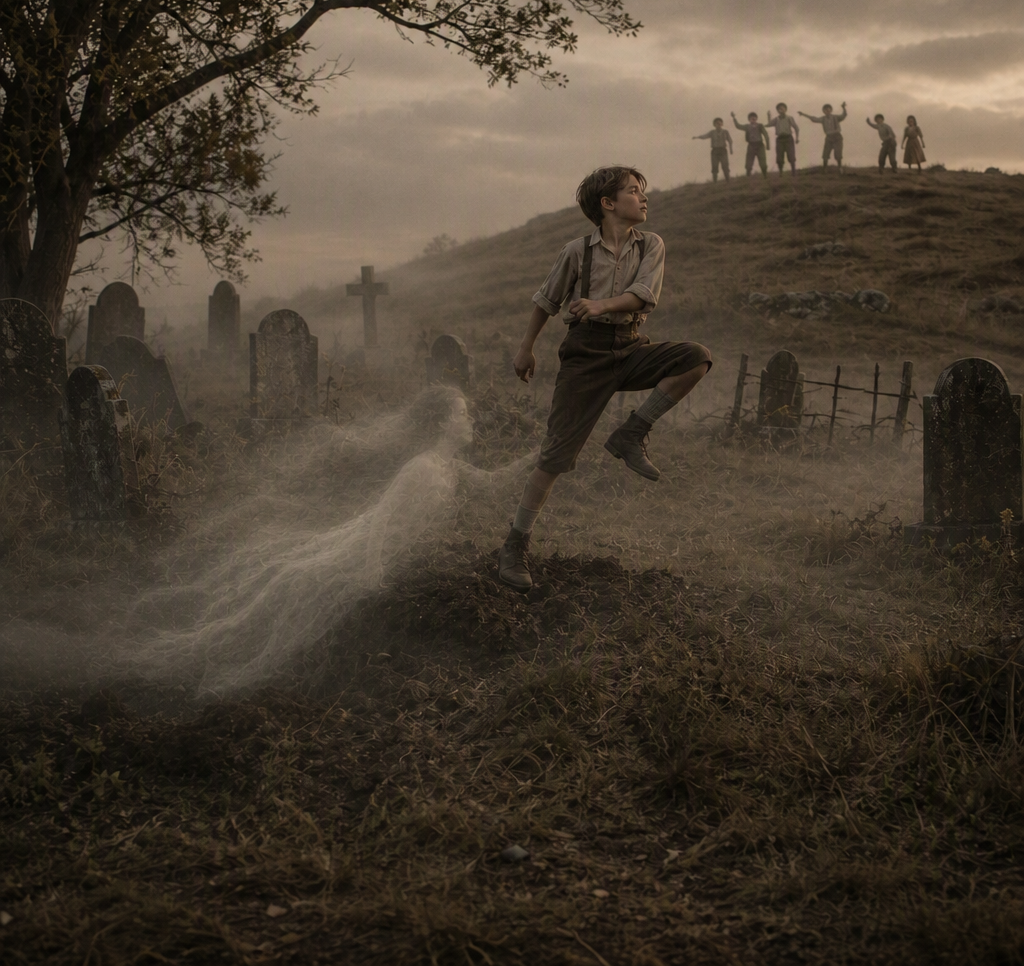
Twilight came on fast, the way it does in autumn. One minute the sky burned orange and purple, the next the world turned to gray. James stood up from his log and walked to the unknown woman’s grave. He stood beside her marker, looking down at it, then turned to face us. Even from a hundred yards, I could see his grin.
“He’s dancing,” Lee breathed.
And he was. James had started to move, a slow, mocking shuffle, arms swinging, head bobbing. He was dancing beside the grave of a woman who’d crawled a mile to die, and he was laughing while he did it.
“James!” I screamed. “James, run!”
“Run!” Brian joined in, then David, then all of us, our voices carrying across the field in a chorus of panic. “Run, James, run!”
He just danced faster, laughing at what he thought was our attempt to scare him. He couldn’t hear the real terror. Couldn’t see what we could see from our hill.
The mist started at the base of her headstone. Just a thin vapor at first, rising from the earth like breath on a cold morning. Then it thickened, swirling around James’s ankles while he danced, oblivious.
“RUN!” we shrieked, our voices breaking, tears streaming down Cindy’s face.
The mist took shape.
A hand emerged from the ground-pale, bloodied, fingers clawing at the dirt. Then an arm, reaching upward, grasping. James kept dancing.
The earth heaved. Shoulders rose, then a head with matted dark hair, then the full form of a young woman pulling herself from her grave with the same desperate determination she’d once crawled along a highway. She reached for James’s legs, her bloodied fingers inches from his dancing feet.
Something in our voices finally broke through. Maybe it was the pitch of true terror, the sound of seven children screaming not with mischief but with genuine fear. James stopped dancing. He looked at our hill, at our waving arms, our pointing fingers. Then he looked down.
He saw nothing. The mist, the reaching woman, the grave itself-they were invisible to him. But he saw our faces. He heard the horror in our throats.
James ran.
He bolted from the cemetery like a startled deer, legs pumping, arms windmilling, crashing through the underbrush and across the field. He didn’t look back. None of us would have either.
He reached our hill gasping, bent over with his hands on his knees. “You… you stupid…” he panted. “Trying to… scare me…”
“Didn’t you see it?” I grabbed his shoulders, shaking him. “Didn’t you see her?”
“See what? There was nothing there! I was dancing and you all started screaming like-”
“She came out of the grave,” Brian said, his voice flat and strange. “She reached for you. Her hand was right there, James. Right by your leg.”
“You’re lying.” But James looked back at the cemetery, and the trees had gone completely dark. The last of the light had died while he ran, and the grove was just a black shape against a purple sky.
“We all saw it,” Cindy whispered. “All of us.”
James didn’t speak for a long moment. Then: “I didn’t see anything. Not a thing.”
But his voice had changed. The wildness had gone quiet.
We never went near the Burgess cemetery after dark again. Not any of us. James, for all his feral courage, would take the long way around rather than pass within sight of those trees. Cindy had nightmares for years. Andy and Lee stopped claiming ghosts weren’t real, though they never admitted they believed either.
And me? I thought about that young woman often. About crawling through darkness, searching for help. About being buried with strangers, then pulled back by whatever force keeps the dead from resting easy. I wondered if Grandaddy had done her a kindness by giving her a named grave, or if he’d only given her a place to return to.
Grandaddy died in the spring, when the planting was just beginning. We buried him in the Burgess cemetery, not far from the unknown woman. I visit when I’m back home, clear the weeds, make sure the stones are upright. Both of theirs.
Sometimes, on warm October evenings, I stand on the far hill and watch. I’ve never seen her again. But I’ve felt the mist on my ankles. I’ve heard the soft, desperate sound of something dragging itself through fallen leaves.
And I’ve learned that some kindnesses don’t end with death. That taking care of the dead means more than keeping their graves tidy. It means remembering them. Speaking their stories. Keeping them from being forgotten in unmarked places, alone in the dark, crawling toward help that never comes.
The unknown woman has a name now, in our family. We call her the Crawling Woman. And every Halloween, when the air turns warm and strange and the night comes on too fast, we tell her story. We speak of her crawling. We remember her reaching.
We keep her from being alone.
And sometimes, if you stand on the right hill and the light is failing just so, you can see the mist rise from her grave. Not every year. But often enough.
Often enough to know that some stories aren’t meant to end.
They’re meant to be told, generation after generation, whispered between children who huddle close and swear they saw something impossible, something that reached from the earth with bloody fingers and desperate eyes.
Something that crawls still, searching for what we all want in the end.
Not to be forgotten.
Not to be alone.
For Grandaddy Burgess, who took care of the dead, and for the woman who taught us that some graves are never truly at rest.
-
Title: The Autumn Edit Date: October 5, 2026

The air has shifted. Pebble noticed first — his tail flicked at the window as the morning light turned gold instead of white. He’s decided that fall is editing season.
He’s ruthless. Every draft gets a pawprint audit. Every sentence earns a stare that says, you can do better.
I’ve learned to take his feedback seriously. When Pebble curls up beside the notebook, it means the paragraph passes. When he walks away mid‑sentence, it means I’ve lost the plot.
Autumn reminds us that revision is natural. Leaves fall, ideas shed their excess, and stories find their shape. Pebble’s edits may be unconventional, but they’re honest — and somehow, they always make the work better.
He stretches, yawns, and flicks his tail toward the window, signaling that the season’s first rewrite is complete.
𝓢𝓲𝓰𝓷𝓮𝓭 𝔀𝓱𝓲𝓵𝓮 𝓽𝓻𝓪𝓭𝓲𝓷𝓰 𝓼𝓾𝓶𝓶𝓮𝓻 𝓵𝓲𝓰𝓱𝓽 𝓯𝓸𝓻 𝓪𝓾𝓽𝓾𝓶𝓷 𝓲𝓷𝓼𝓲𝓰𝓱𝓽 — 𝓓𝓮𝓪𝓷 𝓑𝓾𝓻𝓰𝓮𝓼𝓼
-
Coming Soon – The Starlet’s Daughter

Review: The Starlet’s Daughter (coming soon)
This is noir that refuses to look away from the systems that enable evil. The trafficking ring isn’t an aberration-it’s a feature of the Hollywood dream machine. What distinguishes this debut from standard hardboiled fare is its insistence that the rot has structure: studio heads, talent scouts, city councilmen, all functioning as gears in a machine that grinds up young women and calls it opportunity. Brennan’s investigation unfolds with the grim inevitability of a man who keeps fighting not because he expects to win, but because stopping would be its own kind of death. The prose is lean, the atmosphere suffocating, and the moral accounting uncompromising. By the final chapters, the reader understands that some rescues are also reckonings-and that the detective who delivers them rarely walks away whole.
While not his first novel, Dean Burgess jumps into the realm of Crime Noir with a Splash! This book is as hot as the Santa Ana winds!
- Sloane Vickers, Mystery Scene Magazine
-
Coming Soon – The Starlet’s Daughter
The Starlet’s Daughter – By Dean Burgess – Coming Soon!
Chapter One: The Office Above the Smoke
Dutch woke with the taste of smoke in his mouth and the ache of an hour spent sleeping upright in a wooden chair. He was forty-five minutes ahead of his alarm, which meant he was right on time. The light through the single window above Rodriguez Taco Stand came flat and colorless, the alley bricked up on all sides so that sunrise, when it arrived, hit like a flinch instead of a gift. He rolled his neck. Vertebrae crackled and a nerve in his right temple stuttered a warning he’d be fighting all day. The last of a neon sign somewhere on Figueroa hummed behind the walls, its afterlife more insistent than its color ever was.
The Santa Ana had started early. He felt it on his skin before he could see it, a dry tickle on the back of his neck, a static in the air that had nothing to do with weather and everything to do with nerves set to go off. In his experience, wind made people dangerous: lips cracked, tempers snapped, the city’s rot surfaced and walked the streets like it had somewhere to be. The trick was to be less brittle than everyone else.
He stood. His office was a converted storage closet above the taco stand—three paces wide, five deep, the fourth wall a sheet of painted plywood that never quite fit the frame. He kept it neat. Order was an advantage, so was denial. There was a battered file cabinet in one corner, a battered hot plate in the other, and a battered man standing between them looking for something to do with his hands.
Copyright 2026 – By Dean Burgess
-
A Tall Glass of Lemonade
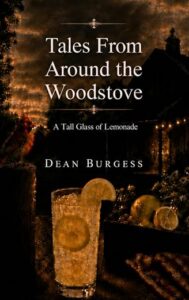
There’s something special about a story that lingers after the final page, and A Tall Glass of Lemonade is written to do just that.
Warm, reflective, and rooted in heartfelt storytelling, this book invites readers to slow down, settle in, and savor every chapter. A story to sip slowly and remember.
If you enjoy thoughtful writing, memorable characters, and stories with heart, A Tall Glass of Lemonade deserves a place on your reading list.
-
Why Writing Still Matters
A Quiet Practice
Writing asks us to slow down long enough to notice what is true. In a noisy world, the page remains one of the few places where thought can deepen, memory can settle, and feeling can find its proper shape.
For many writers, the work begins before the first sentence. It begins in observation: the turn of a phrase overheard in town, the weathered look of a porch at dusk, the way a person hesitates before telling the truth. These small details are often where stories first take root.
Finding Your Voice
A writer’s voice is not manufactured overnight. It is discovered through repetition, patience, and a willingness to write imperfectly. The more honestly you write, the more your work begins to sound like you and no one else.
- Read with attention and curiosity
- Write regularly, even in small stretches
- Revise with care rather than haste
- Trust the details that feel lived-in and specific
The best writing does not shout. It invites the reader to come closer.
Staying With the Work
Every writer meets doubt. Some days the words arrive with ease, and some days they do not come at all. What matters most is returning to the desk. A page written in uncertainty can still lead to something lasting, honest, and unexpectedly beautiful.
If writing matters to you, keep going. Protect the habit, honor the craft, and let the work teach you what it wants to become.
Browse the books or visit My Journal for more reflections on storytelling, reading, and the writing life.
-
The Art of Storytelling: Crafting Compelling Narratives

Why Stories Stick: Unlocking the Mind’s Love for Narrative
From boardrooms in Newnan to classrooms across Georgia, one truth remains constant: people don’t just consume information—they remember stories. The human brain is wired to respond to narrative structure, using it to organize thoughts, retain details, and make emotional connections. In fact, research shows that messages delivered through storytelling are up to 22 times more memorable than facts alone—making narrative not just a creative tool, but a strategic advantage in communication.
Whether you’re crafting a blog post, designing website copy, or sharing community updates, understanding the mechanics of effective storytelling helps your audience engage, relate, and respond. A well-structured narrative builds trust, clarifies purpose, and turns abstract ideas into relatable experiences. It answers the silent questions: Why does this matter? How does it affect me?
In this guide, you’ll learn how to harness narrative elements—character, conflict, resolution, and emotional arc—to strengthen your writing and deepen audience connection. You’ll discover how location-specific storytelling (such as weaving in Georgia settings or Southern cultural nuances) boosts local relevance and search visibility. Most importantly, you’ll walk away with practical frameworks to transform everyday content into compelling narratives that inform, inspire, and convert.
Mastering the Framework: The Core Elements of Compelling Story Structure
Every memorable story—whether a novel, article, or blog post—relies on a strong narrative foundation. Understanding the essential components of narrative structure empowers writers to craft stories that engage, resonate, and stick with readers long after the final sentence. In cities like Newnan and across Georgia’s growing literary communities, storytellers are using these time-tested elements to build authentic, impactful content that connects on both emotional and intellectual levels.
A compelling narrative typically follows a clear arc composed of key structural pillars: exposition, rising action, climax, falling action, and resolution. The exposition introduces your characters, setting, and central conflict—laying the groundwork for reader investment. As tension grows in the rising action, obstacles challenge your protagonist, deepening emotional stakes. The climax delivers the turning point—the moment of greatest intensity or decision—while the falling action unravels consequences. Finally, the resolution offers closure, answering key questions and leaving a lasting impression.
To strengthen your storytelling:
- Map your arc before writing: Outline each structural phase to maintain pacing and purpose.
- Anchor conflict early: Readers stay engaged when a clear problem emerges within the first few paragraphs.
- Vary pacing intentionally: Use shorter sentences and scenes to heighten tension; longer descriptions can provide reflection.
- Ensure character motivation drives the plot: Authentic choices make your narrative feel real and relatable.
By mastering these foundational elements, you create stories that don’t just entertain—they endure.
Choose Your Storytelling Format: 7 Methods to Match Message and Audience
Every compelling narrative begins with a simple but critical decision: which storytelling method best serves your audience and objective? With so many formats at your disposal, choosing the right one can make the difference between engagement and indifference. Here’s how to align your message with the most effective approach.
-
The Personal Anecdote
Use this when building trust or illustrating a lesson. Rooted in authenticity, personal stories humanize brands and ideas. Focus on vulnerability, growth, and relatable outcomes—ideal for blogs, live speeches, or introductory videos targeting local Newnan audiences seeking genuine connection. -
The Hero’s Journey
A timeless structure perfect for case studies or customer success features. It follows a character overcoming obstacles—ideal for showcasing transformation in service-based businesses. Map out the “call to adventure,” “trial,” and “return” to create an emotionally resonant arc. -
The Inverted Pyramid
Common in journalism and ideal for time-poor readers. Lead with the most critical facts—what, why, and how—then layer in context. Use this for press releases, news updates, or quick-turnaround content that prioritizes clarity over suspense. -
The Data Story
Turn statistics into a narrative by framing numbers within real-world impact. Instead of listing figures, build a plot around what changed and who benefited. This approach works well for annual reviews, community impact reports, or nonprofit storytelling in Georgia regions. -
The Metaphor-Driven Tale
When explaining complex ideas, use symbolic narratives—like comparing a business journey to a road trip. This method simplifies abstract concepts and boosts retention, especially useful for workshops or educational webinars. -
The Episodic Serial
Break long-form messages into digestible installments. This builds anticipation and encourages repeat engagement, perfect for email drip campaigns or social media storytelling aimed at local communities. -
The Origin Story
Audiences love to know where things began. Use this to highlight foundational values, struggles, and breakthroughs—especially effective for websites, onboarding materials, or community outreach in Newnan and neighboring towns.
Master the Mechanics: A Step-by-Step Guide to Sharpening Your Storytelling Skills
Improving your storytelling abilities doesn’t require a flash of inspiration—just consistent, intentional practice across formats. Whether you’re crafting blog posts, scripts, or social media narratives, follow these proven steps to build stronger, more engaging stories.
-
Define Your Core Message
Start every story by identifying the central idea or emotion you want to convey. Ask: What should the audience feel, know, or do after hearing this? A clear purpose keeps your narrative focused and impactful. -
Structure with a Narrative Arc
Use the classic arc—setup, conflict, climax, resolution—even in short-form content. In Newnan and beyond, audiences respond best to stories that build tension and deliver satisfying conclusions. Map your key beats before writing. -
Hook in the First 10 Seconds
Whether spoken, written, or visual, open with intrigue: a question, bold statement, or relatable problem. Skip the preamble—your reader decides quickly whether to stay. -
Use Sensory and Emotional Language
Replace generic descriptions with vivid details. Instead of “a busy café,” say “the hum of espresso machines and scattered laughter bouncing off brick walls.” Ground your story in place and feeling. -
Practice Across Mediums
Tell the same story as a 60-second voice memo, a 500-word blog post, and a three-slide carousel. Each format strengthens different muscles—brevity, pacing, visual support. -
Seek Feedback and Refine
Share drafts with trusted peers and ask: Where did you disengage? What felt unclear? Revise based on responses, not just preferences.
Consistent application of these steps builds narrative confidence and audience connection—one story at a time.
How to Master Your Voice, Break Through Blocks, and Captivate Readers
How do I develop a unique writing voice that stands out?
Your voice emerges from consistent writing and intentional reading. Focus on authenticity—write as if speaking to a trusted friend. Study authors you admire, but don’t imitate. Instead, analyze why their tone resonates: Is it their word choice, rhythm, or honesty? Experiment with sentence length, diction, and perspective to discover what feels natural. Keeping a journal specifically for voice exploration can accelerate this process.What’s the best way to overcome creative blocks when crafting a narrative?
Start small. Set a timer for 10 minutes and write freely without editing. Freewriting bypasses mental blocks by prioritizing flow over perfection. Change your environment—visit a park in Newnan or work from a local café. You can also try narrative swapping: retell your story from a side character’s point of view. This shift often unlocks fresh insights and momentum.How can I make my writing more engaging from the first sentence?
Hook readers with immediacy. Begin with action, tension, or a compelling question. Avoid lengthy exposition. Instead, drop readers into a moment that raises curiosity: What happens next? Why is this character here? Strong openings often include sensory details or emotional stakes.Should I outline my story, or write freely without structure?
Balance both. A loose outline gives direction, but leave room for discovery. Use a three-act framework or beat sheet to map key turning points, then let scenes unfold organically. Writers in Georgia and beyond find this hybrid approach maintains focus while preserving creativity.How do I keep readers engaged throughout a long piece?
Maintain momentum with varied pacing. Alternate fast-paced dialogue with reflective moments. End sections with micro-cliffhangers or unanswered questions. Use concrete language and active verbs to keep energy high.How often should I revise to strengthen my narrative?
Revise in layers. First pass: focus on structure and clarity. Second: refine voice and tone. Final pass: polish grammar and flow. Allow time between drafts for fresh perspective.Can reading regional literature improve my storytelling?
Absolutely. Southern narratives, for example, often emphasize voice, place, and social nuance—valuable techniques for any writer. Reading works inspired by Georgia communities deepens your understanding of authentic dialogue and setting.Keep Your Storytelling Skills Sharp Through Consistent Practice
Mastering the art of storytelling isn’t about a single breakthrough—it’s the result of ongoing refinement and intentional practice. Throughout this guide, we’ve explored how narrative structure, emotional resonance, and authentic voice shape compelling stories that engage audiences across Newnan and beyond. From understanding character arcs to leveraging setting as a storytelling device, each element plays a vital role in creating narratives that stick.
To turn these insights into lasting skill growth, focus on consistency over intensity. Small, daily habits—like journaling a scene, analyzing a short story, or outlining a personal anecdote—build muscle memory for effective storytelling. Writers who treat storytelling as a craft rather than a one-time task see faster progress and greater audience engagement, whether they’re creating blog posts, marketing copy, or literary works.
Here’s how to stay on track:
- Set weekly storytelling goals, such as drafting one short narrative or rewriting a past piece with stronger emotional stakes.
- Read like a writer—dissect what makes stories in Georgia-based publications or regional genres effective.
- Seek feedback from trusted peers or writing groups to identify blind spots and refine your approach.
Your voice matters, and every story you tell makes the next one stronger. Keep writing, keep revising, and let every word move you closer to becoming the storyteller you aim to be.
-

Why Writers Stare at Walls
Why Writers Stare at Walls
A field guide to procrastination, inspiration, and pretending the ceiling fan is part of the creative process.
People imagine writers spend their days in a thunderstorm of genius, pounding away at the keyboard while sentences arrive like divine telegrams. This is adorable. In reality, a great deal of writing involves staring at a wall as if it owes you money.
A writer can stare at a blank page for twenty minutes, write six words, delete four of them, and then reward this effort with a snack usually reserved for emotional emergencies. It is not laziness. It is craft. Or at least that is what we tell ourselves while opening the pantry for the third time.
The Many Forms of Research
- Looking up one historical detail and resurfacing ninety minutes later knowing everything about 18th-century spoons.
- Searching for a better character name and accidentally reading baby-name forums from 2014.
- Watching interviews with other writers to confirm they are also confused and mildly sleep deprived.
Writing is the only profession where staring into space counts as visible productivity.
Then there is the ritual side of things. Some writers need silence. Some need music. Some need a candle, a lucky mug, a sharpened pencil, and the exact emotional weather of a 1997 autumn afternoon. If one item is missing, the whole operation collapses and no one can reasonably be expected to write chapter twelve.
Drafts Are Strange Creatures
First drafts are wild little beasts. They are full of plot holes, repeated words, and characters who somehow have blue eyes on page ten and green eyes by page forty. A first draft is not a polished story. It is a note to yourself that says, I was here, and I think this might become something if I do not panic.
Editing, of course, is where the real mischief begins. That is when writers become detectives, janitors, surgeons, and occasionally arsonists. Entire paragraphs vanish. Dialogue gets tightened. Adverbs are escorted firmly off the premises. It is brutal, necessary, and oddly satisfying.
A Serious Conclusion
For all the silliness, writing remains one of the finest ways to make sense of the world. It lets us chase memory, invent trouble, tell the truth sideways, and occasionally produce a sentence so good we forgive ourselves for the previous three pages.
So if you see a writer staring out the window, do not interrupt. They may be working very hard. Or they may be wondering whether their hero should own a dog. In either case, it is best to back away slowly and leave coffee within reach.
More From the Shelf
If you enjoy warm stories, literary reflections, and the occasional laugh from behind the writing desk, explore more posts on My Blog or browse the latest titles in the Bookshop.