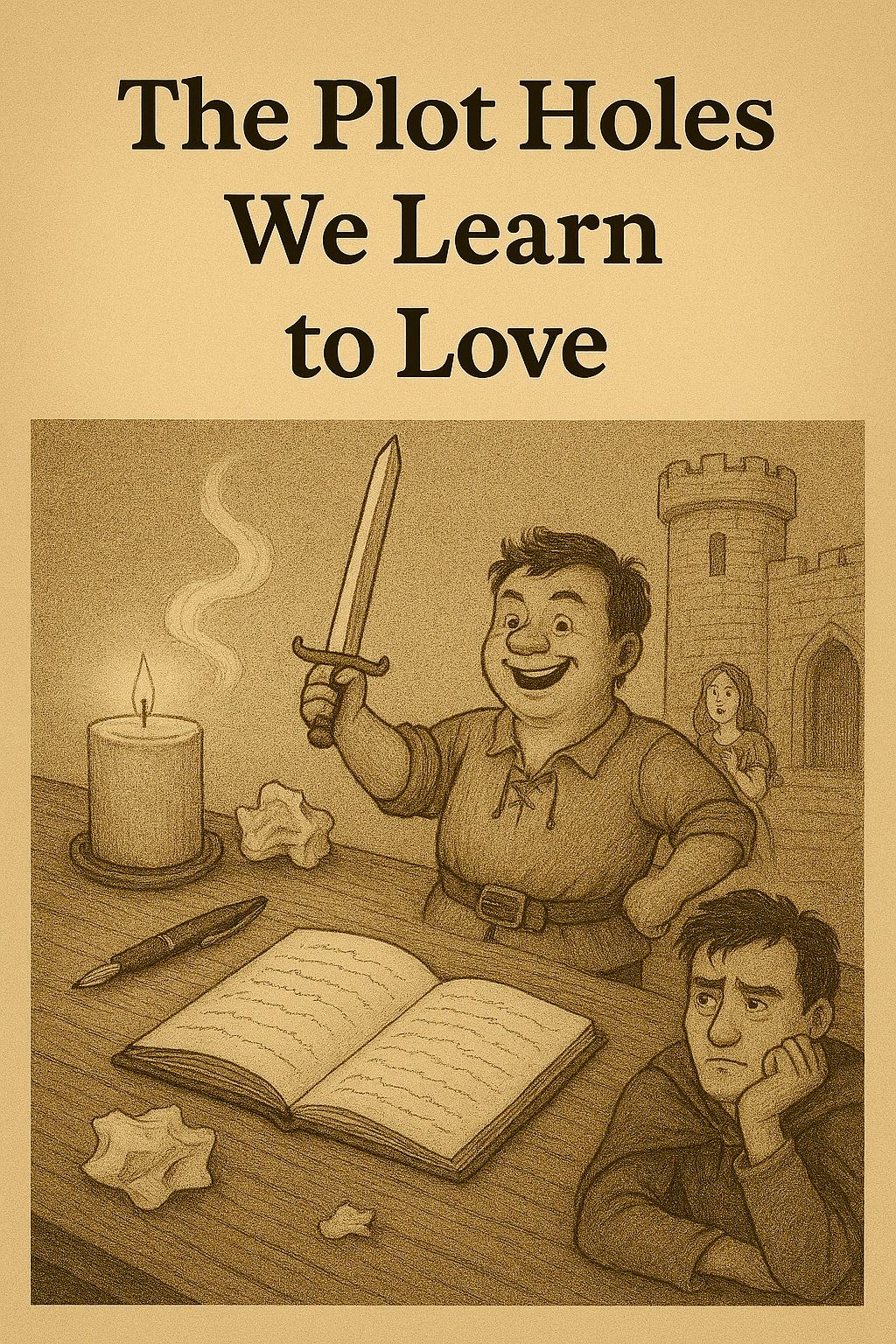
Blog Post: March 28, 2026
Every writer has one. That moment in the story where logic takes a nap, timelines blur, or a character forgets something they absolutely should remember.
You spot it on the reread. You wince. You consider fixing it. And then… you don’t.
What Is a Plot Hole, Really?
Technically, it’s a gap in the story’s logic. A contradiction. A missing explanation. Something that doesn’t quite add up.
But sometimes, it’s also:
- A moment of emotional truth that overrides technical accuracy
- A scene so beloved you forgive its flaws
- A quirk that becomes part of the story’s charm
Why We Let Them Live
Because perfection isn’t the point. Connection is.
Readers don’t fall in love with airtight logic. They fall in love with characters, moments, and feelings. If a plot hole doesn’t break the emotional arc, it might not be a hole at all — just a wrinkle.
Famous Wrinkles We’ve Embraced
- The character who ages inconsistently across books
- The magical rule that’s broken for dramatic effect
- The side character who disappears without explanation (but we still miss them)
These quirks become part of the story’s mythology. They’re the things fans debate, defend, and secretly adore.
When to Patch vs. When to Embrace
Ask yourself:
- Does this break the story’s emotional truth?
- Will it confuse or alienate readers?
- Is it distracting or endearing?
If it’s the former, patch it. If it’s the latter, maybe it’s part of the charm.
Closing Thought
Stories aren’t machines. They’re messy, human, and full of contradictions. Sometimes the plot holes are where the light gets in.
Next Up: April 4 – “The April Fool’s Guide to Writing Advice You Should Ignore”